

White Cloud Mountain minnows are the most reliable genuinely coldwater community fish for an Australian home, no heater required in most rooms. Goldfish also skip the heater but need far more space and filtration than their price tag suggests, and neither group mixes safely with tropical community fish from a heated tank.
A coldwater aquarium fish is one that copes with ordinary Australian room temperature, roughly 15 to 24 degrees C depending on the season and where you live, without a heater doing the work a tropical setup needs. That is a smaller list than most first-time keepers expect. Goldfish, White Cloud Mountain minnows, zebra danios, rosy barbs and a handful of other truly hardy species make the cut on real cross-source consensus, while plenty of fish sold as “coldwater friendly” quietly need a heater the moment a cool snap hits. This list covers seven species with a real evidence trail behind the no-heater claim, what tank size and filtration they actually need, and where Australia’s climate variation changes the answer. It does not cover tropical community fish that merely tolerate a temporary temperature dip, and it does not cover saltwater fish at all.
“No heater needed” is climate-dependent, not a blanket Australian fact. A Hobart or high-country Victorian home can still drop well under 15 degrees C on a winter night, cold enough that even these hardy species benefit from a heater during the worst of it. Run the same tank in Darwin, Cairns or inland WA through summer and the opposite problem shows up: room temperature can sit above what several of these fish actually prefer, pushing it toward the warm end of their tolerance instead of the cool end. Check your own room’s real winter and summer range with a cheap tank thermometer before assuming any fish on this list is heater-free year round. On legality, none of these species appear on the banned-fish lists for NSW, Queensland, South Australia, Victoria, Western Australia or the Northern Territory (checked October 2026), and I couldn’t find the ACT’s list. Tasmania’s permitted list covers every fish here except the hillstream loaches, where it names only one species (Sewellia lineolata), so check before buying them there.
Best Coldwater Aquarium Fish in Australia, Compared
| Species | Min Tank (L) | Temperament | Water Temp Range (C) | Best For |
|---|---|---|---|---|
| White Cloud Mountain Minnow (top pick) | 40+ | Peaceful, schooling | 15-22 | A genuine no-heater community shoal |
| Comet / Common Goldfish | 200+ or a pond | Peaceful, boisterous | 10-24 | A large tank or outdoor pond, not a bowl |
| Fancy Goldfish (fantail, oranda type) | 110+ per fish | Peaceful, slow | 15-24 | A big indoor tank with strong filtration |
| Zebra Danio | 60+ | Active, schooling | 15-24 | A fast shoal that copes with big swings |
| Rosy Barb | 90+ | Peaceful, schooling | 15-22 | A cool, unheated community tank |
| Paradise Fish | 75+ | Territorial, solitary-leaning | 15-30 | The widest climate range on this list |
| Hillstream Loach | 90+, high flow | Peaceful, territorial to own kind | 15-22 | A cool, well-oxygenated planted tank |
How I Compared It
This list is built from established fishkeeping consensus on temperature tolerance and hardiness, cross-checked against current species legality through NSW DPI, SA PIRSA, Queensland Business and Industry Portal and the Victorian Fisheries Authority, and checked against current Australian pet shop listings for real availability. ProductReview.com.au carries almost no species-specific aquarium fish coverage, mostly retailer service reviews, not fish-keeping outcomes, so it is used sparingly here and named where it applies. Whirlpool’s aquarium threads are thin and general, not species-specific. Where a widely repeated international recommendation turned out to have a real Australian legal problem, that gap is called out directly here instead of being quietly dropped from the list.
1. White Cloud Mountain Minnow (Tanichthys albonubes) – Best true no-heater schooling fish for a first coldwater tank
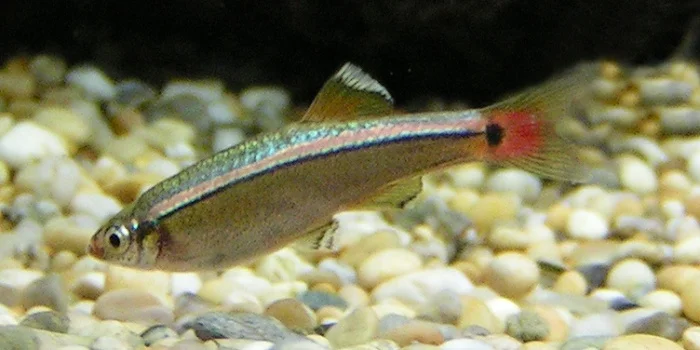
If one fish on this list earns the “no heater” claim without an asterisk, it is this one. White Clouds come from cool mountain streams in southern China and tolerate a remarkably wide swing, from the low teens up into the low 20s, which covers most Australian lounge rooms across most of the year without any equipment beyond a filter. A school of six or more in a planted tank looks better than the fish’s modest price suggests, small red and gold fins flashing as they move together.
They are also, refreshingly, hard to find a real complaint about. Compared with the zebra danio further down this list, White Clouds are calmer and less likely to outcompete slower tankmates for food, which makes them the easier pick for a mixed coldwater community instead of a single-species tank.
Pros
- Genuine no-heater hardiness across most of the Australian climate range
- Calm schooling behaviour, easy to keep with other peaceful coldwater fish
- Cheap and widely stocked at Australian aquarium shops
Cons
- Less vivid colour than a mature rosy barb or a fancy goldfish
- Small enough that boisterous tankmates can push them off food
2. Comet / Common Goldfish (Carassius auratus) – Best hardy goldfish for a big tank or outdoor pond

Common and comet goldfish are the fish every non-fishkeeper pictures when you say “coldwater fish”, and the reputation for toughness is genuinely earned. They cope with a wider temperature range than almost anything else on this list and shrug off water conditions that would stress a tropical community fish. That toughness is exactly why they get sold into setups that are nowhere near big enough.
A single comet grows past 20 centimetres and produces a genuinely heavy bioload, closer to what a small pond fish produces than what its cheap retail price implies. A 200 litre-plus tank or a real outdoor pond is the honest minimum for an adult, not the 40 or 60 litre tank a shop assistant might wave you toward. Unlike the fancy goldfish below, a comet’s long, torpedo-shaped body is built for open swimming, so length matters more than depth here.
Pros
- About as hardy against temperature and water-quality swings as freshwater fish get
- Truly low ongoing cost and wide availability
- A realistic no-heater option for an outdoor Australian pond in most regions
Cons
- Needs far more space as an adult than its small juvenile size or price tag suggests
- Produces a heavy bioload that overwhelms an underpowered filter fast
3. Fancy Goldfish (fantail, oranda and similar) – Best fancy goldfish for a large indoor tank

Fancy goldfish are the rounder, shorter-bodied, often double-tailed varieties bred for show rather than speed, and that body shape is the whole story here. A telescope eye or an oranda’s head growth cannot swim as efficiently as a comet’s streamlined shape, so a fancy goldfish needs a shorter, wider footprint, not length, and it is actually more prone to swim bladder trouble on the wrong diet.
They still count as coldwater fish, no heater required through most of the year, but they are not a small-tank fish just because the body looks compact in a retail photo. Compared with the comet above, a fancy goldfish is the better pick for an indoor display tank rather than a pond, since the fancier tail and finnage patterns show up best under indoor lighting, not outdoors.
Pros
- Striking colour and finnage variety, from a basic fantail to a premium tancho oranda
- Still a genuine no-heater fish across most of the year
- Widely available from specialty online sellers as well as pet shops
Cons
- More prone to swim bladder and buoyancy issues than a streamlined comet
- Heavy bioload for its apparent size, same filtration reality as a common goldfish
4. Zebra Danio (Danio rerio) – Best fast, hardy shoal across a wide temperature swing
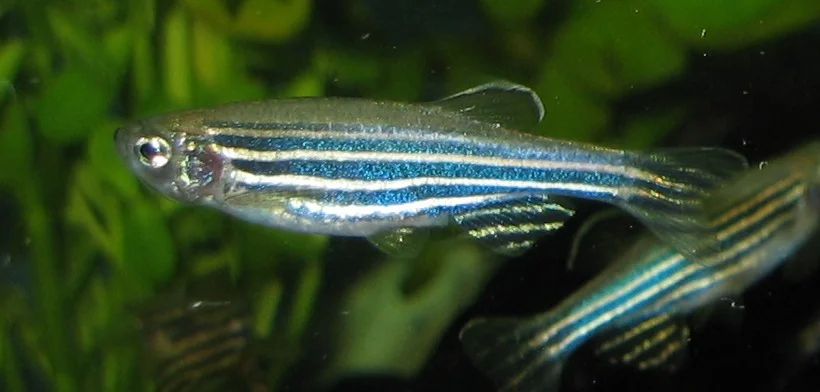
Zebra danios turn up on plenty of beginner tropical lists too, and that overlap is not an error. Few fish handle a bigger temperature swing, which is exactly why they were historically used to fish-in cycle a new tank, a practice worth avoiding now that a fishless cycle gets the same result without risking a fish’s welfare. For a truly unheated Australian room, that same hardiness is the appeal rather than the risk.
They are constant, fast swimmers that need real horizontal swimming room, not a tall, narrow tank, and kept with a slower coldwater fish like a paradise fish, they can out-race it to food every time. If your room runs warm in summer and cool in winter without a heater, a zebra danio is one of the few fish here built to shrug off both ends of that swing in the same year.
Pros
- Extremely wide temperature and water-quality tolerance
- Constant, entertaining swimming activity
- Cheap and reliably in stock
Cons
- Can outcompete slower tankmates for food
- Needs tank length over height to swim properly
5. Rosy Barb (Pethia conchonius) – Best schooling barb for a genuinely unheated community tank

Rosy barbs are a genuinely underused pick for an unheated Australian tank. They colour up brighter and live longer at the cool end of their range than they do pushed warm, which is the reverse of most barbs sold in Australian shops, and a mature male’s rosy-pink flanks are hard to miss in a planted tank. Kept warm long-term, the same fish looks duller and shorter-lived, a genuine hype-versus-reality gap against how they are usually marketed as an ordinary tropical barb.
They need more swimming room than the White Cloud at the top of this list, closer to what the cherry barb needs in this site’s own beginner fish guide, and a proper school of six or more is what keeps them from nipping fins out of boredom.
Pros
- Brighter colour and longer life kept cool instead of warm
- Actually tolerant of an unheated Australian room for most of the year
- Peaceful with other coldwater schooling fish on this list
Cons
- Needs a full school of six or more to avoid fin-nipping boredom
- Less commonly stocked than a comet goldfish or a zebra danio
6. Paradise Fish (Macropodus opercularis) – Best single hardy fish for the widest climate range in Australia
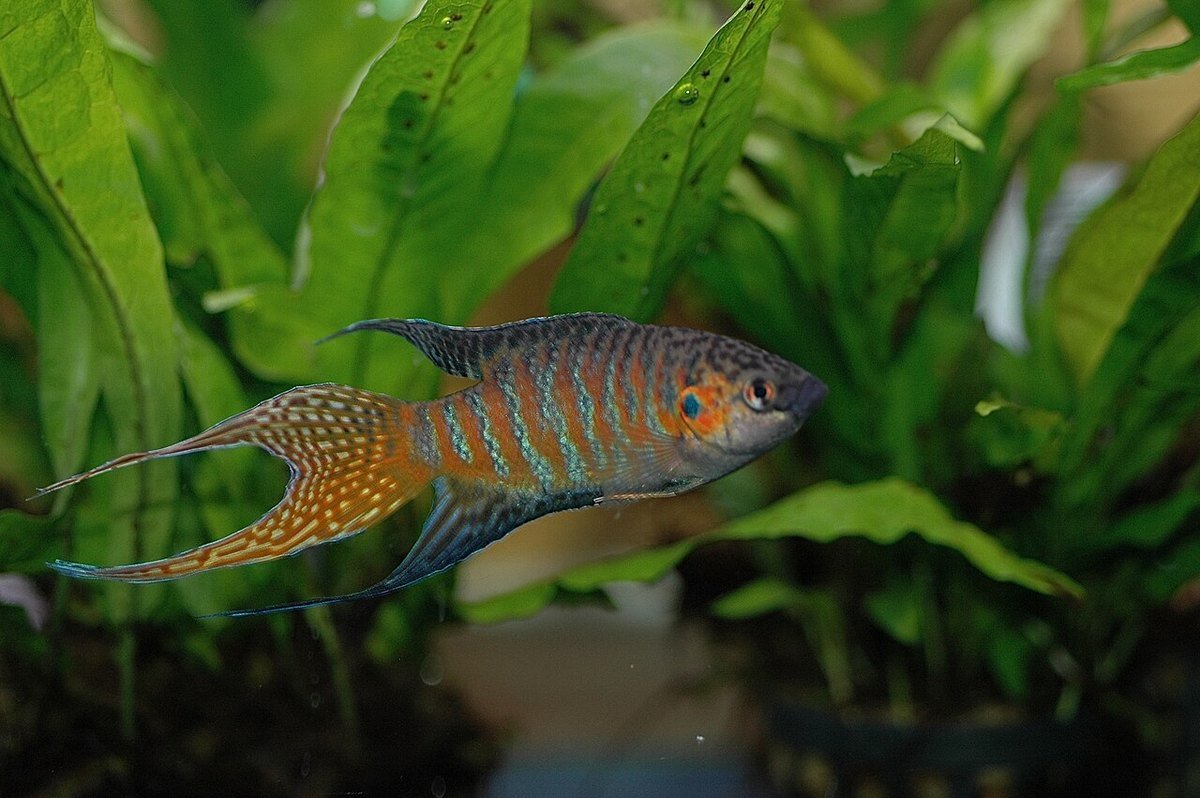
No fish on this list covers a wider slice of the Australian climate than the paradise fish. From a cool Tasmanian lounge room through a Queensland summer, it sits comfortably in the same tank without a heater or a chiller, a genuinely rare trait once you account for how many “hardy” fish actually mean hardy within a narrower band than the marketing suggests.
The honest trade-off is temperament, not temperature. A paradise fish becomes noticeably territorial as it matures, and two males in the same tank is a real problem, not a preference. Small or slow tankmates can be bullied or worse, so treat it as closer to a single-fish or single-species pick than a community addition, the same caution this site gives a betta in its own beginner fish guide.
Pros
- Tolerates the widest temperature range of any fish on this list
- Striking blue and red banding, especially on males
- Cheap and consistently available from Australian aquarium shops
Cons
- Becomes territorial and sometimes aggressive with maturity
- Not a safe bet with small, slow or fancy-finned tankmates
7. Hillstream Loach (Sewellia and Beaufortia species) – Best specialist pick for a cool, high-flow planted tank
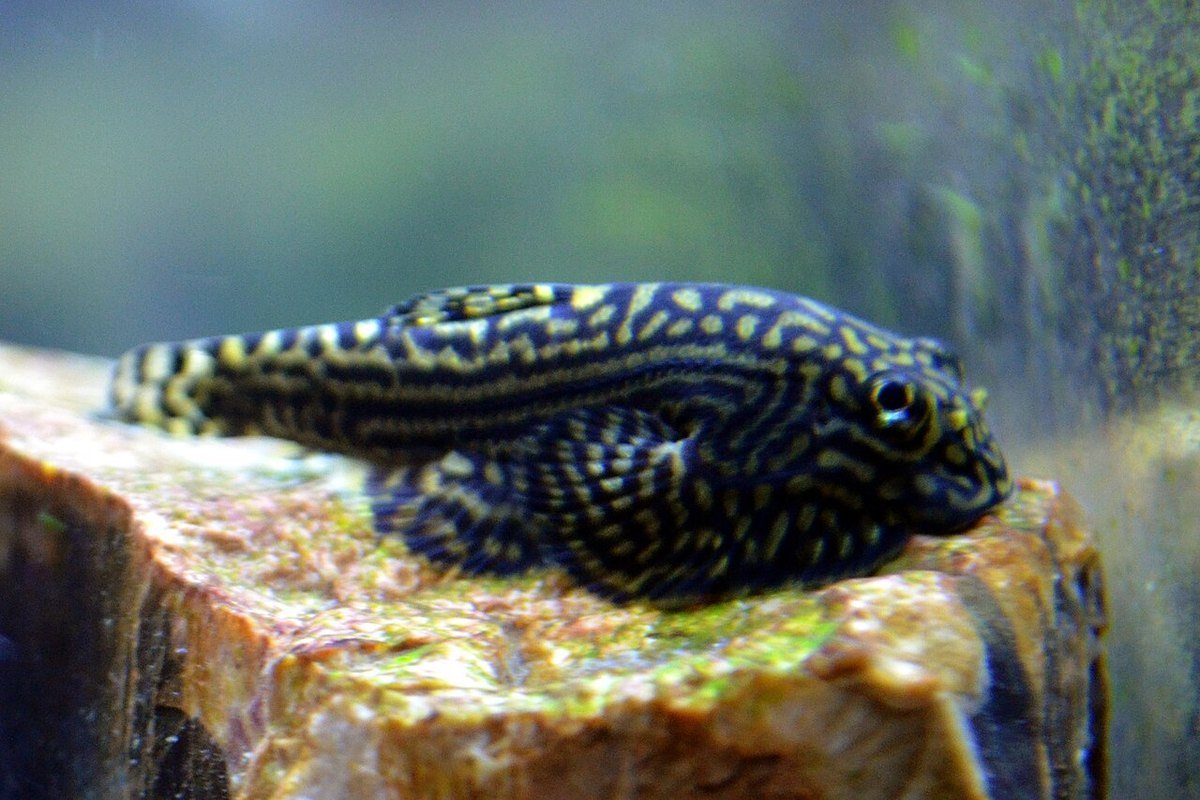
This is the one genuine specialist on the list, and it is included here with an honest caveat instead of being glossed over. A hillstream loach needs cool water, which fits the no-heater brief, but it also needs far more current than a standard filter provides, something closer to eight to ten times the tank’s volume in flow per hour from a powerhead or a river-style manifold. Skip that part and the fish slowly struggles even in an otherwise clean, well-filtered tank.
What earns it a place here instead of on a general community list is the reward: a flat, ray-finned body clinging to rock and glass in a cool, heavily oxygenated planted tank is not something the other six fish on this list offer. Treat it as the advanced pick, not the beginner one, and pair it with the same live plants covered in this site’s own beginner plants guide instead of a bare tank.
Pros
- Truly cool-water, no heater required
- Unique clinging, grazing behaviour not seen elsewhere on this list
Cons
- Needs far more current than a standard filter supplies
- Thin, unverified AU pricing data compared with the more mainstream fish above
- Best suited to an experienced keeper’s second or third tank, not a first one
How to Choose Your Coldwater Fish
Match the fish to your actual room, not the label on the shop tank. A Perth or Adelaide lounge room can swing from a cool 15 degrees C in winter to close to 24 in summer without any climate control at all, which every fish on this list handles, but a sunroom or a poorly insulated Tasmanian hallway can dip further than that in a genuine cold snap. Buy a cheap thermometer before you buy the fish.
- Do not assume a coldwater fish and a tropical community fish share a tank. Goldfish in particular are slow swimmers next to a tropical shoal and cannot compete for food at a warmer temperature that stresses them anyway, so treat this list and a tropical roundup like best freshwater aquarium fish as two separate stocking plans, not one combined tank.
- Size the tank for the adult fish, not the juvenile you bring home. This trips up more first-time goldfish owners than any other single mistake on this list.
- Cycle before you stock, the same as any tank. A coldwater tank still needs the nitrogen cycle established before fish go in, hardiness against temperature is not hardiness against ammonia.
Related Guides
Keep reading on the same topic:
- best fish for small tanks
- best community fish
- best aquarium plants for beginners
- best aquarium fish for beginners
- best freshwater aquarium fish
- betta tank mates
- best schooling fish
- how to move fish to a new tank
- browse the Best Fish hub
Frequently Asked Questions
What is the easiest coldwater fish to keep in Australia?
The White Cloud Mountain minnow is the most forgiving choice on this list, honestly tolerant of a wide temperature swing with almost no real owner complaints in the research behind this guide. A school of six or more in a 40 litre-plus tank is a low-fuss, no-heater display for a first attempt at coldwater fishkeeping.
Do goldfish really not need a heater?
Correct, goldfish are truly coldwater fish and do not need a heater in most Australian homes. The catch is space, not temperature. An adult common or fancy goldfish needs a much bigger tank and stronger filtration than its cheap retail price suggests, so budget for the tank before you budget for the fish.
Can coldwater fish live with tropical community fish?
Not reliably. Goldfish in particular are slower swimmers than most tropical community fish and do not share the same temperature comfort zone, so a heated tropical tank runs warmer than a goldfish prefers while a genuinely unheated tank runs cooler than most tropical fish tolerate. Keep the two stocking plans separate instead of mixing them into one tank.
Is a weather loach or dojo loach legal to keep in Australia?
No, not currently. It is a genuine fixture on international coldwater fish lists, but importing it into Australia has been banned since 1986 and it is a declared noxious pest species in states including New South Wales and South Australia, since it has established wild populations here. If you see it recommended on a US or UK site, treat that as a gap in their advice, not a species to look for at an Australian aquarium shop.
What is the minimum tank size for a pet goldfish?
Plan for at least 200 litres for a single adult common or comet goldfish kept indoors, or a properly sized outdoor pond, and at least 110 litres for the first fancy goldfish with 40 to 50 litres more per additional fish. The small tanks goldfish are traditionally sold alongside in shops are not a realistic long-term home for either variety.
Do I still need a heater somewhere cold in Australia?
Possibly, in a genuine cold snap. Every fish on this list tolerates ordinary Australian room temperature without a heater, but a Tasmanian, alpine Victorian or high-country NSW home can drop below the low end of that range on the coldest winter nights. A small heater set low as backup, not run constantly, covers that edge case without turning the tank tropical.
For a first genuinely unheated tank with no prior coldwater experience, the White Cloud Mountain minnow is the safest starting point, cheap, calm and tolerant of a real Australian room’s swings across the year. If the goal is the classic coldwater fish, a comet or common goldfish delivers on toughness but only in a tank or pond sized for what it actually grows into, not what it looks like at the shop. For a reader chasing colour without goldfish-sized space demands, a school of rosy barbs in a 90 litre-plus tank is the pick most likely to be overlooked and most likely to reward the extra research. Whichever you choose, check your own room’s real winter and summer temperature range before assuming “no heater” applies to your specific home.
