
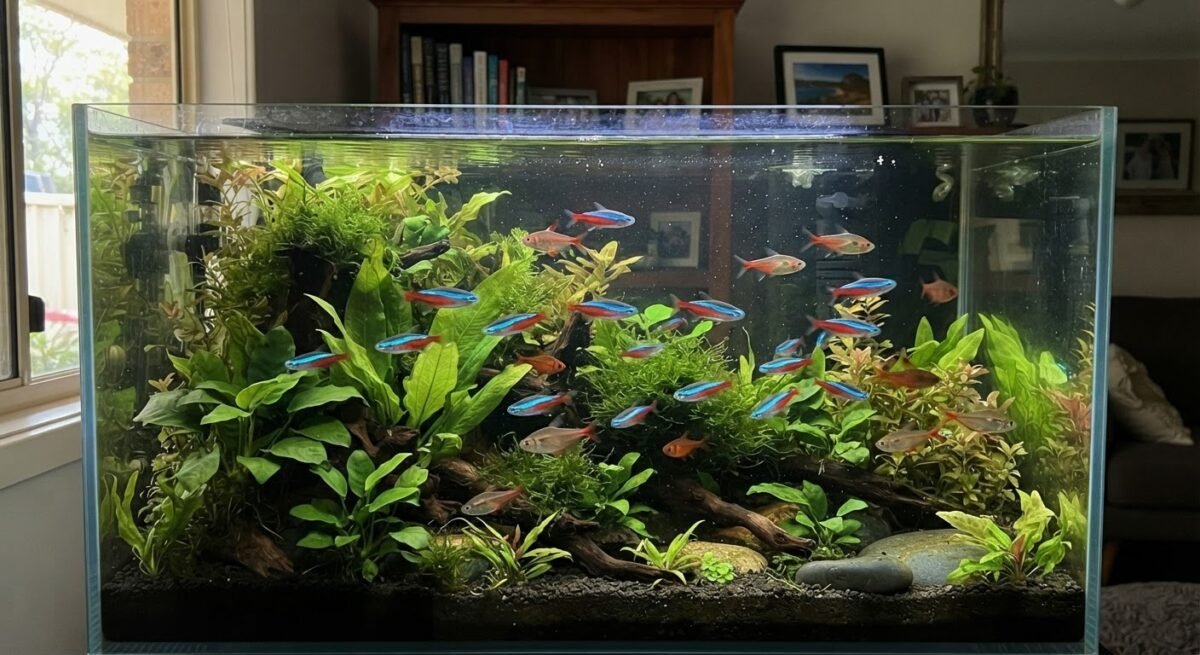
The best community fish are not just individually easy species, they are species that genuinely share water without one group starving, stressing or nipping the others out of the tank. Bronze corydoras, cherry barbs and platies are the safest three to start a mixed community with, and zebra danios are the entry on this list most likely to wreck a combination that looked fine on paper.
Picking the best community fish for an Australian tank is a stocking problem before it is a shopping list. Community fish generally fall into a handful of practical types: schooling mid-water fish (tetras, rasboras, barbs), livebearers that fill the same zone without a school (platies, mollies), bottom-dwelling catfish and loaches that clean up instead of competing, and labyrinth fish like gouramis that hold their own patch near the surface. The number that actually matters here is not the fish count on the box, it is the litres behind each schooling group, since most of the fish below need six or more of their own kind to feel secure, and that pushes a genuine minimum tank size to somewhere between 40 and 75 litres depending on which species you are grouping. This list covers freshwater tropical community fish for a heated tank between roughly 40 and 120 litres. It does not cover goldfish, cichlids or anything that needs its own species-only tank, and if your setup is smaller than 60 litres it is worth checking best fish for small tanks before you commit to a full nine-species mix.
Every species on this list is a common aquarium-trade fish in Australia, and none of them appear on the banned-fish lists for NSW, Queensland, South Australia, Victoria, Western Australia or the Northern Territory, while all nine are on Tasmania’s permitted list (checked October 2026). I couldn’t find the ACT’s list, so check with an ACT aquarium shop first. Ornamental fish legality is set state by state, not nationally, and Western Australia runs the strictest rules in the country. Rules change over time, so confirm with your own state Fisheries or Biosecurity department before buying if you are ever unsure, especially if you are in WA.
Best Community Fish Compared
| # | Species | Water Zone | Min Tank | Best For | Compatibility Notes |
|---|---|---|---|---|---|
| 1 | Bronze Corydoras | Bottom | 60 L | Anchoring a mixed community | Pairs well with cherry barb, platy, harlequin rasbora. Avoid stacking with pleco and kuhli loach in under 75 L |
| 2 | Cherry Barb | Mid | 60 L | Hardy schooling fish, not a fin-nipper | Pairs well with corydoras, platy, harlequin rasbora |
| 3 | Platy | Mid-upper | 40 L | Calm livebearer without the drama | Pairs well with corydoras, cherry barb, harlequin rasbora |
| 4 | Harlequin Rasbora | Mid | 60 L | Hardier alternative to neon tetra | Pairs well with corydoras, cherry barb, platy |
| 5 | Neon Tetra | Mid | 40 L | Classic colour in a stable tank | Pairs well with the above three once cycled. Avoid zebra danio |
| 6 | Bristlenose Pleco | Bottom | 75 L | Algae control without a substrate turf war | Pairs well with corydoras, cherry barb, platy |
| 7 | Kuhli Loach | Bottom | 75 L | Nocturnal clean-up in a planted tank | Pairs well with corydoras, harlequin rasbora. Avoid a third bottom-dweller in a small tank |
| 8 | Zebra Danio | Top | 60 L | Fast, hardy surface shoal | Pairs well with cherry barb, platy. Avoid neon tetra, betta, anything slow or long-finned |
| 9 | Dwarf Gourami | Mid-upper | 75 L | Lightly stocked labyrinth centrepiece | Pairs well with corydoras, cherry barb, harlequin rasbora. Avoid a second male or a betta |
How I Compared These
This list draws on established fishkeeping consensus across enthusiast forums (Aquaria Central, Fishlore, The Planted Tank Forum, Aquarium Co-Op’s own forum), cross-checked against current Australian legality. ProductReview.com.au’s aquarium listings turned out to be shop-service reviews (delivery, packaging, communication) rather than species-specific write-ups, so it is cited here only for that limited purpose, not for compatibility claims. I haven’t listed prices, since livestock pricing varies by shop and region. Where a repeated online claim did not match what real owners reported, that gap is called out directly rather than repeated.
1. Bronze Corydoras (Corydoras aeneus) – Best for anchoring a mixed community
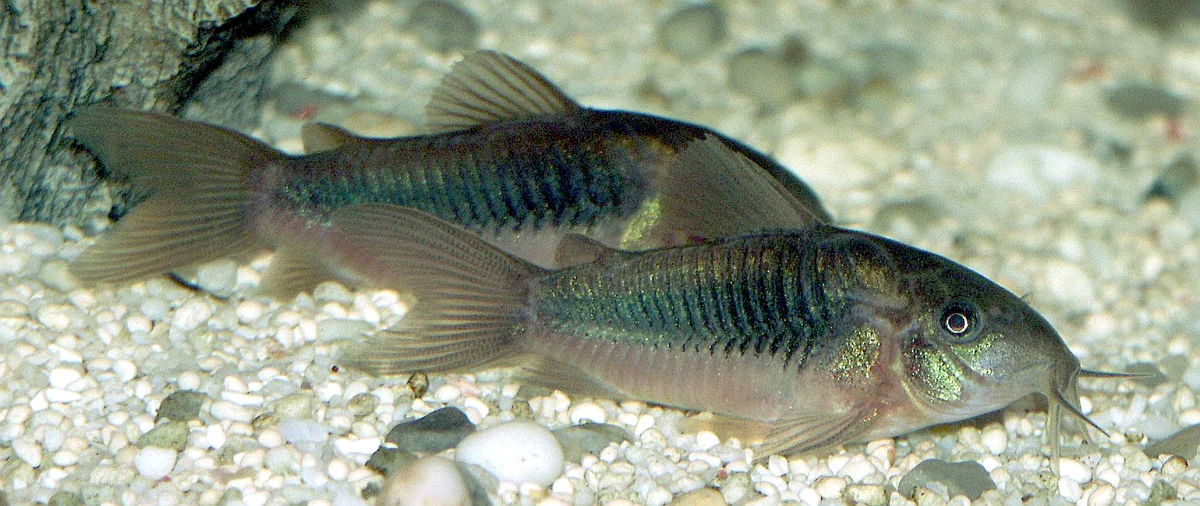
Start a community stocking plan from the substrate up and corydoras are the obvious first pick. They spend their day sifting leftover food off the bottom without competing with anything swimming above them, which is exactly why they turn up in almost every successful community combination reported across the forums checked for this guide. Keep at least three, ideally six, since a lone corydoras spends most of its time hiding instead of doing the job you bought it for.
The genuinely useful compatibility fact here: corydoras do not fight the other bottom dwellers on this list out of principle, but three separate bottom-feeding species (corydoras, bristlenose pleco, kuhli loach) crammed into a 60 litre tank will compete hard for the same sinking food and the same handful of hiding spots. Pick two of the three unless your tank clears 75 litres.
Compared to the harlequin rasbora further up the water column, corydoras add almost zero competition for space, food or light, which is the whole point of stratifying a community tank by water zone instead of just picking nine species you like the look of.
Pros
- Genuinely useful for eating leftover food other fish miss
- Peaceful with every other fish on this list
- Barely competes with mid or top water fish for space
Cons
- Needs a group of 3 or more, not the single fish most shops sell it as
- Sharp gravel can damage their sensitive barbels over time
- Competes hard with other bottom feeders if you stock too many at once
2. Cherry Barb (Puntius titteya) – Best hardy schooling fish, and not the fin-nipper barbs are known for
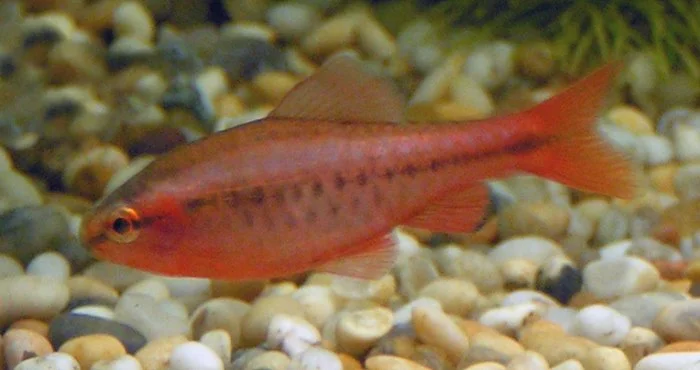
Barbs as a family carry a fin-nipping reputation, and tiger barbs earned it fairly. Cherry barbs are the exception, and forum consensus is unusually consistent on this point: kept in a proper school, they are one of the calmer schooling fish on this list, not one of the riskier ones. That reputation gap matters, because a nervous first-time keeper reading “barb” and assuming trouble would skip a genuinely good community fish for no real reason.
They tolerate a rockier water-quality wobble than neon tetra does, which makes them a safer pick than tetra for a tank that has only just finished cycling. Where they fall a touch short of the platy below is colour consistency, since only mature males show the deep cherry-red they are named for.
Pros
- Calm schooling behaviour despite the barb family’s reputation
- More tolerant of a rocky cycle than neon tetra
- Strong colour on mature males
Cons
- Needs a full school of 6 or more to stay calm, not a pair or trio
- Females are noticeably duller than males
- Needs more swimming room than the smallest schooling fish here
3. Platy (Xiphophorus maculatus) – Best livebearer for filling the water column without the drama
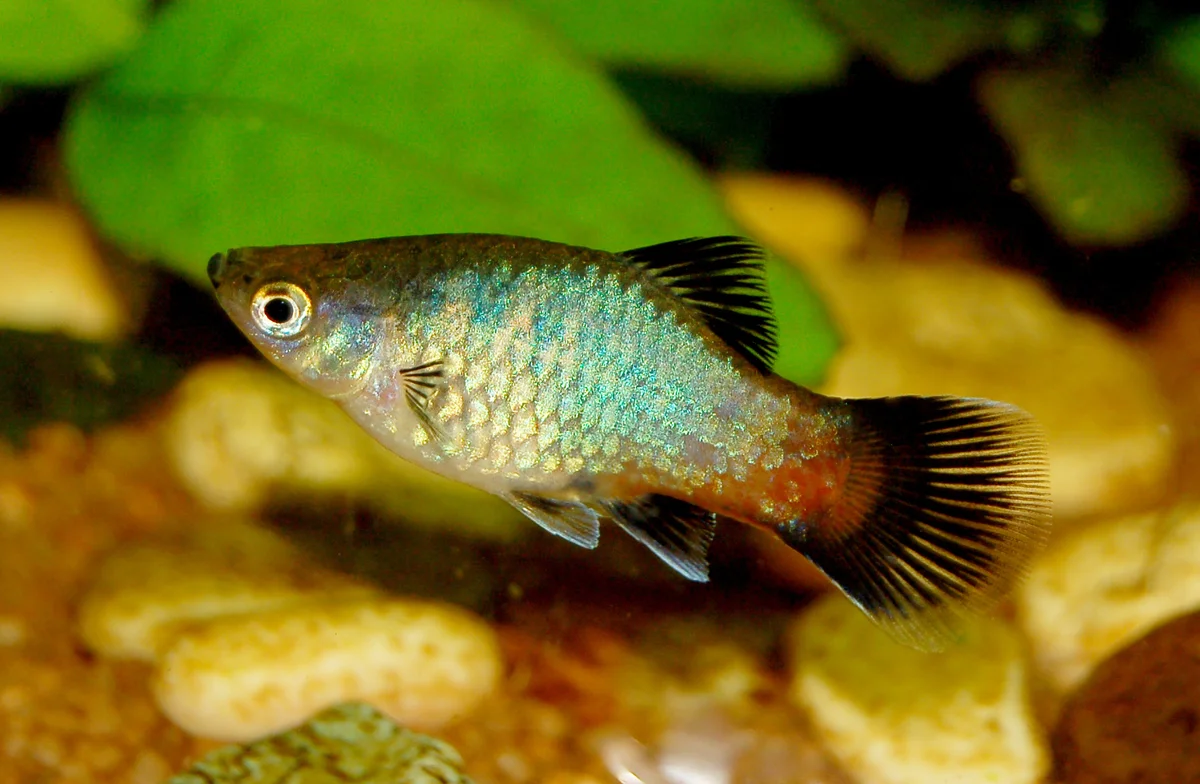
If you have looked at guppies and worried about the breeding explosion they are famous for, platies do almost the same job with a noticeably slower, more manageable birth rate. They are just as forgiving of imperfect water, still come in strong colour, and spend most of their time in the middle to upper water column, which keeps them out of the corydoras’ way entirely.
The one honest caveat: a platy is still a livebearer. A mixed-sex group will breed, just at a pace most keepers find manageable, not overwhelming. If you genuinely do not want fry, buy a single-sex group the same way you would with guppies.
Platies pair particularly well with cherry barbs and harlequin rasboras, since none of the three compete for the same food or the same swimming layer, and none of them are boisterous enough to bother the other two.
Pros
- Very tolerant of a wide pH and water-quality range
- Calmer, slower breeding rate than a comparable guppy group
- Peaceful with slow bottom dwellers and mid-water schoolers alike
Cons
- Still a livebearer, so unplanned fry are possible in a mixed-sex group
- Less flashy fin variety than fancy guppy strains
- Males can pester females if the group skews too heavily male
4. Harlequin Rasbora (Trigonostigma heteromorpha) – Best hardier alternative to neon tetra for the classic community school

Ask an experienced keeper whether to buy neon tetra or harlequin rasbora and you will get a genuinely split answer, and both sides have a point. Rasboras are usually the hardier fish of the two, partly because neon tetra stock is more heavily mass-farmed and carries weaker genetics into the shop tank than it used to. What rasboras give up is the electric blue-and-red of a neon tetra school, trading it for a metallic orange body and a bold black triangle that photographs almost as well.
They are also more active swimmers than neon tetra, feeding more readily near the surface, so a community tank running both species needs to watch feeding time to make sure the neons lower in the water column still get their share.
Pros
- Hardier than neon tetra in a newly established tank
- Peaceful, active schooling behaviour
- Feeds confidently, rarely the fish that misses out
Cons
- Less vivid colour than a mature neon tetra school
- Needs a full 8 to 10 fish group to look and behave its best
- Can out-feed slower fish like neon tetra at the surface if not watched
5. Neon Tetra (Paracheirodon innesi) – Best classic colour, and the one entry on this list that needs the most care around tankmates

Neon tetra earns its spot for one reason: nothing else on this list matches that electric stripe under normal community lighting, and it is still the fish most people picture when they say “community tank.” The trade-off is real though. Neon tetra is the most fragile fish here in a tank that has not finished cycling, and it is the entry most likely to be bullied out of its own food by a faster tankmate.
Which brings up the pairing this list exists to warn about: neon tetra and zebra danio get suggested together constantly online, and it does not work as often as the internet implies. Danios are fast, boisterous surface fish that will out-eat a tetra school without even trying, and more than one forum thread checked for this guide describes exactly that outcome in anything under about 100 litres. Corydoras, cherry barb and platy are all safer tankmates for neon tetra than a zebra danio is.
Pros
- Genuinely striking colour under normal community lighting
- Peaceful with almost every other fish on this list, once the tank is stable
- Cheap and widely available in a group
Cons
- Won’t survive a tank that is still cycling
- Loses out on food to faster, more boisterous tankmates like zebra danio
- Short lifespan for a community fish, typically 2 to 3 years
6. Bristlenose Pleco (Ancistrus sp.) – Best algae control that shares the substrate instead of fighting over it
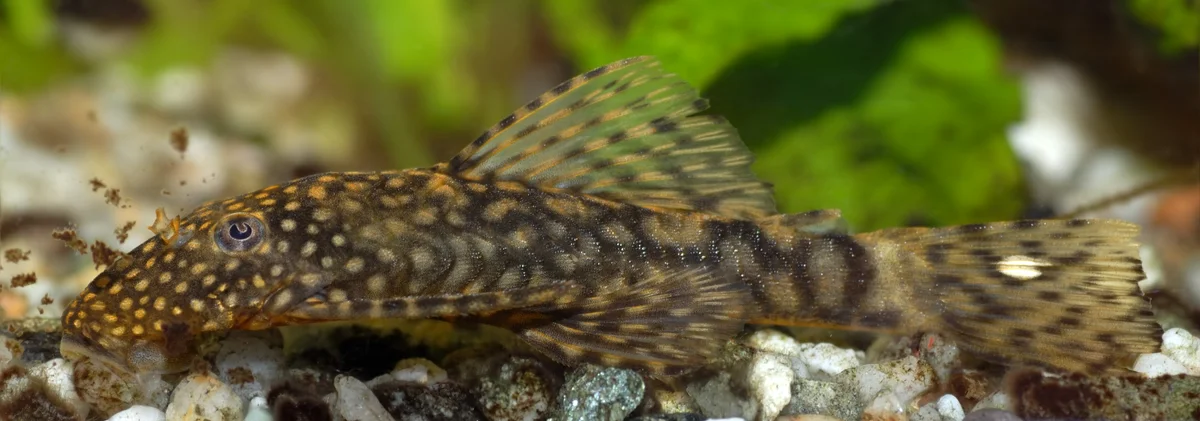
The common pleco gets sold in the same beginner tanks as everything else on this list and grows to 30 to 45 centimetres, well past what any community tank here can hold. Bristlenose pleco does the same algae-eating job, tops out under 15 centimetres, and is the one actually built for a community setup this size.
Real owner reports on whether it shares a tank with corydoras are mostly reassuring: one long-running combination described in a planted-tank forum thread ran a large corydoras school alongside two bristlenose plecos in a 190 litre tank without conflict, though a handful of reports describe an individual pleco turning territorial toward corydoras in a smaller footprint. Give it a cave of its own and the odds tip firmly in your favour.
Pros
- Genuinely community-appropriate size, unlike the common pleco it gets confused with
- Helps manage soft algae on glass and decor
- Generally tolerant of corydoras sharing the same substrate
Cons
- Occasionally territorial toward corydoras in a tank under about 75 litres
- Needs supplemental vegetables or wafers, not just algae, to stay healthy
- Territorial with its own species in a smaller tank
7. Kuhli Loach (Pangio kuhlii) – Best nocturnal bottom dweller for a planted community

Kuhli loach looks almost nothing like the rest of this list, an eel-shaped, whisker-faced burrower that spends daylight hours wedged under a piece of driftwood and comes out once the lights dim. That habit alone is what makes it compatible with corydoras instead of a competitor: the two are rarely active at the same time, so they are not fighting over the same food at the same moment the way two daytime bottom feeders would.
Where this list draws an honest line is stocking density. Corydoras, bristlenose pleco and kuhli loach are all bottom-oriented, and cramming all three into a 60 litre tank is a genuine, common mistake, not a hypothetical one. Pick two of the three below 75 litres, or go all in only once you are past that mark.
Pros
- Genuinely low-conflict with corydoras thanks to opposite activity patterns
- Peaceful with every mid and top-water fish on this list
- Entertaining, if secretive, once settled into a planted tank
Cons
- Rarely visible during the day, which disappoints keepers expecting a daytime fish
- Can slip through surprisingly small gaps in tank equipment, so check for escape routes
- Adds to substrate-zone crowding if paired with two other bottom dwellers
8. Zebra Danio (Danio rerio) – Best fast, hardy surface shoal, and the fish most likely to break a combination on this list
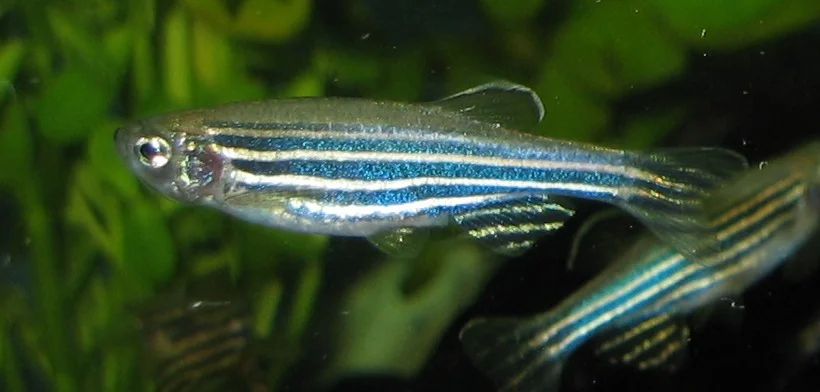
Zebra danio gets marketed everywhere as a blanket “great beginner community fish,” and on hardiness alone that is fair. It copes with an Australian summer pushing an unheated room well past 30 degrees C, and it is genuinely one of the toughest freshwater fish sold in this country. What that blanket claim leaves out is temperament, and this is the real hype-versus-reality gap on this list: danios are fast, constant swimmers that will outcompete slower fish for food without any real aggression involved, they are simply first to the surface every time.
That is why this entry does not pair with neon tetra, and why the reddit and betta-forum threads checked for this guide describe a genuinely mixed record with bettas specifically: one reported case in a spacious 150 litre-plus planted tank with a calm individual betta and a full danio school of 8 to 10 went fine for months, but the more common report in anything under about 75 litres was a stressed, fin-damaged betta within weeks. If you already own a betta, this is not the fish to add to its tank on the strength of a single success story online.
Pros
- Extremely wide temperature and water-quality tolerance
- No heater required in most Australian homes for most of the year
- Cheap, constantly in stock, and entertaining to watch
Cons
- Outcompetes slower or long-finned tankmates for food
- Genuinely poor odds with a betta in anything under about 75 litres
- Needs real horizontal swimming room, not a tall, narrow tank
9. Dwarf Gourami (Trichogaster lalius) – Best lightly stocked labyrinth centrepiece, with a genuine health caveat worth knowing first

Dwarf gourami is sold as an easy, colourful centrepiece for exactly the kind of peaceful community this list describes, and most of that reputation holds up. It breathes atmospheric air through a labyrinth organ, so it copes with lower oxygen levels than the rest of this list, and its flowing fins and bright colour make it the visual centrepiece a school of small tetras cannot really provide on its own.
The honest gap the marketing leaves out: dwarf gourami iridovirus, a viral disease with a documented, real incidence in mass-farmed stock, carries close to a 100 percent mortality rate once symptoms appear and has no treatment. It generally does not spread to non-gourami tankmates, which is some relief for a mixed community, but it is a real reason to buy from a shop with healthy-looking, active stock, not just the cheapest tank in the store.
Two males will fight, and this is the other tankmate a dwarf gourami genuinely does not belong with: a betta. Both are territorial labyrinth fish competing for the same air-gulping space near the surface, and stacking two territorial air-breathers in one tank is asking for exactly the fight both fish are trying to avoid on their own.
Pros
- Genuinely striking colour and finnage for a peaceful community fish
- Copes with lower oxygen levels than most fish on this list
- Peaceful with corydoras, cherry barb and harlequin rasbora
Cons
- Mass-farmed stock carries a real, documented iridovirus risk with no treatment
- Two males in one tank will fight
- Poor combination with a betta, both being territorial air-breathers
How to Choose Your Community Mix
Get the water-column layout right before you get attached to individual species. The four checks below matter more than which nine fish you pick.
- Stock by water zone, not just by species you like the look of. A genuinely stable community spreads its fish across bottom, middle and top instead of crowding all nine into the same layer competing for the same food.
- Do the group-size maths before the litre count. Most schooling fish here need six or more of their own kind, and that number, multiplied across three or four species, adds up to real litres fast. A 60 litre tank comfortably holds one schooling group plus a small bottom-dwelling crew, not four full schools.
- Distrust the “1 inch of fish per gallon” rule. It gets repeated everywhere and it is too simple to be safe, since it ignores body shape, waste output and how active a species actually is. A school of fast zebra danio produces more mess and more competition for food than the same inch-count of slow-moving corydoras.
- Match tankmates to temperament, not just size. A betta and a zebra danio are both small fish, but one is a territorial loner and the other is a fast, constant swimmer, and that mismatch causes far more real-world grief than either fish’s size would suggest.
- If your tank runs under 60 litres, a full nine-species community is not realistic. Check best fish for small tanks for a scaled-down combination instead, and if you would rather skip a heater altogether, best coldwater aquarium fish covers species that do not need one.
Related Guides
Keep reading on the same topic:
- best freshwater aquarium fish
- best aquarium fish for beginners
- best aquarium plants for beginners
- best fish for small tanks
- best coldwater aquarium fish
- best centerpiece fish for a community tank
- how to add new fish to a tank
- how many fish a tank can hold
- how to move fish to a new tank
- browse the Stocking hub
Frequently Asked Questions
Can all nine of these fish live together in one tank?
Not all at once without planning. Neon tetra and zebra danio are a poor match since danios outcompete tetras for food, and dwarf gourami should never share a tank with a betta since both are territorial air-breathers. Corydoras, cherry barb, platy and harlequin rasbora combine well as a calm four-species base.
What is the safest starter combination for a first community tank?
Bronze corydoras, cherry barb and platy is the safest three-species starting point on this list. All three tolerate a new tank’s rough edges, none of them compete for the same food or water layer, and none carry the compatibility caveats that neon tetra, zebra danio or dwarf gourami do.
Do zebra danios really not get along with other community fish?
They get along fine with similarly hardy, similarly fast fish like cherry barb and platy. The real risk is pairing them with slower or long-finned fish, especially neon tetra or a betta, since danios outcompete both for food and can nip at long fins in a tank under about 75 litres.
Is a betta considered a community fish?
Not in the usual sense. A betta is territorial and does best alone or with carefully chosen tankmates that are not fin-nippers and not competing for the same surface space, which rules out zebra danio and dwarf gourami specifically. It is not on this list for that reason.
How many community fish can I keep in a 60 litre tank?
Realistically one full schooling group of six to eight plus a small bottom-dwelling crew of three to four, not four separate schools. See how many fish in a 20 litre tank for the smaller-tank version of this maths, or best fish for small tanks if 60 litres is your ceiling.
Are these community fish legal to keep in every Australian state?
None of the nine appear on the banned-fish lists I checked for NSW, Queensland, South Australia, Victoria, Western Australia or the Northern Territory, and all nine are on Tasmania’s permitted list (checked October 2026). I couldn’t confirm the ACT, so check there first. Ornamental fish legality is set state by state and does change, so check your own state Fisheries or Biosecurity department if you are ever unsure.
For a genuine first community tank, bronze corydoras, cherry barb and platy is the safest three-species base to build around, since none of them compete for the same food or water layer and all three tolerate a new tank’s rough edges. Add harlequin rasbora or neon tetra once the tank is properly stable for the classic schooling display, but keep zebra danio and dwarf gourami as separate, more deliberate additions, not something you assume every peaceful-looking fish on the shelf earns automatically.
