
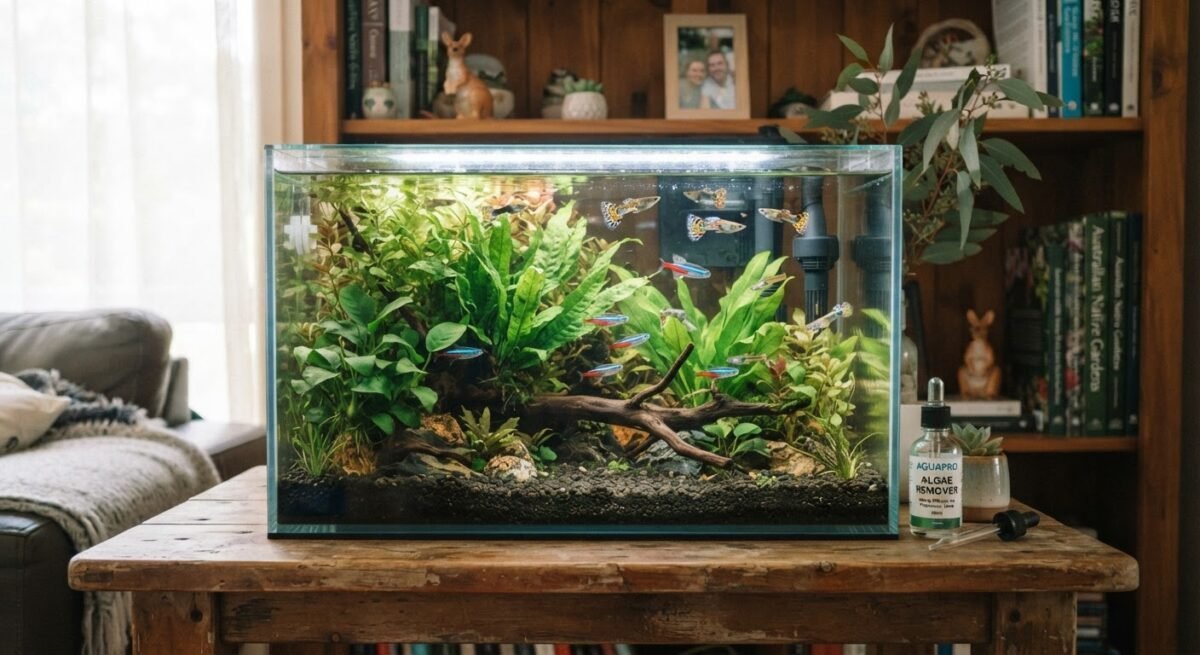
Most algae is best removed by scraping and a nerite snail, not a bottle. Use Algaefix only in a tank without invertebrates, APT Fix for black beard on hardscape, and Chemiclean for red slime, which is cyanobacteria and not true algae. None of them fix the cause, so algae returns if the light and nutrients stay the same.
The best algae remover for aquarium tanks depends on which algae you have, because there are three ways to remove it: scrape it off, get something to eat it, or dose a treatment. Scrapers and magnet cleaners handle glass, nerite snails graze it, and liquid algaecides such as API Algaefix and 2Hr Aquarist APT Fix are for hair and black beard algae, while Chemiclean is for red slime.
The number that matters is the dose, because the margin for error is small. Algaefix runs at 1ml per 38 litres, APT Fix at up to 1ml per 10 litres for spot treatment, and a 2g Chemiclean pack treats 1,135 litres. Get the volume wrong, or use one on a tank with shrimp, and a treatment can do more harm than the algae.
This list covers products and methods sold in Australia for freshwater aquariums. It leaves out marine algaecides, pond products, and anything without clear compatibility information. For everyday glass cleaning see the glass cleaner guide and the Algae hub.
Algae in Australia often starts with sunshine. Blue Planet’s Algae Cure listing names excessive lighting duration, direct sunlight and high phosphate as the usual causes, and a tank near a sunny window in an Australian summer can hit all three. Fix the light first, or any remover only buys you a week or two.
The Best Algae Remover for Aquarium Tanks, Compared
| Remover | Type | Best For | Key Spec | AU Price (29 Sep 2026) |
|---|---|---|---|---|
| Seachem Algae Scraper | Manual scraper | Green spot algae on glass | 3 blades, floats | $43.95 (31cm) |
| Nerite Snail | Biological | Ongoing glass and diatom control | Cannot breed in freshwater | $14.95 (buy 2 get 1 free) |
| API Algaefix | Liquid algaecide | Hair algae, green water | Not for shrimp or snails | $17.95 to $29.95 |
| 2Hr Aquarist APT Fix | Spot treatment | Black beard on hardscape | Avoid on moss, Vallisneria | $49.20 (300ml) |
| Chemiclean Red Slime Remover | Oxidising treatment | Red slime cyanobacteria | Needs an airstone | $38.95 |
How I Compared It
Algae removers aren’t lab-tested, so this comparison rests on Australian retailer listings and independent guides. I read product pages from The Tech Den, a Queensland retailer, and the guides from Aquarium Co-Op, Aquarium Science and Portland Aquarium. Prices and stock were checked on 29 September 2026, and the nerite price comes from the snails guide dated 27 September. Reddit could not be read directly in this session, and CHOICE and Canstar Blue do not test aquarium treatments. No product here had independent user ratings, so I haven’t ranked on reviews. Every pick is labelled Researched, in line with the site’s testing standard.
1. Seachem Algae Scraper – Best for green spot algae on glass
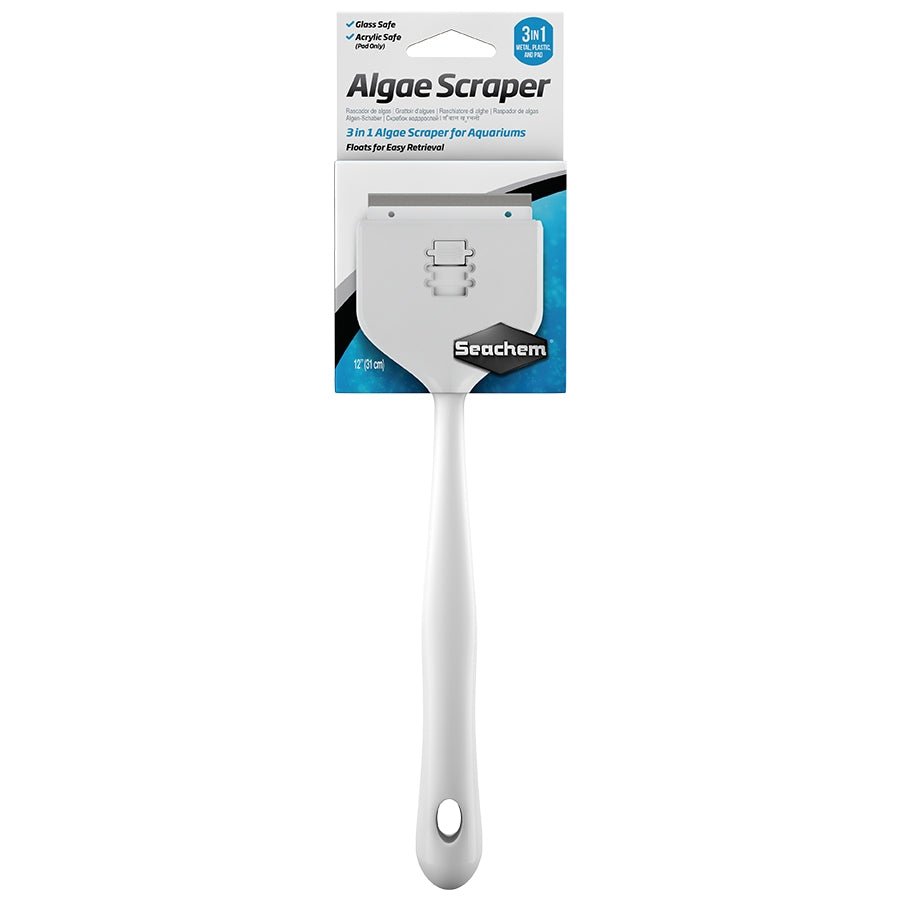
Green spot algae is the hard, dotted kind that a soft sponge won’t shift, and a blade is the recommended fix. Aquarium Co-Op’s algae guide says to scrape it off with a razor blade on a glass tank or a gift card on acrylic, which is exactly the job this scraper is built for. The Seachem Algae Scraper carries three interchangeable blades in one cartridge (metal, plastic and a soft felt pad), floats if you drop it, and has a retractable blade housing for safety.
The catch is acrylic. The retailer page says it works on glass and acrylic, but the packaging says the pad only on acrylic, so keep the metal blade for glass. Sand is the other risk. Scraper guides such as Portland Aquarium’s warn that a grain trapped under a blade or pad is what scratches a panel, so move the substrate back from the glass first.
It solves a different problem from the magnet cleaners in the gravel vacuum and glass cleaner guide. A magnet handles the everyday film, and this handles the spots the magnet skates over. The Tech Den lists the 31cm at $43.95 and the 46cm at $59.95, with a refill blade pack at $19.50.
Pros
- Three blade types in one cartridge, including a soft pad
- Floats for easy retrieval, per the retailer listing
- Scraping is Aquarium Co-Op’s recommended fix for this algae
Cons
- Manual, so it needs a hand in the tank each time
- Acrylic needs the pad only, per the packaging
- Sand trapped under a blade can scratch glass, per scraper guides
2. Nerite Snail – Best for living algae control that doesn’t need dosing

A nerite snail is the only entry here that keeps working after you walk away. Aquarium Co-Op names nerite snails as a good first line of defence against green spot algae, and the best snails for aquariums guide covers why: they strip glass without touching healthy plants and can’t reproduce in freshwater.
Two things to know before buying. Nerites lay small white egg dots on glass and decor that never hatch, which is cosmetic but visible, as Aquarium Co-Op also notes. And they need algae to graze on, so a spotless tank will starve one. Price was $14.95 with a buy two get one free deal at last check, as listed in the snails guide on 27 September 2026.
There’s an Australian catch. Tasmania’s Inland Fisheries Service applies a blanket ban on importing live invertebrates, including snails, so this option isn’t open to Tasmanian keepers. And don’t pair a nerite with Algaefix (entry 3), whose label says not to use it with snails.
Pros
- Cleans algae continuously with no dosing
- Named by Aquarium Co-Op as a good first defence for green spot algae
- Can’t breed in freshwater, so no population to manage
Cons
- Leaves white egg dots on glass and decor
- Can’t be imported to Tasmania
- Needs algae to graze on, so it can starve in a spotless tank
3. API Algaefix – Best for hair algae and green water if the tank has no invertebrates
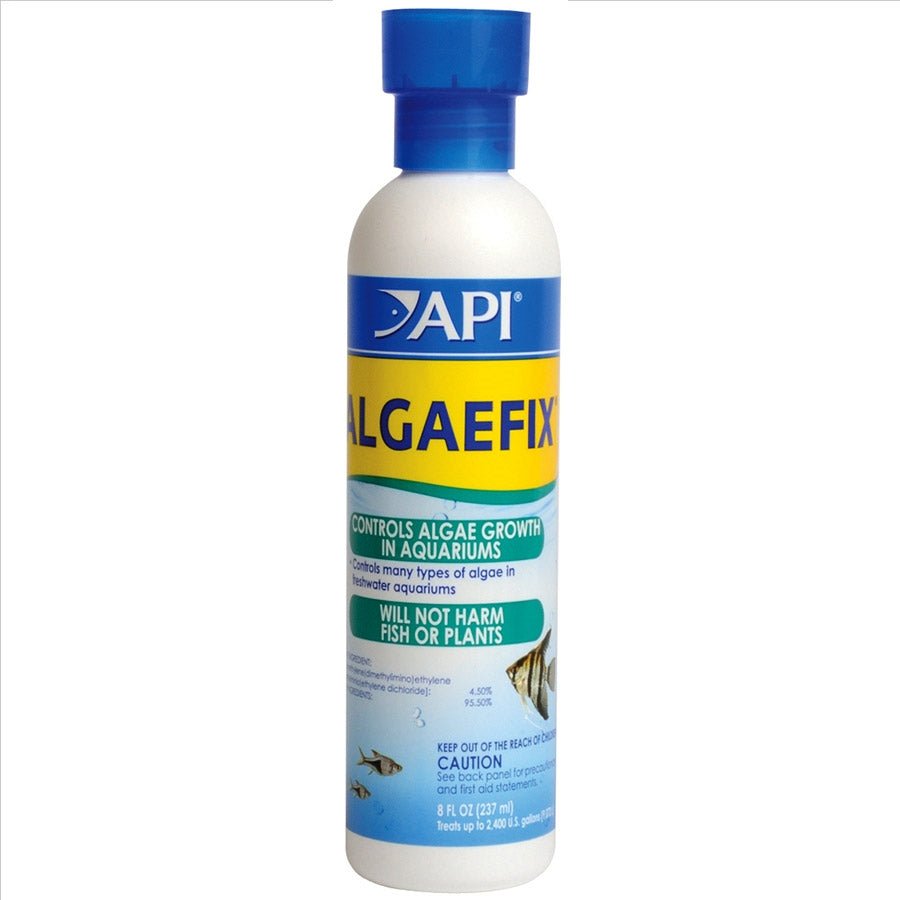
Algaefix is the mainstream liquid fix, and it’s easy to see why. The Tech Den lists it for green water and string or hair algae at 1ml per 38 litres, repeated every three days until the algae clears, then weekly. The label says it will not harm fish or plants when used as directed.
The independent evidence is less kind. Aquarium Science’s chapter on chemical algae control names polyquaternium as the active ingredient in Algaefix and similar products, says they only kill algae temporarily, and reports the algae returning within a week or two if the cause isn’t fixed. It also collects owner reports of fish and snail deaths, and its author says they have no use for chemical algae control. Treat that as a caution, not a ban.
Compatibility is the practical limit. The label says not to use it with freshwater crustaceans, including shrimp, crabs and lobsters, and the retailer page adds snails. That rules it out for any tank with shrimp or snails. It’s the cheapest fix here at $17.95 for the small bottle, but for a plain fish tank only.
Pros
- Cheapest treatment on the list from $17.95
- Lists green water and hair algae on the label
- Widely stocked in Australia
Cons
- Kills algae only temporarily if the cause remains, per Aquarium Science
- Not for shrimp, crabs, lobsters or snails, per the label and retailer
- Owner reports of fish and snail deaths collected by Aquarium Science
4. 2Hr Aquarist APT Fix – Best for spot-treating black beard algae on hardscape
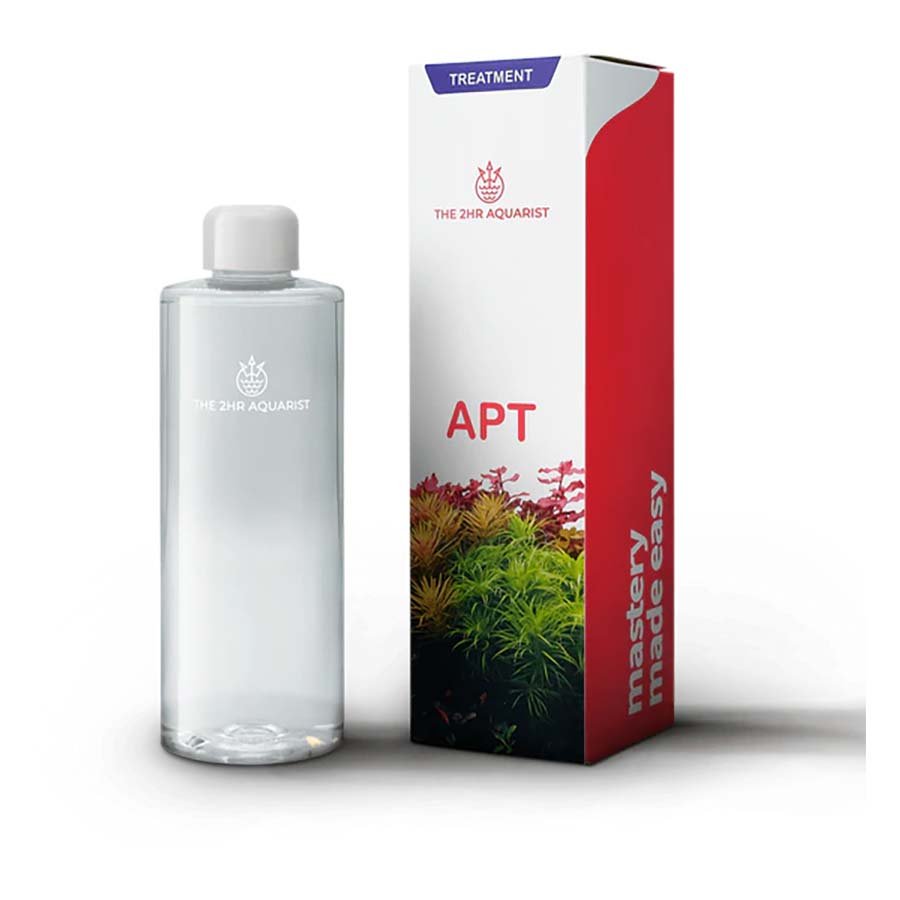
APT Fix is aimed at the algae nothing else shifts, black beard on wood and rock. The retailer listing says it targets black beard, hair, string and fuzz algae, works best on hardscape, and is a copper-free treatment that biodegrades within 24 hours. You spot-dose up to 1ml per 10 litres every 24 hours.
Be clear about the evidence. Everything above comes from the seller, and I found no independent test of it. The independent fix I did find, from Aquarium Co-Op, is spot-treating black beard with 3 per cent hydrogen peroxide out of the water for five minutes, plus a clean-up crew and patience, with removal taking six to eight months. So APT Fix is a convenience purchase, not a proven upgrade.
Check your plants before you dose. The listing says to avoid it on mosses, liverworts (Riccardia and Riccia) and Vallisneria, which matters if you keep anything from the best aquarium moss list. At $49.20 for 300ml with two in stock, it’s the priciest treatment here, so try the peroxide method first.
Pros
- Spot-dosed, so you treat the algae and not the whole tank
- Listed as copper-free and biodegrading within 24 hours
- Targets black beard, the hardest algae on this list
Cons
- Avoid on mosses, Riccia, Riccardia and Vallisneria, per the listing
- Priciest treatment here at $49.20
- Only seller claims found, no independent test
5. Chemiclean Red Slime Remover – Best for red slime (cyanobacteria)

Red slime isn’t true algae. It’s cyanobacteria, which is why algaecides and scrapers do little, and Chemiclean is the product built for it. The Tech Den lists it for red, black, blue-green and bubble-producing cyanobacteria in freshwater and saltwater tanks, at one drop per gallon, and the box says it is safe for fish and invertebrates.
The instructions are demanding. The listing calls an air pump with an airstone critically important during treatment, says to remove chemical filtration, UV sterilisers and skimmers first, and asks for a water change of at least 20 per cent after 48 hours. Aquarium Co-Op’s approach to cyanobacteria is manual removal, vacuuming and water changes, and better circulation, so those steps help either way.
One box is a lot of product. The 2g pack is sized for 1,135 litres, far more than a home tank needs, and I found no independent reviews, only the seller’s notes. At $38.95, it’s worth buying only once you’ve confirmed the slime is cyanobacteria and tried improving flow and water changes.
Pros
- Made specifically for red slime and cyanobacteria
- Label says it’s safe for fish and invertebrates
- One small pack treats a very large volume
Cons
- Needs an airstone running and chemical filtration and UV removed during treatment
- Requires a 20 per cent water change after 48 hours
- No independent reviews found, seller information only
How to Choose
Identify the algae first. Hard green dots on glass mean scrape and add a nerite. Hair or string algae means cutting the light period and, if the tank has no invertebrates, considering Algaefix. Black beard on wood or rock means spot treatment. A slimy red or blue-green sheet over the substrate is cyanobacteria and needs Chemiclean or better flow, not an algaecide.
Then fix the cause. Aquarium Science’s chapter on chemical control says algae comes back in a week or two if the underlying problem isn’t solved, and Aquarium Co-Op’s guide points to too much light or a nutrient imbalance. Shorten the lighting period, keep the tank out of direct sun, and test for nitrate and phosphate with a kit from the water test kit guide. If you run plants under strong light, the planted tank lighting guide shows how to match light to plants.
One product I left out on purpose. Blue Planet Algae Cure sells for $22.95 for 500ml at The Tech Den and lists simazine as its active ingredient, but the listing shows no warnings about shrimp, snails or plants. With no compatibility information and no reviews, I couldn’t recommend it.
Algae and Maintenance Guides
A dedicated guide to identifying each algae type isn’t published on this site yet, so use these related pages. Browse Best Snails for Aquariums for living clean-up crews, Best Gravel Vacuums & Glass Cleaners for everyday cleaning, Best Aquarium Water Test Kits for tracking nutrients, and the Maintenance hub.
Frequently Asked Questions
What is the best algae remover for an aquarium?
It depends on the algae. Scrape green spot algae with a blade scraper, add a nerite snail for ongoing grazing, and use a spot treatment only for black beard or hair algae. None of these fix the cause, so shorten your lighting period and check nitrate and phosphate, or the algae will return.
Is API Algaefix safe for shrimp and snails?
No. The label says not to use Algaefix with freshwater crustaceans, including shrimp, crabs and lobsters, and the retailer page adds snails. Aquarium Science also collects owner reports of fish and snail deaths from similar algaecides, so it’s a poor fit for any tank with invertebrates.
How do I get rid of red slime algae?
Red slime is cyanobacteria, not true algae. Aquarium Co-Op recommends removing it by hand, vacuuming the substrate, doing water changes and improving circulation with an airstone or powerhead. Chemiclean is a treatment made for it, but it needs an airstone running and a water change of at least 20 per cent afterwards.
Why does algae keep coming back after treatment?
Because the treatment kills the algae, not the cause. Aquarium Science says algae typically returns within a week or two if the underlying problem remains. Common causes are too many hours of light, direct sunlight and excess phosphate, so reduce the lighting period and check your nutrient levels.
Will algae removers harm live plants?
Some can. The APT Fix listing says to avoid it on mosses, Riccia, Riccardia and Vallisneria, and Aquarium Science reports plant damage from some algaecides at the wrong dose. Scraping and nerite snails don’t harm healthy plants, so they’re the safer first step in a planted tank.
For most Australian tanks, start with a scraper and a nerite snail, the two options here that don’t involve dosing anything. Use 2Hr Aquarist APT Fix, or the peroxide method Aquarium Co-Op describes, only for black beard on hardscape, and reserve Chemiclean for confirmed red slime. Skip Algaefix if you keep shrimp or snails, and whichever you choose, cut the lighting period and keep the tank out of direct sun, because none of these removers fix the reason the algae grew.
