

Java moss is the easiest, cheapest and most forgiving pick, and the safest first buy for most tanks. Christmas moss looks best on driftwood, and the finer weeping, Taiwan and phoenix mosses cost more and prefer water under about 25 C, which many Australian tanks pass in summer.
The best aquarium moss is a low-light plant with no roots that you tie to wood or rock, and it’s the cheapest way to add cover, biofilm and texture to a freshwater tank. Java moss, Christmas moss, weeping moss, flame moss, Taiwan moss, willow moss and phoenix moss are the seven types Australian aquarium shops list most, and each grows in a different shape for a different job.
The number that matters is temperature. Micro Aquatic Shop, a Sydney retailer, says most mosses sulk above 27 C, and its listings put weeping and phoenix moss as low as 25 C. Light and CO2 barely matter by comparison, because every moss here is rated for low to moderate light and none needs CO2 injection.
This list covers true mosses sold for freshwater aquariums. It leaves out marimo balls (a ball-forming alga, not a moss), floating plants and carpeting plants. For the wider picture see the site’s guides to the best aquarium plants for beginners and the Live Plants hub.
Several Australian retailers do not ship live plants everywhere. Micro Aquatic Shop’s weeping moss, flame moss and phoenix moss listings all say it cannot ship live plants to Western Australia, the Northern Territory or Tasmania because of state restrictions. If you live in one of those, check the seller’s shipping terms first, and never tip spare moss into a creek or stormwater drain.
The Best Aquarium Moss, Compared
| Moss | Type | Best For | Key Spec | AU Price (29 Sep 2026) |
|---|---|---|---|---|
| Java Moss | Spreading mat | Beginners and shrimp tanks | 20-28 C, low to moderate light | $9.95 to $18.00 |
| Christmas Moss | Fir-tree fronds | Driftwood trees | 20-28 C, slower growth | $14.95 to $24.95 |
| Weeping Moss | Downward growth | Overhangs and ledges | 18-25 C | $19.95 to $29.95 |
| Flame Moss | Upright shoots | Vertical accents | 5-15cm tall, slow spread | $24.95 to $27.95 |
| Taiwan Moss | Fine branching | Nano tanks and twigs | Low to medium light | $24.95 to $44.95 |
| Willow Moss | Long strands | Cooler tanks and back walls | 15-28 C | $10.95 to $24.95 |
| Phoenix Moss | Feathery domes | Showpiece on rock | 18-25 C, slow | $24.95 to $34.95 |
How I Compared It
Moss isn’t lab-tested, so this comparison rests on retailer listing data and independent hobby guides. I compared temperature, light, growth and portion details on Micro Aquatic Shop, Liverpool Creek Aquariums and Aquafy, read the moss guides from Micro Aquatic Shop, Canton Aquatics and Wikipedia, and used the retailers’ own on-page reviews where they existed. Prices and stock were checked on 29 September 2026. Reddit could not be read directly in this session, and CHOICE and Canstar Blue do not test aquarium plants, so no forum or lab ratings are quoted. I haven’t grown these mosses myself for this post, so every pick is labelled Researched, in line with the site’s testing standard.
1. Java Moss (Taxiphyllum barbieri) – Best for beginners and shrimp tanks
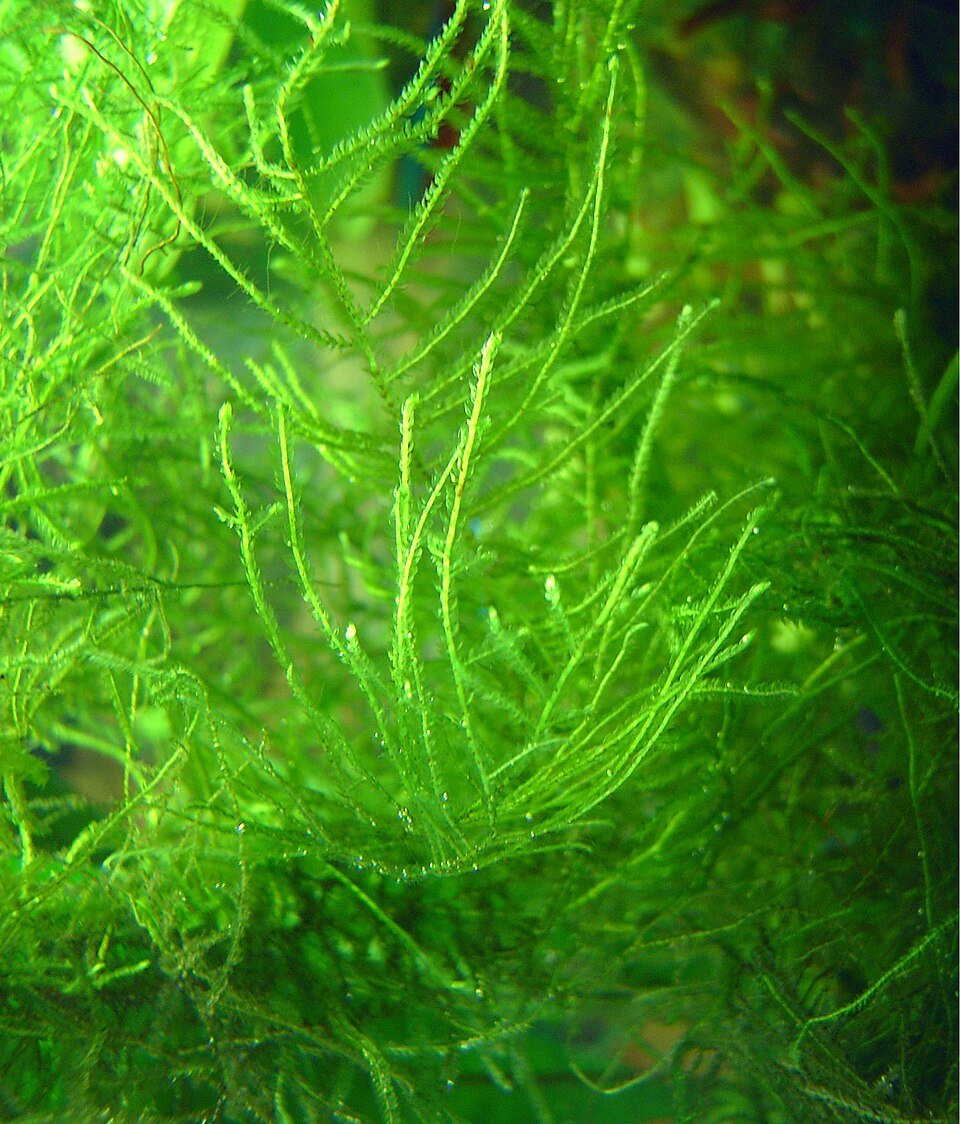
Java moss is the default answer for a reason. Micro Aquatic Shop’s own guide calls it impossible to kill and says it grows in any light, and the buyer feedback on its Java moss page backs that up: 30 reviews at 5 out of 5, with one owner reporting it was already spreading like wildfire. Those are the shop’s own on-page reviews, so treat them as friendly evidence, not an independent rating. The hobby guides I read agree with the retailer on the basics anyway (low to moderate light, no CO2, any position in the tank).
It does one job better than everything else here, which is cover. A tangled mat gives shrimplets and fry somewhere to hide from day one and holds a permanent film of biofilm for them to graze. That’s why it sits first for shrimp tanks, ahead of the finer, tidier mosses further down this list.
The trade-off is that it’s untidy. Left alone, Java moss grows into a shaggy ball that traps debris, and it needs regular haircuts to look deliberate. A Christmas moss clump (entry 2) stays neater, but it grows slower and costs more.
Pros
- Cheapest moss on this list from the big Australian retailers
- Tolerates almost any light level and no CO2
- Dense cover for shrimplets and fry
Cons
- Grows shaggy and traps debris without regular trimming
- Looks messy compared with Christmas or Taiwan moss
- Can spread past where you wanted it
2. Christmas Moss (Vesicularia montagnei) – Best for driftwood trees

Christmas moss is the one you buy for the shape. Its side branches fan out into flat, triangular fronds that read as tiny fir trees, and Micro Aquatic Shop calls it the industry standard canopy for bonsai-style driftwood. The Australian retailer page shows 11 reviews averaging 91 per cent five-star, with buyers mentioning healthy arrival and new growth within days.
The guides don’t fully agree on its light needs. Micro Aquatic lists low to moderate, while Canton Aquatics says moderate and warns it grows slower than Java moss and needs regular pruning to hold its shape. In practice that means it will live in a dim tank but earns its keep with a bit more light.
Pricing is the split between retailers. Aquafy lists it from $14.95 for a 6x6cm flat portion, while Micro Aquatic and Liverpool Creek Aquariums both sit at $24.95. Micro Aquatic’s Christmas moss was sold out at last check, so compare stock before you decide who to buy from.
Pros
- Neat, tree-like fronds that hold their shape on wood
- Easy care at low to moderate light, no CO2
- Buyer feedback on the Australian listing is consistently positive
Cons
- Slower to fill in than Java moss
- Needs regular trimming to stay neat, per Canton Aquatics
- Price varies by $10 between retailers for a similar portion
3. Weeping Moss (Vesicularia ferriei) – Best for overhangs and driftwood curtains

Weeping moss is the only common moss that grows downward, which is the whole appeal. Attach it to the top of a branch or a ledge and the fronds droop like a willow, giving you an instant hanging curtain without any trimming into shape.
Micro Aquatic Shop describes it as relatively fast-growing for a moss and says it copes with brighter light than most. The catch is the heat ceiling. Its listing gives 18.3 to 25 C, a full three degrees under the 28 C top end of Java, Christmas and flame moss, and that matters more than it sounds in an Australian summer.
Value depends on where you shop. Aquafy lists it at $19.95 on an 8x8cm mesh, Liverpool Creek Aquariums at $29.95, and Micro Aquatic’s loose portion was sold out. If your tank runs warm, Java or flame moss will cope better than this one.
Pros
- Unique downward growth gives a natural willow-curtain look
- Faster growing than most mosses, per Micro Aquatic
- Copes with brighter light than typical moss
Cons
- Lowest heat ceiling on the list at 25 C
- Price ranges from $19.95 to $29.95 across retailers
- Only looks its best attached high on wood or rock
4. Flame Moss (Taxiphyllum sp.) – Best for vertical accents between stones
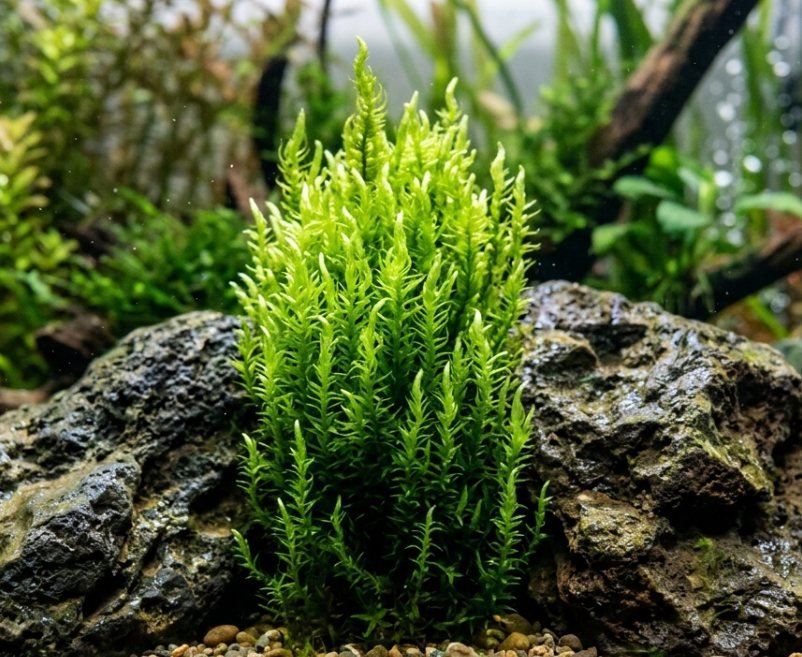
Flame moss grows straight up in tight, gently twisting shoots that Micro Aquatic Shop lists at 5 to 15cm tall, spreading only slowly sideways. Treat it as punctuation, not a carpet. A patch tucked between two stones looks like a small green campfire, and Micro Aquatic’s own guide says to use it sparingly for exactly that reason.
It grows slowly, so you’re paying for patience. Every Australian listing I checked sat at $24.95 for a small portion (a 5x5cm flat at Aquafy, a 50 cent coin sized loose piece at Micro Aquatic), and the tissue culture version at Aquafy was $27.95. Both shops were sold out of the standard portion at last check, so stock comes and goes.
Retailer copy for this moss claims it reduces algae and absorbs nitrates. I’d treat that as marketing, not a reason to buy it. Buy flame moss for how it looks, and use Java moss (entry 1) if you want a plant that fills space fast.
Pros
- Distinctive upright flame shape no other moss copies
- Compact upright shoots that stay in a defined 5-15cm patch
- Handles the same 20-28 C range as Java moss
Cons
- Slow growth and a $24.95 starting price for a small portion
- Sold out at Micro Aquatic and Aquafy at last check
- Needs a real anchor point or it floats free
5. Taiwan Moss (Taxiphyllum alternans) – Best for nano tanks and fine twigs

Taiwan moss has fine, branching fronds that stay in scale in a small tank. Micro Aquatic Shop’s guide singles out the mini version for nano setups and fine twigs, and its listing rates it easy, low to medium light, with CO2 optional. If Java moss looks too coarse in a 20 litre nano, this is the swap.
The naming is a genuine trap. Retailers sell Taiwan moss, Mini Taiwan moss and Taiwan moss on mesh under different prices. At last check Micro Aquatic listed a Taiwan moss established on 8x8cm mesh at $44.95 (down from $55.00, with 2 units left), while Liverpool Creek listed Mini Taiwan Moss at $24.95. Compare the portion size before you compare the price.
You also pay for the neatness. It costs more per portion than Java moss, so it suits a small, deliberate scape better than a big tank you want covered quickly.
Pros
- Fine fronds that suit small tanks and thin branches
- Easy care with CO2 optional
- Works in foreground, midground or on hardscape
Cons
- Confusing names and portion sizes across retailers
- $24.95 to $44.95 depending on portion
- Low stock at Micro Aquatic at last check
6. Willow Moss (Fontinalis antipyretica) – Best for cooler tanks and flowing back walls

Willow moss grows in long, flowing strands, and Micro Aquatic Shop says it softens a back wall in a few months. It suits a tall tank where you want movement instead of a tidy mound, and it’s the cheapest way to cover a lot of background.
The listing range of 15 to 28 C is the widest low end on this list, which makes it the moss to reach for in an unheated tank in Melbourne, Canberra or Hobart, where winter water temperatures sit well under what a tropical heater holds. It’s the same reason Java moss (entry 1) works for most southern tanks but the weeping moss above doesn’t handle a hot northern summer.
Availability is the weak point. Micro Aquatic’s willow moss was sold out at $24.95 and Aquafy’s Rare Giant Willow Moss was also sold out, though Aquafy’s plain Willow Moss was in stock at $10.95 for a 5x5cm portion. It’s a stock-watching purchase, not something you can always add to a cart today.
Pros
- Widest temperature range on the list, from 15 C
- Long flowing strands cover a back wall
- Cheap at $10.95 when Aquafy has it
Cons
- Sold out at Micro Aquatic at last check
- Loose, wispy look won’t suit a tidy scape
- Less documented than Java or Christmas moss
7. Phoenix Moss (Fissidens fontanus) – Best for a showpiece on rock

Phoenix moss is the luxury pick. Micro Aquatic Shop’s guide describes feathery domes that look expensive because they are, and its listing says it attaches easily to wood and stone and slowly builds dense mats. The point is display value, not utility.
The price and the heat range both limit it. Micro Aquatic lists loose portions at $24.95 and 5x5cm mesh at $34.95, Liverpool Creek at $34.95, with Aquafy sold out at $25.95. The 18.3 to 25 C range is the same tight window as weeping moss, so it suits a cooler room or a tank with a fan, not a north Queensland summer.
Its listing rates care as easy to moderate, a notch harder than Java moss. Buy it last, after you’ve kept an easier moss alive first.
Pros
- Dense, feathery growth on rock that looks like a small tree
- Attaches easily to wood and stone
- Listed as easy to moderate care, so it’s beginner-possible
Cons
- Slowest grower on the list
- Narrow 18-25 C temperature window
- Premium price for the slowest grower here
How to Choose
Start with your water temperature, not the look. Put a thermometer in the tank for a week in summer. If it sits under 25 C, every moss here will work. If it climbs above 27 C, stick to Java, Christmas, flame or willow moss and skip weeping and phoenix. The guide to the best aquarium heaters covers keeping temperature steady, and a stable tank suits moss far better than a swinging one.
Then match the moss to the job. Cover for shrimp means Java moss. A driftwood tree means Christmas moss. Something to hang over a ledge means weeping moss. In a nano tank, Taiwan moss keeps its scale. Budget matters too, since a Java moss portion from $9.95 covers far more area than a $34.95 phoenix moss patch.
Two habits keep any moss alive. Tie it to wood or rock with cotton thread or glue gel, because loose moss floats off and clogs filters. And trim it lightly and often, because thick clumps go brown at the core. Pair it with a light suited to planted tanks and the right planted tank substrate if the tank also has rooted plants.
Aquarium Plant Guides
Dedicated moss care guides aren’t published on this site yet, so use these related pages instead. Browse Best Aquarium Plants for Beginners for rooted and stem plants, Best LED Lights for Planted Aquariums for lighting, Best Substrates for Planted Aquariums for the tank floor, and the Plants & Decor hub for everything else.
- best aquarium carpet plants
- what plants you can put in a fish tank
- best fish for planted aquariums
- best background plants for aquariums
Frequently Asked Questions
What is the best aquarium moss for beginners in Australia?
Java moss is the easiest choice. It grows under modest lighting, needs no CO2, tolerates a wide temperature range of about 20 to 28 C, and costs from around $10 to $18 from Australian retailers. It’s also the moss with the most positive buyer feedback, so it’s the safest first purchase.
Does aquarium moss need CO2 or special lighting?
No. Java, Christmas, flame, weeping, Taiwan, willow and phoenix moss are all listed by Australian retailers for low to moderate light with no CO2 injection required. Brighter light can speed growth, but it also encourages algae on the fronds, so most keepers stay at low to moderate.
Why is my aquarium moss turning brown?
Heat and thick clumps are the usual causes. Micro Aquatic Shop notes most mosses struggle above 27 C, and dense mats can go brown at the centre where light and flow don’t reach. Trim lightly, keep water cooler, and check the moss isn’t smothered by debris before blaming the water.
How do I attach moss to driftwood or rock?
Tie it on with cotton thread or use a small dab of cyanoacrylate glue gel. Spread the moss thinly, because thick pads trap debris. Over time the moss grows its own anchoring rhizoids and the thread can be trimmed away or left to rot.
Can I buy aquarium moss in Western Australia or Tasmania?
It depends on the seller. Micro Aquatic Shop says on its flame, weeping and phoenix moss pages that it cannot ship live plants to Western Australia, the Northern Territory or Tasmania because of state restrictions. Check each retailer’s shipping terms before ordering, or look for a local store.
For most Australian tanks, Java moss is the best aquarium moss to start with: cheap, forgiving and excellent cover for shrimp and fry. If you want a neater look on driftwood, Christmas moss is the better-looking upgrade. If your tank runs cool or you’re in the southern states, willow moss gives the most background for the least money, and weeping or phoenix moss are worth their higher price only if you can keep the water under 25 C.
