

The best centerpiece fish for community tank setups are the one or two eye-catching fish that anchor the display, usually larger and more graceful than the schooling fish around them. In Australia the reliable choices are gouramis and cichlids, mainly pearl gourami, angelfish, kribensis and the ram cichlids, and each one only works when the tankmates and tank size are right.
The number that matters is tank volume. A kribensis pair fits 71 litres, a pearl gourami wants 81 litres, and an angelfish needs about 200 litres in a tall tank, so a 60 cm starter tank cannot hold most of these. This list gives each fish’s real size and space needs so you can pick a focal fish that suits your tank.
It covers five centerpiece fish sold in Australia, all permitted on the federal import list. It leaves out betta fish, which Seriously Fish does not recommend for a standard community, and dwarf gourami, which is covered in the best community fish.
Pearl gourami is the safest centerpiece for a typical community tank, because Seriously Fish calls it one of the most peaceful gouramis. Angelfish are the classic showpiece but need a tall 200 litre tank and no tiny tetras. Kribensis suit smaller tanks. The two ram cichlids are attractive but not true community fish, so use them with care.
The Best Centerpiece Fish for Community Tank Setups, Compared
| Fish | Type | Best For | Key Spec |
|---|---|---|---|
| Pearl Gourami (Trichopodus leerii) | Labyrinth fish | Most community tanks | 12 cm, 81 L, one male per tank |
| Angelfish (Pterophyllum scalare) | Cichlid | Tall, large community tanks | 15 cm, about 200 L, 50 cm tall tank |
| Kribensis (Pelvicachromis pulcher) | Dwarf cichlid | Mid-size tanks with caves | 10 cm, 71 L for a pair |
| Bolivian Ram (Mikrogeophagus altispinosus) | Dwarf cichlid | Calm tanks with Corydoras | 8 cm, about 182 L, 24 to 28 C |
| German Blue Ram (Mikrogeophagus ramirezi) | Dwarf cichlid | Warm, pristine nano-community tanks | 4 cm, 54 L, 27 to 30 C |
How I Compared It
I have not kept all five myself, so each pick is labelled Researched, as promised on the How We Test page. Size, temperature and temperament come from Seriously Fish species pages, and I checked each species against the federal permitted import list effective 17 May 2024. Australian prices came from Coburg Aquarium and Micro Aquatic Shop on 29 September 2026. Prices move often and many lines sell out, so recheck before buying. Reddit and forums were unreadable, ProductReview.com.au only rates stores, and CHOICE does not test livestock.
1. Pearl Gourami (Trichopodus leerii) – Best for most community tanks
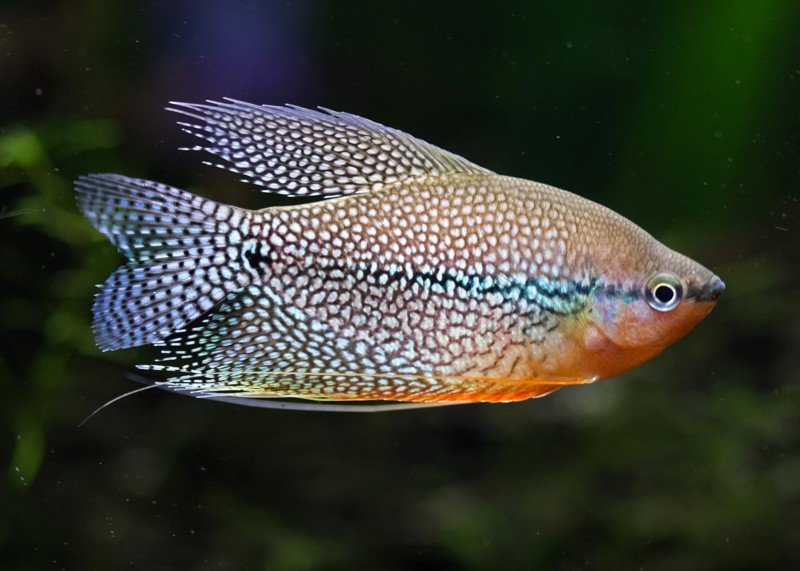
Pearl gourami earns first place on evidence. Seriously Fish calls it one of the most peaceful gouramis and an excellent community fish, unfussy about food, hardy and possibly living 8 years or more. Males in breeding dress show an orange or red throat, and both sexes are spotted like a lace pattern. It also eats hydra, an aquarium pest.
The rule is one male per tank, since males are territorial with each other. Provide hiding places, and avoid vigorous tankmates. At $6.95 from Coburg Aquarium, it is cheap for a showpiece. Versus the angelfish below, it looks less dramatic but needs less than half the water volume.
Pros
- Peaceful and hardy, per Seriously Fish
- Lives 8 years or more
- Cheap at $6.95 from one retailer
Cons
- Only one male per tank
- Avoid fast, boisterous tankmates
- Needs an 81 litre tank
2. Angelfish (Pterophyllum scalare) – Best for tall, large community tanks
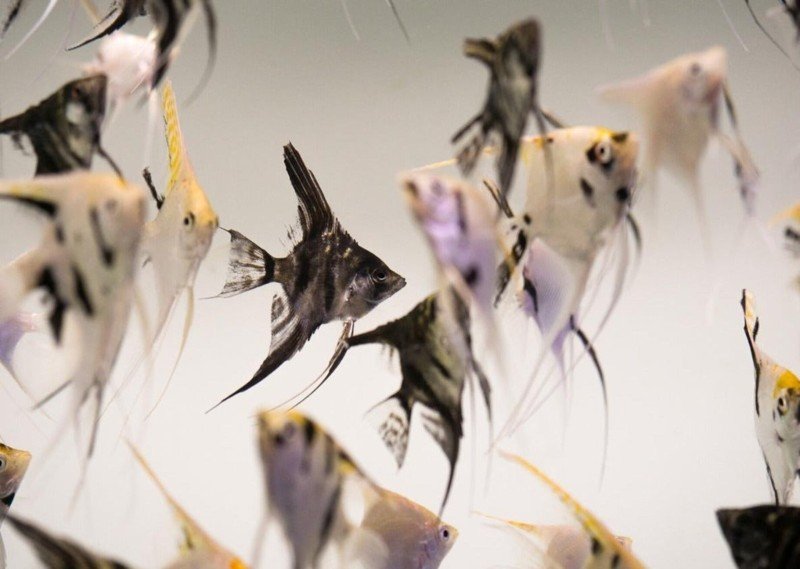
Angelfish are the classic centrepiece. Seriously Fish rates them as generally peaceful cichlids that suit community tanks, but adds that they may squabble with their own kind and may eat small fish such as tetras. Adult fish need a tall tank of at least 50 cm, about 200 litres, which is a serious commitment. It also notes most are mass-produced overseas rather than wild caught.
Price starts at $5.95 for an assorted juvenile at Coburg Aquarium and climbs to $24 for a 4 cm named variety at Micro Aquatic Shop. Do not put neon tetras in with them. Compared with the pearl gourami above, angelfish look more dramatic but demand a much taller tank and more careful stocking.
Pros
- Graceful, tall showpiece fish
- Cheap as juveniles, from $5.95
- Accepts flake, pellets and frozen foods
Cons
- Needs about 200 litres and a 50 cm high tank
- May eat small fish such as tetras
- Squabbles with its own kind
3. Kribensis (Pelvicachromis pulcher) – Best for mid-size tanks with caves

Kribensis are the small cichlid with big colour: a pink belly on the female, and a yellow-orange face and spotted tail. Seriously Fish recommends them for community tanks with small characins, barbs, danios, rasboras, Corydoras and gouramis, and says a pair fits 71 litres. Coburg Aquarium lists them at $5.95, and calls them peaceful.
They become very territorial when breeding, so give clay pots, caves and wood. A pair lays up to 300 eggs in a cave and both parents guard the fry, which is fun but can bully smaller tankmates. Compared with the German blue ram below, they are hardier and cooler, though more possessive.
Pros
- Recommended for community tanks, per Seriously Fish
- Fits a 71 litre tank for a pair
- Cheap at $5.95
Cons
- Very territorial when breeding
- Needs caves or clay pots
- Keep in pairs, not groups
4. Bolivian Ram (Mikrogeophagus altispinosus) – Best for calm tanks with Corydoras
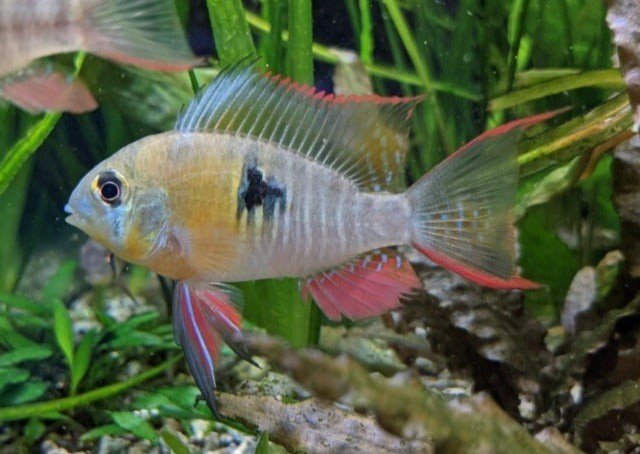
The Bolivian ram is a hardier, cooler alternative to the German blue ram. Seriously Fish says it is arguably a better choice for less-experienced aquarists than its cousin, at 8 cm and 24 to 28 C, but also says it is not recommended for the general community aquarium, despite how shops sell it. Pair it with peaceful characins and Corydoras.
That advice is honest and worth heeding. It wants a 90 x 45 cm base of about 182 litres for one fish or a pair, and it sifts sand for food. Price is $4.95 at Coburg Aquarium and $29.00 at Micro Aquatic Shop, a big gap. Against angelfish above, it is calmer but hardly a fit for busy community tanks.
Pros
- Hardier than the German blue ram, per Seriously Fish
- Peaceful with characins and Corydoras
- Cheap at $4.95 from one retailer
Cons
- Not recommended for a general community
- Needs about 182 litres
- Price varies widely between shops
5. German Blue Ram (Mikrogeophagus ramirezi) – Best only for warm, pristine nano-community tanks
German blue rams are stunning and small, but this is the hype-versus-reality entry. Seriously Fish says they are not recommended for the general community aquarium, need 27 to 30 C and should not go into an immature tank. It also says commercial line-bred stock is often genetically weak, susceptible to disease and short-lived.
That matches the price gap: Coburg Aquarium sells a blue ram for $7.50, while Micro Aquatic Shop charges $35 for balloon ram varieties, which look strange and are more fragile. Warm water also limits tankmates. Compared with the Bolivian ram above, it is prettier but far less forgiving, so keep it to a warm, mature tank.
Pros
- Small and striking, at 4 cm
- Fits a 54 litre tank for a pair
- Cheap at $7.50 for a standard blue ram
Cons
- Line-bred stock is weak and short-lived, per Seriously Fish
- Needs 27 to 30 C, which limits tankmates
- Not recommended for the general community
How to Choose
Start with your tank size, then choose the fish. A tall 200 litre tank suits angelfish, an 81 litre tank suits a pearl gourami, and a 71 litre tank suits a kribensis pair. Then pick calm schooling fish for the middle, as covered in the best schooling fish, and add plants for cover.
Never mix two territorial centerpieces in one tank. If you are new to fishkeeping, see the best aquarium fish for beginners first, and keep the tank cycled before you add the star fish. Unsure? Add the centerpiece last, so it does not claim the whole tank before the others arrive.
All five species appear on the federal permitted import list that took effect on 17 May 2024, but state rules are separate. Tasmania restricts freshwater fish imports, Western Australia and the Northern Territory add their own rules, and I could not confirm every state for every species. Angelfish and cichlids can also become pests if released, so never release aquarium fish, and check with your state fisheries agency before buying.
Community Tank Guides
Explore the best community fish, the best freshwater aquarium fish and the best Australian native aquarium fish, plus the Stocking hub for more.
- how to add new fish to a tank
- how many fish a tank can hold
- community fish tank setup ideas
- how often to feed fish
Frequently Asked Questions
What is a centerpiece fish?
A centerpiece fish is the single standout fish or pair that draws the eye in a tank, usually larger, more colourful or more graceful than the schooling fish around it. In a community tank it should be peaceful enough to live with the others, so the aim is one focal species, not several competing ones.
How many centerpiece fish should I keep?
Usually one, or one pair. Seriously Fish says to keep only one male pearl gourami per tank, kribensis are best kept in pairs, and angelfish squabble with their own kind. Adding several different centrepiece species at once tends to cause chasing and stress, so build the tank around one and choose calm schooling fish to fill the rest.
Will an angelfish eat my neon tetras?
It can. Seriously Fish notes angelfish may eat small fish such as tetras, and adult angelfish grow to about 15 cm in a tall tank. Pair them with larger, calmer schooling fish or bottom dwellers instead. If you love neon tetras, choose a smaller centerpiece such as a pearl gourami or keep the tetras out.
Can I keep a Bolivian ram or German blue ram in a community tank?
Carefully. Seriously Fish says both are not recommended for the general community aquarium, and prefers peaceful open-water characins and Corydoras as tankmates. The German blue ram also needs 27 to 30 C and pristine water, so it clashes with cooler community fish. Beginners should choose a Bolivian ram over a German blue ram.
Do I need a big tank for a centerpiece fish?
It depends. A kribensis pair needs about 71 litres and a German blue ram pair about 54 litres, while a pearl gourami wants 81 litres, a Bolivian ram 182 litres and an angelfish about 200 litres in a tank at least 50 cm tall. Choose the fish that fits your tank length and height, not the reverse.
For most Australian community tanks, choose a pearl gourami, because Seriously Fish calls it peaceful and it fits an 81 litre tank. Pick an angelfish if you have a tall 200 litre tank and no tiny tetras, and a kribensis pair for a mid-size tank with caves. Treat the Bolivian and German blue rams as careful extras, not true community fish.
