
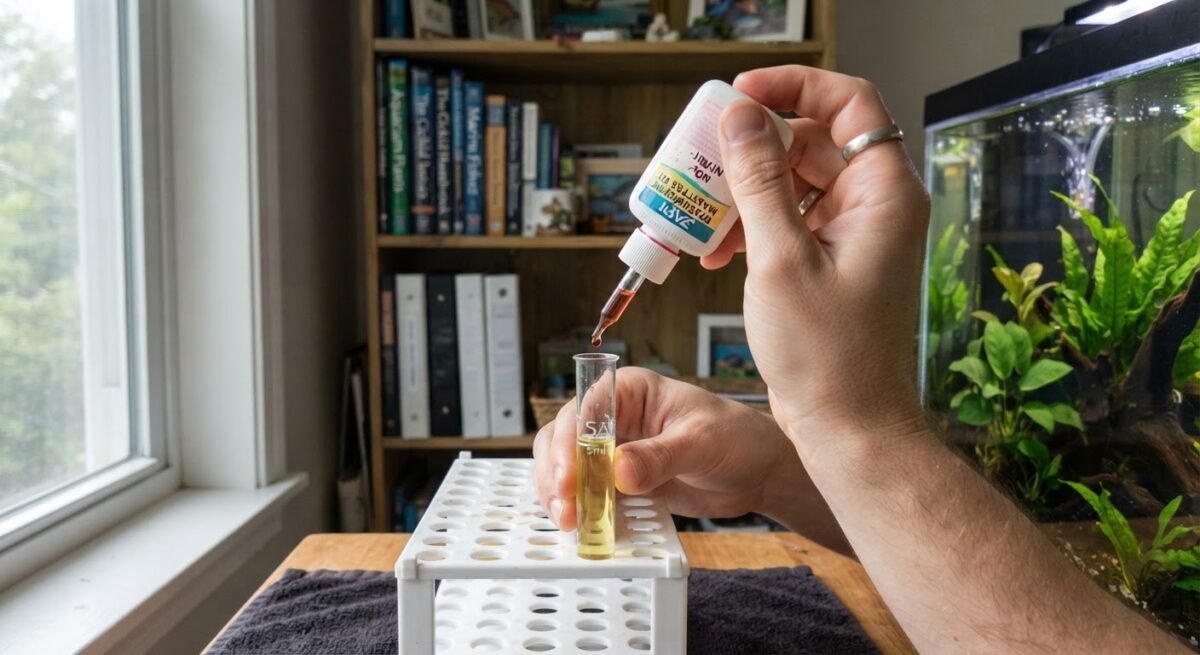
If your tap water is chloraminated, which covers most Australian capital cities, Seachem Prime is the safer default because it detoxifies the ammonia left behind by breaking the chloramine bond, not just the chlorine itself. A plain dechlorinator like API Tap Water Conditioner is fine for a mature, cycled tank, but not the safer choice during a fishless cycle.
A water conditioner isn’t optional if you’re using tap water for your aquarium, but not every conditioner actually does the same job, and the difference matters more in Australia than a lot of imported advice lets on.
Most Australian capital cities treat their water with chloramine rather than plain chlorine, because it’s more stable across long pipe networks. Neutralising chloramine is a two-part job: break the chlorine-ammonia bond, then deal with the free ammonia that reaction releases. Not every conditioner does both parts, and that second part is exactly where a lot of beginner advice written for chlorine-only water falls short.
I haven’t run all four of these side by side in a controlled test, so treat this as a researched comparison of what each product actually claims and what independent reports back up, rather than a hands-on lab result (see how we test).
Check your own water authority’s site to confirm whether your supply uses chlorine or chloramine. If it’s chloramine, and it very likely is if you’re in a capital city, a conditioner that only breaks the bond without detoxifying the resulting ammonia leaves a real gap, especially during a fishless cycle when there’s no established biofilter yet to absorb that ammonia.
Best Water Conditioners for Australian Tap Water, Compared
| Conditioner | Handles Chloramine Ammonia? | Best For | Approx. AU Price |
|---|---|---|---|
| Seachem Prime | Yes | Everyday use, new tanks, chloraminated water | ~$24 / 500mL |
| Seachem Safe | Yes | Large tanks or frequent big water changes | ~$30-40 / 250g |
| API Tap Water Conditioner | No | Budget dosing on an established, cycled tank | ~$15-20 / 473mL |
| API Stress Coat Plus | No | New fish or after handling, slime coat support | ~$18-25 / 237mL |
How I Picked These
Seachem and API turned out to be the two brands that genuinely dominate real consensus in this category, so this list leans on both rather than padding in a third brand for the sake of variety. I checked what each product’s own label actually claims, cross-referenced that against independent comparisons of the ammonia-detoxifying difference between Prime-style and plain dechlorinators, and checked current Australian retailer availability and indicative pricing. Prices are approximate Australian ranges rather than a single locked-in quote, since retailer pricing moves around, so check current pricing before you buy.
1. Seachem Prime – Best Overall
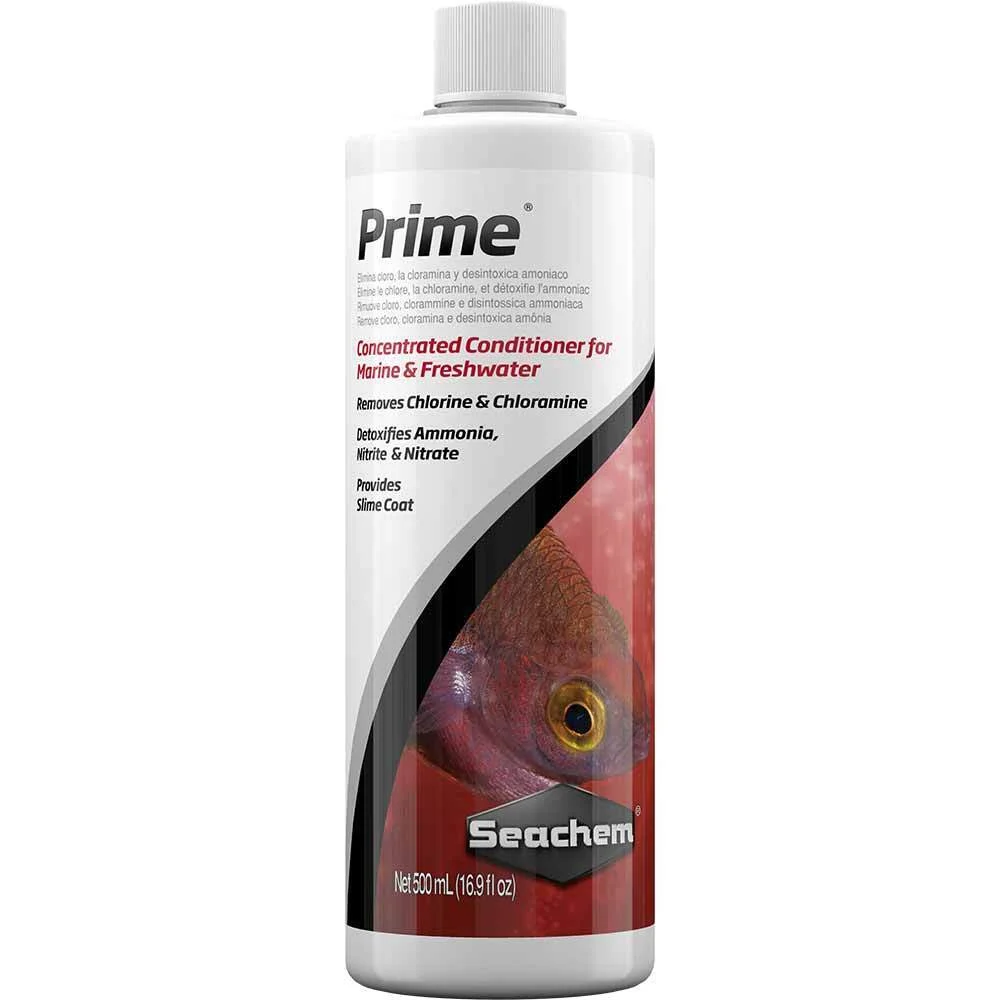
Prime is the closest thing this category has to a universal recommendation, and the reason is specific, not just brand loyalty. Breaking the chlorine-ammonia bond in chloramine is only half the job: that reaction leaves free ammonia behind in the water, and Prime is one of the few conditioners that also detoxifies that ammonia, along with nitrite and nitrate, for up to about two days while your filter catches up.
That matters more than it sounds. A plain dechlorinator that only breaks the chloramine bond can leave a genuine ammonia reading on your test kit straight after a water change, which is confusing and worrying if you don’t know that’s what’s happening. Prime is concentrated enough that one 500 millilitre bottle treats a large number of average-sized water changes, so the per-use cost is lower than the bottle price suggests.
The real trade-off is smell and dosing precision. Prime has a distinct sulphur-like smell straight out of the bottle that puts some new keepers off before they realise it’s normal, and because it’s so concentrated, overdosing by eyeballing it rather than measuring is easy to do by accident.
Pros
- Detoxifies the free ammonia left behind by breaking chloramine, not just the chlorine itself
- Very concentrated, so the real cost per water change is low
- Also covers nitrite and nitrate temporarily during a spike
Cons
- Strong smell straight from the bottle surprises first-time buyers
- Easy to overdose if you’re not measuring carefully
- Slightly pricier upfront per bottle than a basic dechlorinator
2. Seachem Safe – Best Value for Larger Tanks
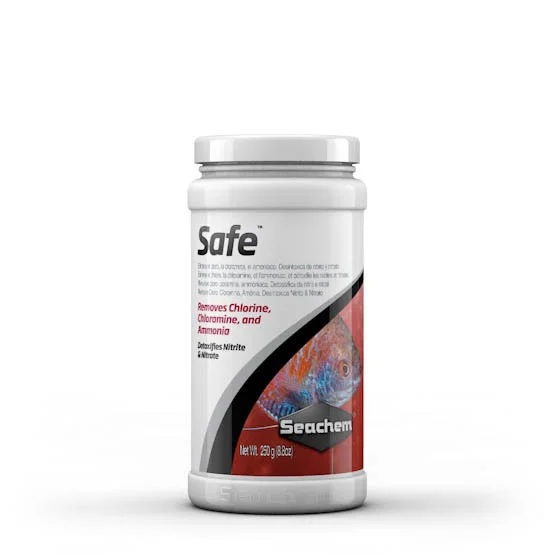
Safe is essentially Prime in powder form, made by the same company with the same chlorine, chloramine and ammonia detoxifying action. The difference is economics at scale: a powder is far cheaper per litre of water treated than an equivalent liquid, which matters once you’re doing large water changes on a big tank or running several tanks at once.
The trade-off is convenience. A powder needs to be measured by weight or with a scoop rather than simply squeezed from a bottle, which is a small extra step that a liquid conditioner doesn’t ask for. For an occasional small water change on one community tank, that extra step isn’t worth it over Prime; for a fishroom or a large tank done regularly, it adds up to real savings.
Pros
- Much cheaper per litre treated than any liquid conditioner on this list
- Same ammonia, nitrite and nitrate detoxifying action as Prime
- A little goes a long way for a large tank or multiple tanks
Cons
- Measuring a powder is an extra step compared to a liquid dose
- Less convenient for a single small tank done occasionally
- Container size makes it awkward for very fine, precise dosing
3. API Tap Water Conditioner – Best Basic Dechlorinator
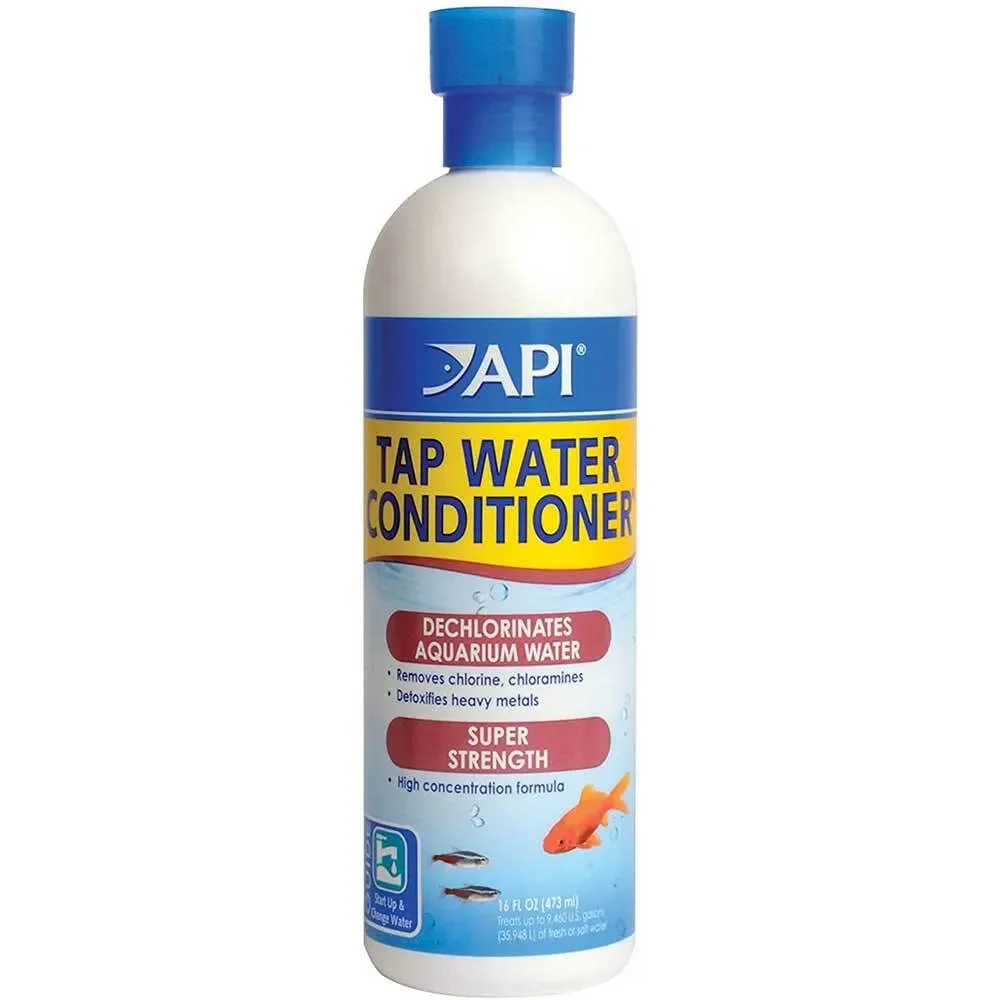
This is a straightforward dechlorinator: it removes chlorine and breaks the chloramine bond, and detoxifies heavy metals, at a lower price than Prime or Safe. What it doesn’t do is the second half of the chloramine job. Breaking that bond releases free ammonia into the water, and this conditioner doesn’t neutralise it the way Prime and Safe do.
In practice that means a two-step situation if your water is chloraminated: the chlorine risk is gone, but you’re relying on an already-established biofilter to process the ammonia that’s left, which is fine in a mature, cycled tank but a genuine risk during a fishless cycle or right after setting up a new tank.
It’s a perfectly reasonable choice for a stable, already-cycled tank on a budget. It’s the wrong choice if you’re mid-cycle or your tank’s biofilter isn’t established yet.
Pros
- Cheaper than Prime or Safe for the core dechlorinating job
- Straightforward dosing, no powder measuring
- Fine for a mature, already-cycled tank
Cons
- Leaves free ammonia in the water after breaking the chloramine bond
- Not the safer choice during a fishless cycle or a new tank
- No slime coat or stress-reducing ingredients
4. API Stress Coat Plus – Best for New or Stressed Fish
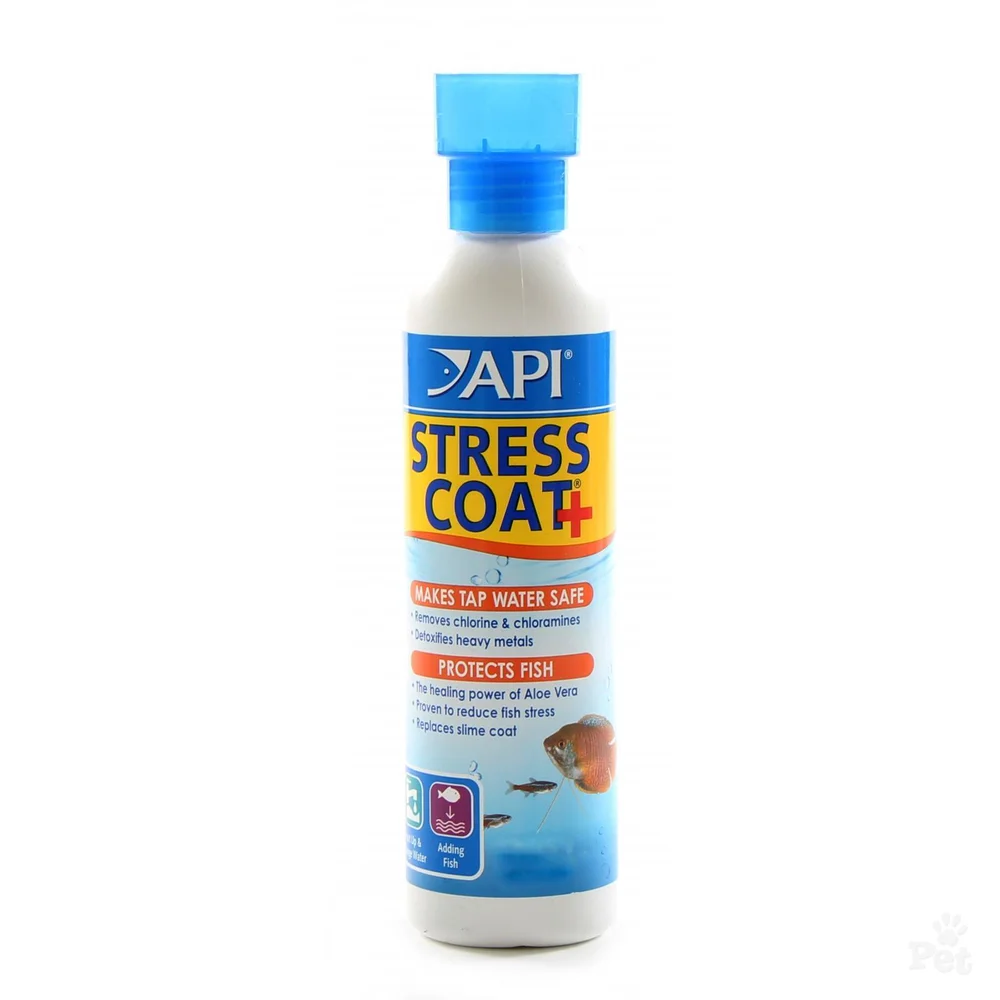
Stress Coat covers the same core dechlorinating job as the plain API conditioner, chlorine, chloramine and heavy metals, and adds aloe vera specifically to support a fish’s slime coat, the protective layer that takes a hit during netting, bagging, a new tank move, or a rough introduction to a new aquarium.
Like the plain API conditioner, it doesn’t detoxify the ammonia left behind by chloramine, so the same caution applies: it’s better suited to topping up an established tank than to a fishless cycle or brand new setup.
The realistic way most experienced keepers use it: Stress Coat specifically for new fish, after a water change in a stressed tank, or after any handling, with a Prime or Safe style conditioner as the everyday, ammonia-safe default the rest of the time.
Pros
- Genuinely useful slime coat support after handling or a new introduction
- Same core dechlorinating action as a plain conditioner
- Widely available and easy to dose
Cons
- Doesn’t detoxify the ammonia left behind by chloramine, same as the plain API conditioner
- A specialty product for stress situations, not an everyday universal pick
- Aloe vera ingredient adds cost without helping a stable, unstressed tank
How to Choose
- If you’re setting up a new tank or mid fishless-cycle, use Seachem Prime or Safe. The ammonia-detoxifying step genuinely matters here.
- If your tank is already established and cycled, a basic conditioner like API Tap Water Conditioner is a reasonable, cheaper everyday choice.
- If you’re running a large tank or doing frequent big water changes, Seachem Safe works out cheaper per litre than any liquid on this list.
- Keep a bottle of Stress Coat Plus on hand specifically for new fish or after any handling, alongside your everyday conditioner, not instead of it.
Related Guides
Keep reading on the same topic:
- how to clean fish tank glass
- how to reduce ammonia
- how to clean a fish tank
- Browse the Testing & Treatment hub
Frequently Asked Questions
Do I actually need a water conditioner every time I do a water change?
Yes, if your water supply is chlorinated or chloraminated, which covers most Australian mains water. Skipping it exposes your fish directly to chlorine or chloramine, both of which are genuinely harmful at tap-water concentrations, not just an inconvenience.
What’s the real difference between Seachem Prime and a plain dechlorinator?
Both remove chlorine and break the chlorine-ammonia bond in chloramine. Prime goes a step further and detoxifies the free ammonia that breaking that bond releases, along with nitrite and nitrate, for about two days. A plain dechlorinator leaves that ammonia for your biofilter to handle on its own.
Can I use a basic dechlorinator instead of Prime once my tank is established?
Yes, once your tank is fully cycled with an established biofilter, a basic dechlorinator like API Tap Water Conditioner is a reasonable, cheaper choice for routine water changes. The extra ammonia-detoxifying step in Prime or Safe matters most during a fishless cycle or in a brand new tank.
Is Seachem Safe as effective as Seachem Prime?
Yes, Safe is the powdered version of the same formula and does the same job, chlorine, chloramine, ammonia, nitrite and nitrate. It’s simply more economical per litre for larger tanks or frequent big water changes, at the cost of measuring a powder instead of a liquid.
Does my Australian tap water actually have chloramine, or just chlorine?
It depends on your water authority. Several Australian capital cities dose chloramine rather than plain chlorine specifically because it’s more stable over long pipe networks. Check your local water authority’s own site to confirm, and choose a conditioner rated for chloramine either way, since it also handles plain chlorine.
If you only buy one conditioner, make it Seachem Prime: it’s the one product on this list built specifically to handle both halves of the chloramine problem most Australian tap water actually presents. Step up to Seachem Safe once you’re treating enough water regularly that the powder’s lower cost per litre matters. A basic API conditioner is fine once your tank is properly established, and Stress Coat Plus earns its place as a specific-situation product for new or stressed fish, not an everyday replacement for the others.
