
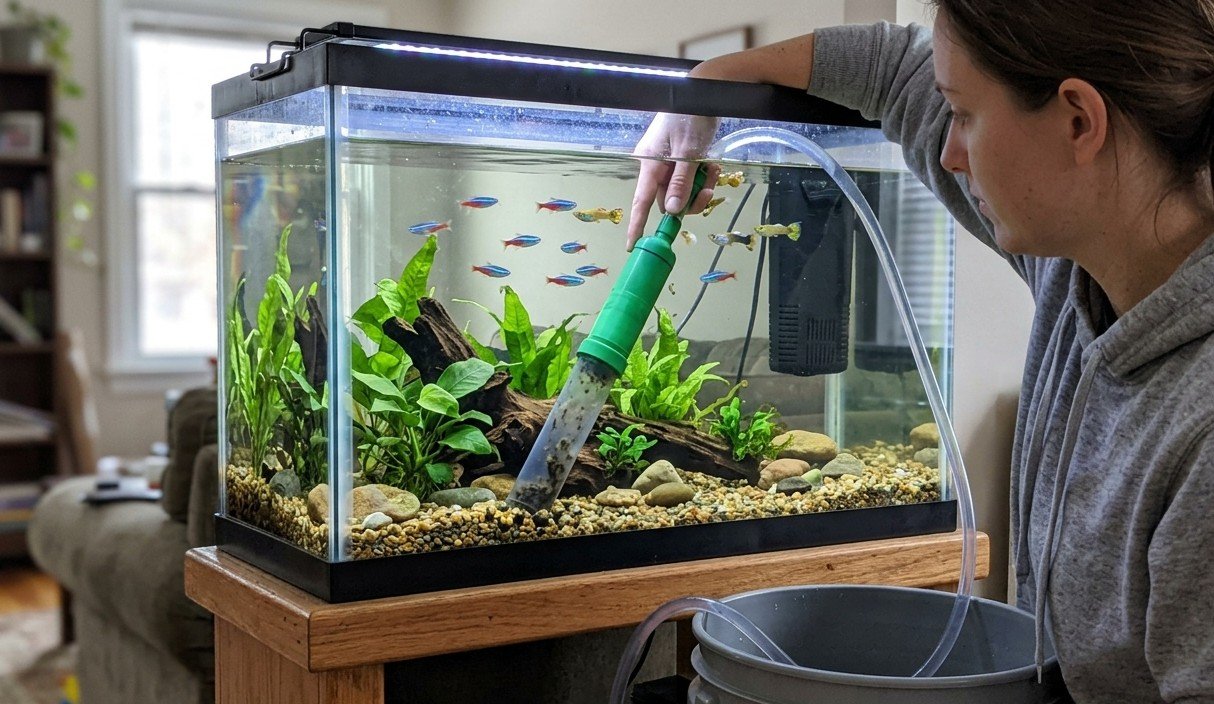
Leave the fish in. Change 10 to 25 per cent of the water and vacuum about a third of the gravel. Rinse filter media only in old tank water, and refill with conditioned water within a degree or two of the tank. Never use soap, or tap water on the filter.
Here’s how to clean a fish tank without removing the fish. Switch off the heater and filter, scrape the glass, then siphon out 10 to 25 per cent of the water while vacuuming part of the gravel. Rinse the filter media in the water you removed, then refill with treated water. The goal is to remove waste without wiping out the beneficial bacteria that keep your fish alive. A full clean-out does the opposite.
It suits a typical freshwater community tank and belongs in our Cleaning guides. If your tank is new, finish the cycling timeline first, because a tank that hasn’t cycled needs different handling.
What You Need
- A gravel vacuum (siphon) and a clean bucket used only for the tank.
- An algae scraper or magnet, and a soft sponge that has never touched soap.
- Water conditioner that names chloramine on the label.
- A thermometer, so you can match the new water to the tank.
- About half an hour for a small to medium tank. That is an estimate, and larger tanks take longer.
How to Clean a Fish Tank: Step by Step
- Switch off the heater and filter. Unplug them before the water level drops. A heater running out of water can crack, and a filter running dry can burn out its motor.
- Clean the glass first. Scrape or magnet the algae off the inside panes while the water is still full, so the loosened flecks get siphoned out in step 3. Use an acrylic-safe sponge if the tank is acrylic.
- Siphon the water and vacuum the gravel. Push the vacuum into about a third of the substrate, let the gravel lift and drop, and drain 10 to 25 per cent of the water into your bucket. Stay light-handed in sand and around plant roots.
- Rinse the filter media in the water you just removed. Squeeze sponges and swish other media gently. Never rinse it under the tap. Chlorine or chloramine in tap water can kill the beneficial bacteria living on it. Replace no more than a third of your media at once.
- Wipe decor and the outside of the glass. Use a soft cloth and an aquarium-safe glass cleaner on the outside only, never household sprays on the inside.
- Refill with treated water at the right temperature. Dose the conditioner into the new water, check the temperature with a thermometer and aim within a degree or two of the tank. Then switch the equipment back on.
Two of these steps have Australian wrinkles. The RSPCA says to keep fish in the tank while siphoning and to avoid tap water on the filter because chlorine or chloramine may kill the bacteria. And for the refill, Sydney Water adds chlorine and, in some longer pipelines, ammonia, which forms chloramine. That guide is old, and its tip to stand water in the sun does not remove chloramine, so use a conditioner that names it and check your own supplier’s information.
How Often to Clean It
Most tanks want a partial water change weekly, in the range the RSPCA gives of 10 to 25 per cent. A lightly stocked, well-filtered tank can go longer between changes. The right rhythm depends on stocking and filtration, and the full answer sits in the frequency guide.
What to Clean, and What to Leave Alone
| Part | What to do | What not to do |
|---|---|---|
| Water | Change 10 to 25 per cent, treated and temperature-matched | Drain it all, or change more than half at once |
| Gravel or sand | Vacuum about a third each visit | Deep-clean it all in one go |
| Glass | Scrape or magnet the inside; sponge or cloth outside | Soap or household glass cleaner near the water |
| Filter media | Rinse in old tank water when flow drops | Rinse under the tap, or replace it all at once |
| Decor | Scrub with a soft brush in tank water | Use detergent |
Common Mistakes
- Cleaning everything on one day. Big changes strip out bacteria and shift the water chemistry all at once. Stagger the jobs across visits.
- Using tap water on the filter. It is the quickest way to trigger an ammonia spike after a clean.
- Skipping the conditioner. Untreated tap water harms fish and beneficial bacteria.
- Chasing sparkling media. Filter media does not have to look pristine, and scrubbing it clean removes the bacteria you want.
When to Get Help
Test the water a day after a big clean. Ammonia or nitrite above zero, or fish gasping at the surface, means the tank needs attention beyond a routine clean. Follow our guide to testing fish tank water. If the water goes milky afterwards, see why a fish tank goes cloudy.
Related Guides
Keep reading on the same topic:
Frequently Asked Questions
How to clean a fish tank without removing the fish?
Leave them in and clean around them. Siphon part of the water, vacuum a third of the gravel, wipe the glass and refill with treated water. Fish only come out for a full teardown, such as a disease disinfection or a leak, and that is a different job.
What should I clean a fish tank with?
Water, and tools used only for the tank. Never use soap or detergent, which is toxic to fish. Use a scraper or magnet for algae, a siphon for gravel and a soft sponge for decor.
Can I use tap water to clean the filter?
No. Rinse it in water taken from the tank. Tap water can kill the bacteria that break down ammonia.
How much water should I change when cleaning?
Between 10 and 25 per cent for a normal weekly clean, and never more than about half in one go. Match the new water’s temperature and treat it first.
How do I keep a fish tank clean between cleans?
Feed only what your fish eat in a couple of minutes, keep to a steady water-change routine and avoid overstocking. Most dirt in a tank comes from uneaten food and waste.
