
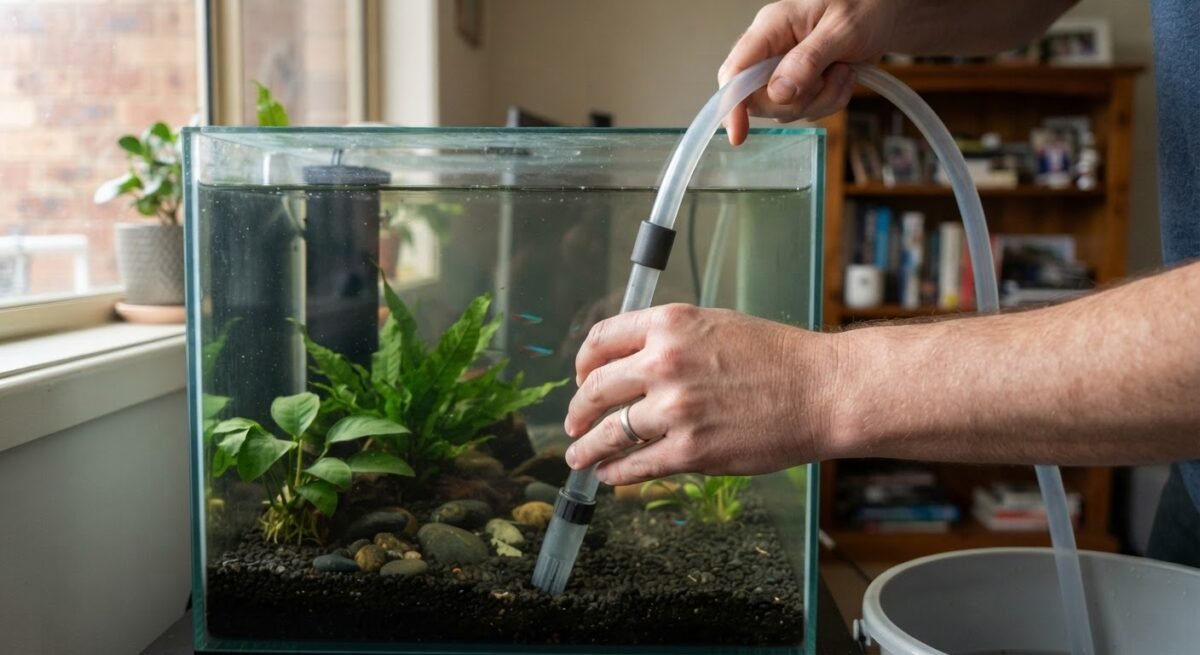
Vacuum about a third of the gravel each visit, as part of your weekly water change. Push the tube into the gravel, let it lift and drop, and work in rows. Hover over sand instead of digging. Leave fish in, and go easy around plant roots.
How to clean fish tank gravel comes down to a siphon and a routine. A gravel vacuum pulls the loose waste out of the substrate along with the water, so you clean the gravel and do your water change in one go. Work through about a third of the gravel each time, in rows, and stop when you’ve drained the water you planned to change. Fish can stay in the tank throughout.
This is one job in our Cleaning guides. For the wider routine, see how to clean a fish tank.
What You Need
- A gravel vacuum: a wide tube on a flexible hose, with a bulb starter if it has one.
- A bucket used only for the tank, with no soap or chemical residue.
- Water conditioner for the refill.
- A thermometer, so the new water matches the tank.
How to Clean Fish Tank Gravel Step by Step
- Unplug the heater and filter, and let the heater cool for a few minutes if it has been on. Move decorations aside so the tube can reach the gravel underneath.
- Start the siphon. Submerge the tube on a diagonal so it fills with water, then lift the hose end below the tank and drain into the bucket. A bulb starter does the same job. Never start a siphon by mouth.
- Push the tube down into the gravel. The gravel will lift inside the tube, while heavier stones fall back and lighter waste travels up the hose.
- Control the flow. If gravel climbs towards the hose, pinch the hose to slow the suction and let it drop. Release and carry on.
- Work in rows, like mowing a lawn. Clean about a third of the substrate, then stop. Next visit, start on a different third.
- Watch the bucket. Stop when you’ve removed the water you meant to change. The RSPCA recommends weekly changes of 10 to 25 per cent, combined with a gravel clean.
- Refill, using conditioned water at close to the tank’s temperature, then plug everything back in.
Keep the tube steady around the fish. Curious ones investigate the intake, and slow, deliberate movement stresses them less than chasing them off. See how to change fish tank water for the refill details.
Gravel, Sand and Planted Tanks
| Substrate | Technique | Watch out for |
|---|---|---|
| Gravel | Push the tube in and let it lift and drop | Gravel pulled into the hose, so pinch to slow the flow |
| Sand | Hover the tube just above the surface | Digging in draws the sand out. A narrower intake helps |
| Planted tank | Vacuum open areas only | Root feeders like swords and crypts use the debris around their roots |
| Bottom dwellers | Light surface cleaning | Corydoras forage in the substrate, so leave some undisturbed |
Thin substrate is easier to keep clean. A layer of 2.5 to 5 cm is common, because deep layers trap more waste. Planted tanks need less vacuuming, since roots process much of the waste.
Why Gravel Needs Cleaning
Uneaten food and fish waste sink into the gravel and break down into mulm, a brown sediment that feeds the nitrogen cycle and adds to nitrate. A little is harmless in a planted tank with strong filtration, and removing the excess keeps the water clear in a tank without plants.
The bigger risk is in deep, undisturbed substrate. Where oxygen is completely absent, bacteria can produce hydrogen sulfide, which is toxic to fish. The warning signs are a rotten-egg smell when you disturb the gravel and black patches deep in the bed. Regular surface vacuuming and a thin layer prevent most trouble.
If you smell it, stop vacuuming deep and ventilate the room. Move fish out only if they seem distressed, then see how to test fish tank water and consider replacing the substrate.
No Gravel Vacuum? Other Ways
- Turkey baster: good for spot-cleaning small areas. Use a baster that has never been used for food.
- Stir and siphon: stir the gravel gently so debris rises, then siphon off a third to half of the cloudy water. Leaving water behind preserves bacteria. This suits planted tanks.
- Full rinse: only when you’re emptying the tank. Keep a couple of cups of dirty gravel to reseed bacteria, and rinse the rest in tank water in a sieve.
A full rinse in tap water is the option to avoid on a running tank. Evidence on whether it kills the bacteria on gravel is mixed, and gravel does far less of the filtering than your filter media, but tank water carries no risk.
How Often to Clean the Gravel
Sources split. Some Australian pet-care guides suggest every two to four weeks, while the RSPCA pairs a gravel clean with the weekly change. A practical middle: vacuum a third weekly in a busy, heavily stocked tank, and every two to four weeks in a lightly stocked or planted one. Let the mulm and the water tests guide you.
Common Mistakes
- Deep-cleaning all the gravel in one session.
- Digging the tube into sand.
- Vacuuming right up against plant roots.
- Using tap water on the substrate, or any soap on the bucket.
- Draining far more water than you can replace with treated water.
When to Get Help
Rotten-egg smell, fish gasping, or ammonia and nitrite readings above zero after a clean all need attention. Ask a local aquarium shop or fish vet, and see testing for ammonia. Many Australian supplies use chloramine, at least in some areas, so pick a conditioner that names it.
Related Guides
Keep reading on the same topic:
Frequently Asked Questions
How to clean fish tank gravel without removing the fish?
Leave them in. Siphon a third of the gravel slowly and steadily, and drain only the water you plan to replace.
How do I use a fish tank vacuum?
Start the siphon, push the tube into the gravel until it lifts, and work in rows over about a third of the substrate. Pinch the hose if gravel climbs.
How to clean fish tank gravel without a vacuum?
Use a baster for spot cleaning, or stir the gravel and siphon off the cloudy water. Both leave most of the bacteria in place.
How often should I vacuum the gravel?
Weekly in a busy tank, every two to four weeks in a lightly stocked or planted one. Vacuum during a water change.
Do I need to clean sand differently from gravel?
Yes. Hover the tube just above the sand rather than pushing it in, since digging in draws the sand out.
