
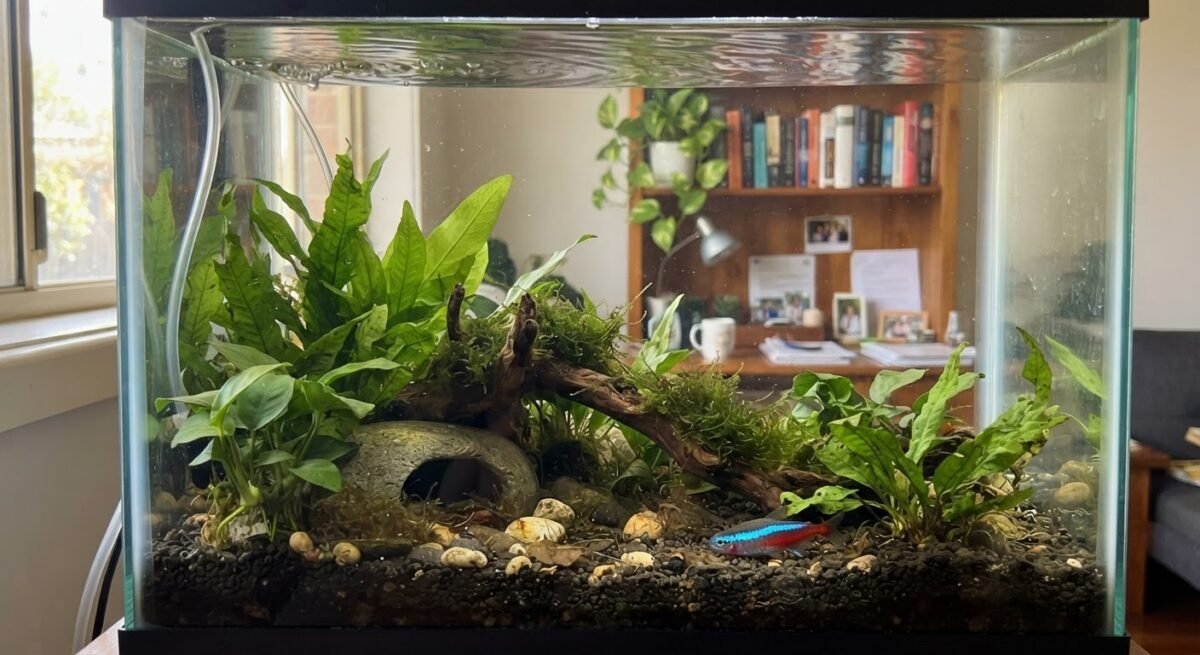
Check the temperature (24 to 26°C for most tropical fish) and test ammonia and nitrite first. If both are fine, look for a swim bladder problem or illness, and remember that bottom dwellers and resting fish are normal.
Why is my fish laying on the bottom of the tank? Cold water and poor water quality are the two most common causes, and both take minutes to check. Some fish, such as bottom dwellers, also spend most of their time down there. A fish that lies on its side or can’t hold its position needs help sooner, so test the water first.
Scope: this covers freshwater tropical fish in a filtered tank. Species differ, so a fish that has always rested low may just be doing what it does. The Fish Health guides cover more symptoms, and keeping some fish species is restricted in parts of Australia, so check your state Fisheries or Biosecurity department before buying any.
Why Is My Fish Laying on the Bottom of the Tank? Causes at a Glance
| Likely cause | What you see | First fix |
|---|---|---|
| Water too cold | Faded colour, slow, off its food, often after a cold night or a failed heater | Check the thermometer, fix the heater, warm slowly |
| Ammonia or nitrite | Fish sit still in a corner, clamped fins, new or overfed tank | Test, then change 25 to 50 per cent of the water |
| Swim bladder problem | Sinks, tilts, swims awkwardly, swollen belly | Check water and temperature, feed lightly, ask a fish vet |
| Normal behaviour | Bottom dwellers or resting fish, eating and colouring up normally | Nothing. Watch it for a day |
| New fish settling in | Hides low for a day or two after being added | Leave it alone, keep the tank quiet |
| Illness or age | One fish, other signs such as spots or flicking, or an old fish | Test the water, then ask a fish vet or aquarium shop |
Start at the top of the table. The first two causes are the easiest to check and the easiest to fix.
Water Too Cold
Tropical fish slow right down when the water cools. RSPCA Australia recommends 24 to 26°C for tropical fish with a submersible heater, because room temperature is generally too cold and fluctuates.
One study on tiger barbs found their body colour faded at 21°C, and that they stopped feeding and lost balance at 15°C. Your fish may differ, but it shows how much a cold night matters. In southern Australian winters a heater that fails overnight can drop a small tank fast.
Check the thermometer, then the heater. If the water is cold, warm it gradually rather than in one jump. The temperature guide covers safe ranges, and the heater roundup lists options.
Ammonia or Nitrite Stress
Ammonia is toxic waste. UF/IFAS says it causes stress and damages gills, even in small amounts, and RSPCA Australia lists fish that stay in a corner for a long time as a sign of poor health. A cycling tank or an overfed one is the usual culprit.
RSPCA Australia’s targets are ammonia below 0.1 ppm and nitrite below 0.2 ppm. Follow the water testing guide, and if the reading is high, use how to reduce ammonia. Gasping at the surface points to a related problem, covered in why fish swim at the top of the tank.
Swim Bladder Problems
The swim bladder is the gas-filled organ that helps a fish hold its depth. A swim bladder disorder is not one disease. A 2020 paper on koi describes fish either sinking to the bottom or floating on the surface, sometimes with a swollen belly, and lists causes from infection and poor water quality to injury and genetics.
Goldfish and other fancy varieties are prone to it because of their rounded bodies. Don’t guess at a treatment. Fix the water and temperature, feed lightly, and get a fish vet or an experienced aquarist to look at the fish if it doesn’t improve.
When Sitting at the Bottom Is Normal
- Bottom dwellers. Catfish and loaches spend much of the day low in the tank, so watch how the fish behaves before worrying.
- Resting. Fish rest at night, and some rest on leaves or the substrate, so check whether it’s up and feeding at the next meal.
- New arrivals. A fish added yesterday may hide low for a day or two. Keep the light dim and the tank quiet.
What matters is a change. A fish that suddenly starts lying low, refuses food or stays there on its side is a different matter.
What to Do Right Now
- Check the temperature. Compare the thermometer with the 24 to 26°C range.
- Test ammonia and nitrite with a liquid kit.
- Change 25 to 50 per cent of the water if either is above zero, using treated water at tank temperature.
- Feed lightly for a day or two, and remove uneaten food.
- Watch closely for spots, flicking, clamped fins or a swollen belly.
- Get advice if the fish can’t hold its position or lies on its side. RSPCA Australia recommends an experienced aquarist or a fish vet.
Related Guides
Keep reading on the same topic:
Frequently Asked Questions
Why is my fish laying on the bottom of the tank but still alive?
Usually cold water, ammonia or a swim bladder problem. Test the water and check the temperature before anything else, because both are quick and free to check.
Why is my goldfish at the bottom of the tank?
It could be cold water, poor water quality or a swim bladder problem, which fancy goldfish are prone to. Test the water first, then feed lightly and get a vet’s advice if it can’t right itself.
Why is my betta laying on the bottom of the tank?
Bettas often rest on leaves or the substrate, but cold water is a common cause. RSPCA Australia’s range for a betta is 24 to 26°C, so check the heater first.
Is it normal for fish to sleep at the bottom?
Yes, many fish rest low at night. It’s a worry only if the fish stays down through feeding time, or lies on its side.
Will my fish recover from lying on the bottom?
Often, if the cause is cold water or ammonia and you fix it quickly. A fish that can’t hold its position after the water is right needs a vet or an experienced aquarist.
