

A basic manual siphon and a magnetic glass cleaner, together under $80, cover most tanks. The Python system earns its higher price on a bigger tank or a fishroom by turning water changes into a tap-to-tap job with no buckets at all.
The best gravel vacuums and glass cleaners in Australia solve two separate maintenance jobs that get lumped into the one shopping trip: pulling waste out of the substrate during a water change, and keeping algae off the glass in between changes. Neither job is optional. Skip the gravel vacuum and waste breaks down into ammonia between changes. Skip the glass cleaner and you’re peering at your fish through a green film within a fortnight.
Gravel vacuums split into manual siphons, which use gravity and a squeeze bulb or a few pumps to start the flow, and powered vacuums, which use a battery-driven motor to pull water and waste without any priming. Glass cleaners split into magnetic cleaners, which you drag along the outside of the glass with a matching magnet on the inside, and long-handled scrapers or pads for spot-cleaning corners a magnet can’t reach.
The number that actually matters on a gravel vacuum is hose diameter and length relative to your tank, not marketing claims about suction power. A vacuum with a tube too narrow for your gravel size just skims the surface. On a magnetic cleaner, the number that matters is your glass thickness in millimetres. Buy for a thinner glass than you have and the magnet loses grip; buy for thicker glass than you have and it won’t grip at all.
This guide covers freshwater cleaning tools for glass aquariums specifically. Acrylic tanks need a soft-pad cleaner rather than any of the scraper-blade tools below, since a metal or hard plastic blade will scratch acrylic in seconds.
If you’re considering the Python No Spill system below, check your tap’s thread before you order. Python’s faucet adapters are sized to US fittings, and Australian taps run on BSP threads the same family the UK uses, which owners there report as “kind of compatible but not quite.” Confirm your tap’s thread size or budget for a universal adapter rather than assuming the standard adapter will seal first try.
Best Gravel Vacuums & Glass Cleaners in Australia, Compared
| Product | Type | Best For | Power | Typical AU Price |
|---|---|---|---|---|
| Bioscape Tropic Hand-Pressure Gravel Cleaner | Manual siphon | Budget first water changer | Manual | $39.95 |
| Aqua One Floating Magnetic Cleaner (Medium) | Magnetic glass cleaner | Budget algae control | Manual, magnetic | $37.50 |
| Flipper Standard | Magnetic glass cleaner | Reliable everyday glass cleaning | Manual, magnetic | $77-$83 |
| Fluval ProVac | Powered gravel vacuum | No-prime, filtered gravel cleaning | Battery | $116.00 |
| Python No Spill Clean and Fill | Tap-to-tap water changer | Bucket-free water changes, bigger tanks | Household water pressure | $162.74 (25ft) |
How I Compared These
Pricing and current stock were checked directly against Australian retailer rather than converted from US prices, and I dropped one option, the standard plastic-bladed budget magnet cleaner, once its stock and reviews turned out thinner than the Aqua One model it competes with. Owner complaints came from Aquarium Co-Op’s forum, the UK Aquatic Plant Society forum and Reef2Reef’s cleaning-tool threads, since long-term durability issues like the Flipper’s silicone-contact complaint don’t show up in a first-week review. ProductReview.com.au and CHOICE don’t have meaningful aquarium-cleaning-tool coverage as of this check.
1. Bioscape Tropic Hand-Pressure Gravel Cleaner – Best budget first water changer
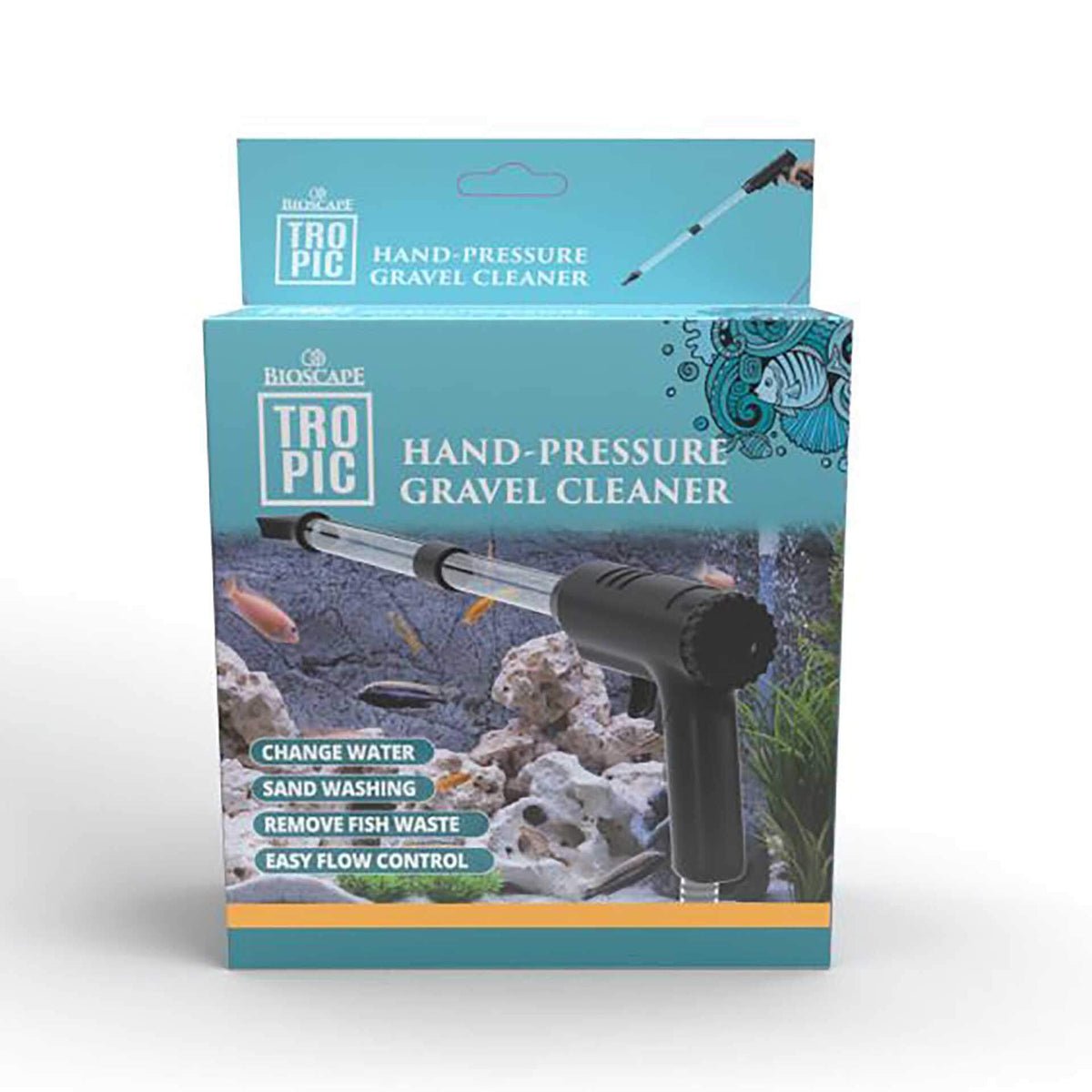
This is the tool almost everyone should own before anything else on this list. The hand-pressure bulb starts the siphon without the mouthful-of-tank-water method plenty of us learned on as kids, and it does the actual job, pulling waste out of the substrate, just as well as anything battery-powered below.
It’s slower than a powered vacuum and needs a bucket under the tank or a drain nearby, which matters more on a big tank than a small one. For anything up to a large community tank, that’s a minor trade for a tool that never needs charging and can’t break a motor.
Where the Fluval ProVac further down this list wins on convenience, this wins on simplicity: nothing to charge, nothing to clog, one part to replace if it ever wears out.
Pros
- Cheapest genuinely effective gravel vacuum on this list
- No battery or motor to fail
- Hand-pressure bulb starts the siphon without a mouthful of tank water
Cons
- Needs a bucket or drain, slower than a powered vacuum
- No filtering while it siphons, unlike the ProVac
- Priming takes a few pumps of practice to get smooth
2. Aqua One Floating Magnetic Cleaner (Medium) – Best budget algae control
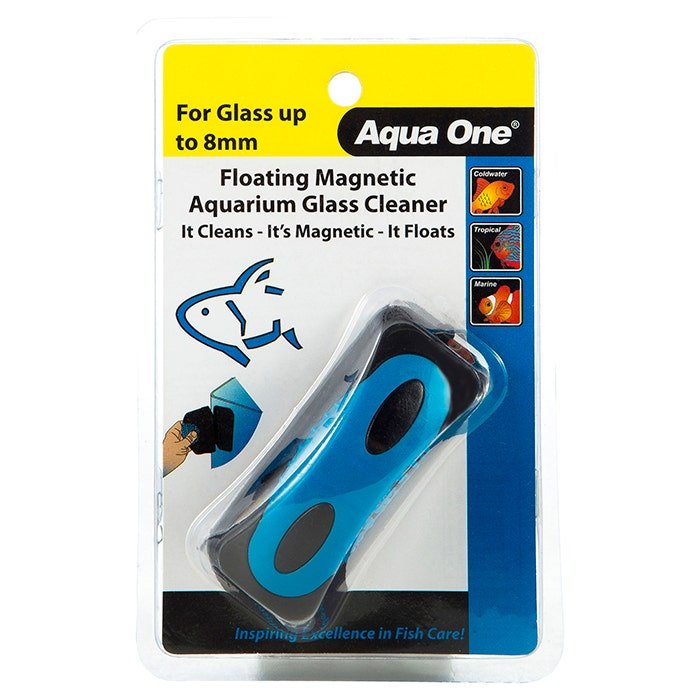
Aqua One’s floating magnet cleaner does the everyday job, dragging soft green algae off the glass, at less than half the price of the Flipper below. It floats to the surface if it ever slips off the inside magnet, so you’re not fishing around in the substrate for it.
The plastic scraper pad is the real difference from the Flipper’s metal blade. It handles soft film algae fine but won’t touch the harder green spot algae that builds up over months, where a metal or ceramic blade actually scrapes rather than smears.
Rated to 8mm glass, so measure your tank’s actual glass thickness before buying. A magnet sized for thinner glass than you have simply won’t hold.
Pros
- Effective on everyday soft algae at a genuinely low price
- Floats if it comes off the tank wall, easy to retrieve
- Widely stocked, easy warranty via Petbarn
Cons
- Plastic pad won’t shift hardened spot algae
- Only rated to 8mm glass; check yours before buying
- Less durable long-term than a metal-bladed cleaner
3. Flipper Standard – Best reliable everyday glass cleaner
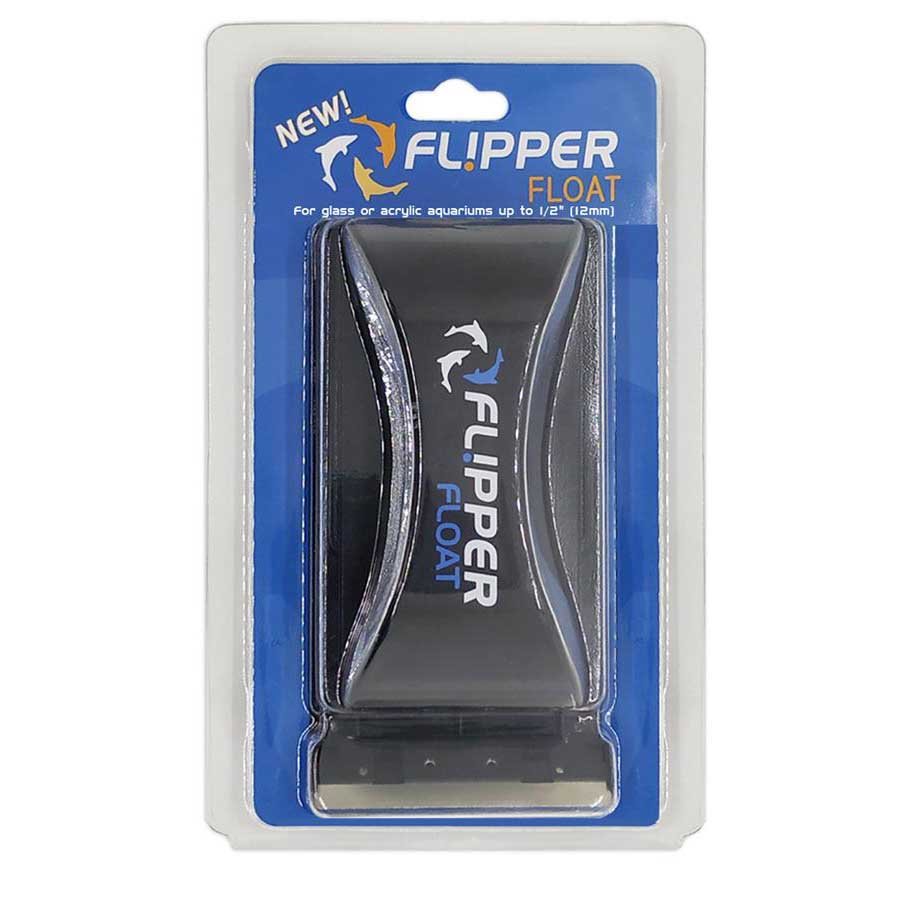
The Flipper earns its higher price with a genuinely thinner profile than most competitors, which matters once your tank has an aquascape or driftwood close to the glass. It squeezes into gaps a bulkier magnet cleaner can’t reach, and the replaceable metal blade cuts through stubborn film algae the Aqua One above simply can’t.
It’s worth being upfront about the one real complaint that shows up repeatedly in long-term owner threads: at least one owner reported it had scored or damaged tank silicone after around six months of regular use, attributed to the blade being sharper and stronger than a plastic-pad cleaner. Keep it moving rather than pressing hard in one spot, especially near a silicone seam.
Next to the Aqua One, this is the clear upgrade for a tank with hardened algae or a tight aquascape; for a bare community tank with soft algae only, the cheaper option does the same job.
Pros
- Thin profile fits tight aquascapes other magnet cleaners can’t reach
- Replaceable metal blade handles hardened algae
- Floats and flips for easy retrieval and double-sided use
Cons
- Metal blade has been reported to score silicone with heavy long-term use
- More than double the price of a basic plastic-pad cleaner
- Overkill for a tank with only soft, everyday algae
4. Fluval ProVac – Best no-prime, filtered gravel cleaning
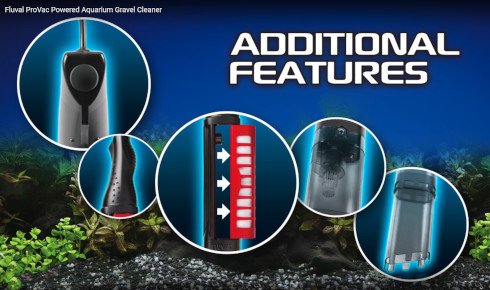
The ProVac’s real trick is filtering the water as it vacuums, catching debris in a dual-layer filter and returning cleaner water to the tank rather than pulling everything out for a full water change. That makes it genuinely useful for a spot-clean between scheduled water changes, not just a substitute for the Bioscape siphon above.
It’s still a battery-powered motor, which means charging it before you need it and, eventually, a battery or motor that wears out, unlike a manual siphon with nothing to fail. The built-in LED spotlight is a genuinely useful, if minor, touch for seeing what you’re actually vacuuming out of a dark substrate.
Where this earns its price over the manual Bioscape option is convenience and no-spill spot cleaning; where the manual option wins is having literally nothing that can run flat or fail.
Pros
- Filters and returns water instead of wasting it on a spot-clean
- Two speed settings and a built-in LED spotlight
- No priming, no mouthful of tank water to start it
Cons
- Battery-powered, needs charging ahead of use
- More moving parts than a manual siphon, more that can eventually fail
- Costs roughly three times a basic manual siphon
5. Python No Spill Clean and Fill – Best bucket-free water changes on a bigger tank
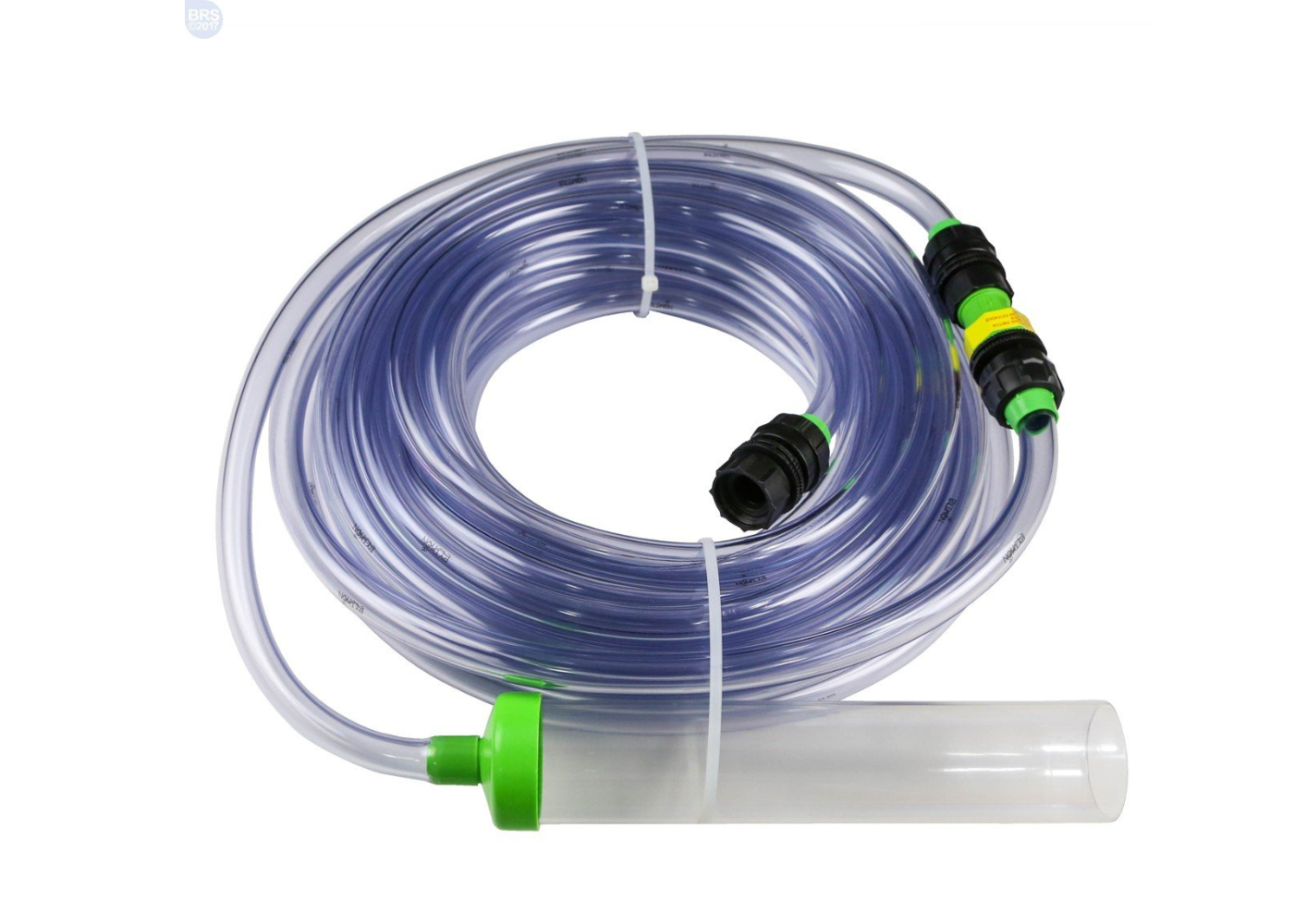
The Python is a different category of tool entirely: it drains the tank out one tap and refills it from another, with no bucket in the loop at all. On a single large tank or a small fishroom of several tanks, that’s a genuine back-saver, and the 4.6-star rating from a large review base on Amazon.com.au reflects how well it’s held up as the category standard for years.
The price is the honest trade-off; you’re paying for the convenience, not a more effective clean than the $40 manual siphon above achieves on a single small tank. It’s also worth confirming your tap’s thread fits before you order, since the standard adapter is sized to US fittings and Australian taps don’t always match on the first try.
If you’re running one modest tank, the Bioscape siphon does the same core job for a quarter of the price. If you’re running a bigger tank or several, the time saved every single water change starts justifying the cost quickly.
Pros
- Drains and refills without a single bucket trip
- Strong, long-established review track record
- Scales well across multiple tanks or one large one
Cons
- Highest price on this list by a clear margin
- Faucet adapter is US-sized, may not seal an Australian tap first try
- Overkill for a single small tank a manual siphon handles fine
How to Choose a Gravel Vacuum or Glass Cleaner
Match the tool to your tank size and how much you mind the manual labour, not the other way around.
- One small-to-medium tank, budget-first: the Bioscape manual siphon and Aqua One magnet cleaner cover both jobs for under $80 combined.
- Tight aquascape or hardened algae: step up to the Flipper for its thinner profile and metal blade.
- Want to spot-clean without a full water change: the Fluval ProVac filters while it vacuums.
- Large tank or a fishroom of several: the Python pays for itself in saved time within a few water changes.
- Always measure your actual glass thickness before buying any magnetic cleaner. A mismatch means a magnet that won’t grip.
Related Guides
Keep reading on the same topic:
- how to clean a fish tank
- how to clean tank gravel
- how often to clean a fish tank
- Browse the Cleaning hub
Frequently Asked Questions
What is the best cheap gravel vacuum for a beginner aquarium in Australia?
The Bioscape Tropic Hand-Pressure Gravel Cleaner, at $39.95, is the realistic starting point. It does the same core siphoning job as far pricier powered options, just with more manual effort and a bucket needed underneath.
Do I need a powered gravel vacuum, or is a manual siphon enough?
A manual siphon is enough for most tanks and is what most experienced keepers actually use day to day. A powered vacuum like the Fluval ProVac earns its price on convenience and spot-cleaning between full water changes, not on doing a fundamentally better job.
How do I know what size magnetic glass cleaner to buy?
Measure your aquarium’s actual glass thickness in millimetres before buying. Budget cleaners like the Aqua One are typically rated up to 8mm, while the Flipper Standard handles up to 12mm. A magnet sized for thinner glass than you actually have won’t hold properly.
Is the Python No Spill system worth the price over a manual siphon?
Only if you’re running a larger tank or several tanks where the time saved on every water change adds up. For one small-to-medium community tank, a manual siphon does the same core job for around a quarter of the price.
Can magnetic glass cleaners damage my aquarium?
A metal-bladed cleaner like the Flipper can score aquarium silicone with heavy long-term use if pressed hard near a seam, based on real long-term owner reports. Keep the blade moving rather than pressing in one spot, and use a plastic-pad cleaner if your tank has exposed silicone seams you’re worried about.
For most tanks, the Bioscape manual siphon paired with the Aqua One magnetic cleaner covers both jobs properly for under $80 combined, no compromise involved. Step up to the Flipper once your tank has hardened algae or a tight aquascape, and to the Fluval ProVac if you want to spot-clean without a full water change. The Python only earns its price on a larger tank or a fishroom, where the time it saves every single week is the real product you’re buying.
