
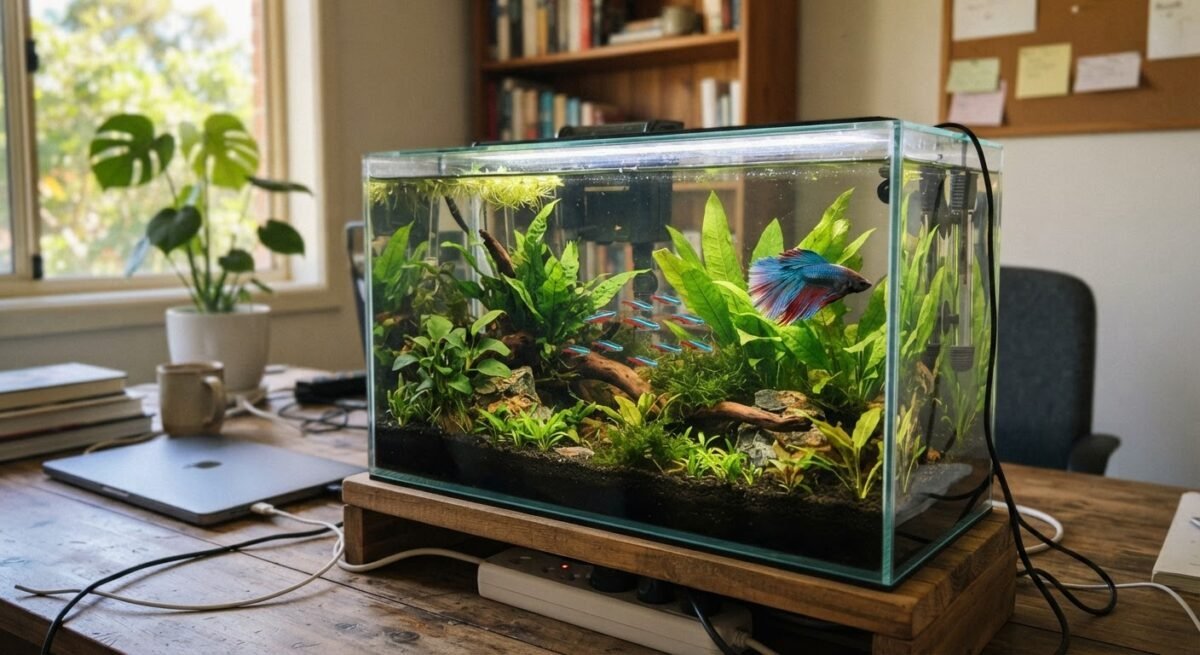
For a genuine 20-litre tank, a single betta or a school of chili rasboras are the two realistic picks. Step up to 40 or 60 litres and celestial pearl danios, ember tetras and pygmy corydoras all become real options, provided you stock to the actual group size each one needs, not the six-or-more rule written for a much bigger tank.
Small tank fish means something specific here: species that stay small as adults, school in a group that actually fits 20 to 60 litres of water, and do not need the swimming length a 4-foot community tank provides. That rules out most of the usual “beginner fish” advice, since a proper school of six neon tetras or zebra danios wants closer to 60 litres than 20. The number that matters on this list is the litre figure attached to each fish, not the centimetre length of the fish itself. A 2-centimetre chili rasbora and a 2-centimetre neon tetra are not interchangeable once you factor in how each one behaves in a small footprint.
This list covers freshwater fish suited to a 20 to 60-litre tank, nano to small by Australian shelf convention (roughly a 30 by 30 by 20 centimetre cube up to a 2-foot tank). It is not the same list as a general beginner roundup: I have left out zebra danios, standard neon tetras and cherry barbs here, since all three want more swimming room than this bracket gives them for a proper group, however hardy they are. If you are working with a 4-foot tank or bigger, best freshwater aquarium fish and best community fish cover that ground properly. If your tank is unheated and you want a coldwater option instead, best coldwater aquarium fish is the better starting point than anything below.
Every fish below is a common aquarium-trade species in Australia, and none of them appear on the banned-fish lists for NSW, Queensland, South Australia, Victoria, Western Australia or the Northern Territory, while all eight are on Tasmania’s permitted list (checked October 2026). I couldn’t find the ACT’s list, so check with an ACT aquarium shop first. Ornamental fish legality is set state by state, not nationally, and Western Australia runs the strictest rules in the country. Rules change over time, so check with your local aquarium shop or your state Fisheries or Biosecurity department if you are ever unsure about a specific species.
8 Best Fish for Small Tanks, Compared
| Species | Type | Min Tank (L) | Best For | Key Spec |
|---|---|---|---|---|
| Betta | Osphronemidae, solo | 20 | A true 20-litre solo tank | One fish only, 24-27C |
| Chili Rasbora | Cyprinidae, nano schooler | 20 | A genuine nano school at 20 litres | Group of 8+, 23-27C |
| Celestial Pearl Danio | Cyprinidae, nano schooler | 30 | A planted nano showpiece | Group of 8+, 20-24C |
| Ember Tetra | Characidae, nano schooler | 30 | A budget-friendly nano school | Group of 6+, 23-27C |
| Pygmy Corydoras | Callichthyidae, bottom dweller | 30 | A nano clean-up crew | Group of 6+, 22-26C |
| Endler’s Livebearer | Poeciliidae, livebearer | 40 | Colour without the guppy fry explosion | Group of 5+, 22-28C |
| Sparkling Gourami | Osphronemidae, labyrinth fish | 40 | A quiet, lidded nano tank | Pairs or trios, 22-28C |
| Otocinclus | Loricariidae, algae grazer | 40 | Algae control in a mature small tank | Group of 3+, 22-26C |
How I Compared These
I cross-checked established fishkeeping consensus (Aquarium Co-Op, Seriously Fish and similar species-care references) against a live 2026 Whirlpool Forums thread of Australian keepers discussing stocking for a 40-litre tank, where galaxy rasboras, ember tetras and a single betta all came up as credible recommendations from real owners, not shop copy. ProductReview.com.au’s aquarium coverage turned out to be retailer reviews only, not per-species pages, so it is not used as a source here. Availability was checked against live listings from multiple specialty Australian aquarium retailers (never linked, per this site’s Month 1-5 policy), not a single shop’s word. I haven’t listed prices, since livestock pricing varies a lot by shop and region.
1. Betta (Betta splendens) – Best for a true 20-litre solo tank
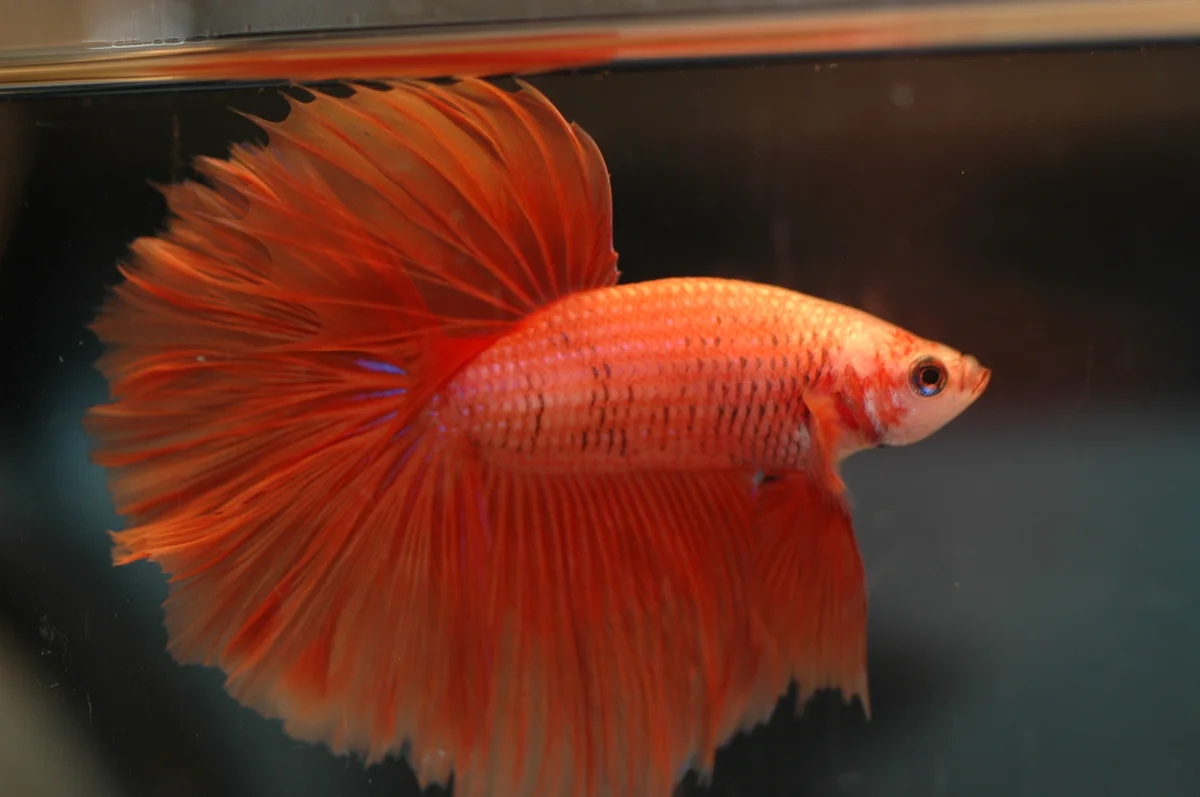
A betta is the one fish on this entire list that is actually built for 20 litres, not just tolerant of it. Every other entry here wants a group, and a group needs litres a 20-litre tank does not have. A betta needs none of that: one fish, alone, in a real filtered and heated tank, not the cup or bowl it is still sometimes sold from.
Whirlpool’s own aquarium forum has multiple Australian keepers reporting a single male betta thriving in exactly this bracket, paired with two albino corydoras and a school of neon tetras in a 40-litre setup, though at 20 litres flat I would leave it solo. Skip the mirror trick some shops suggest for “showing off” the fins. It just stresses the fish for a few seconds of flaring, and it does nothing for a betta kept correctly.
Compared to every schooling fish below, a betta is the only entry that does not scale its need for space by whether you add three fish or eight. That is the entire pitch and the entire limitation in one line.
Pros
- Actually built for a 20-litre space, not just capable of surviving it
- No schooling requirement to plan around
- Strong colour and finnage on an individually chosen fish, not a random six-pack
Cons
- Retail holding conditions are frequently poor, so a stressed or fin-damaged fish at the shop is common
- Cannot be housed with another betta, and most fin-nipping tankmates are a bad match too
- Long-finned males are slower and more prone to fin damage than the wild-type shape
2. Chili Rasbora (Boraras brigittae) – Best for a genuine nano school at 20 litres
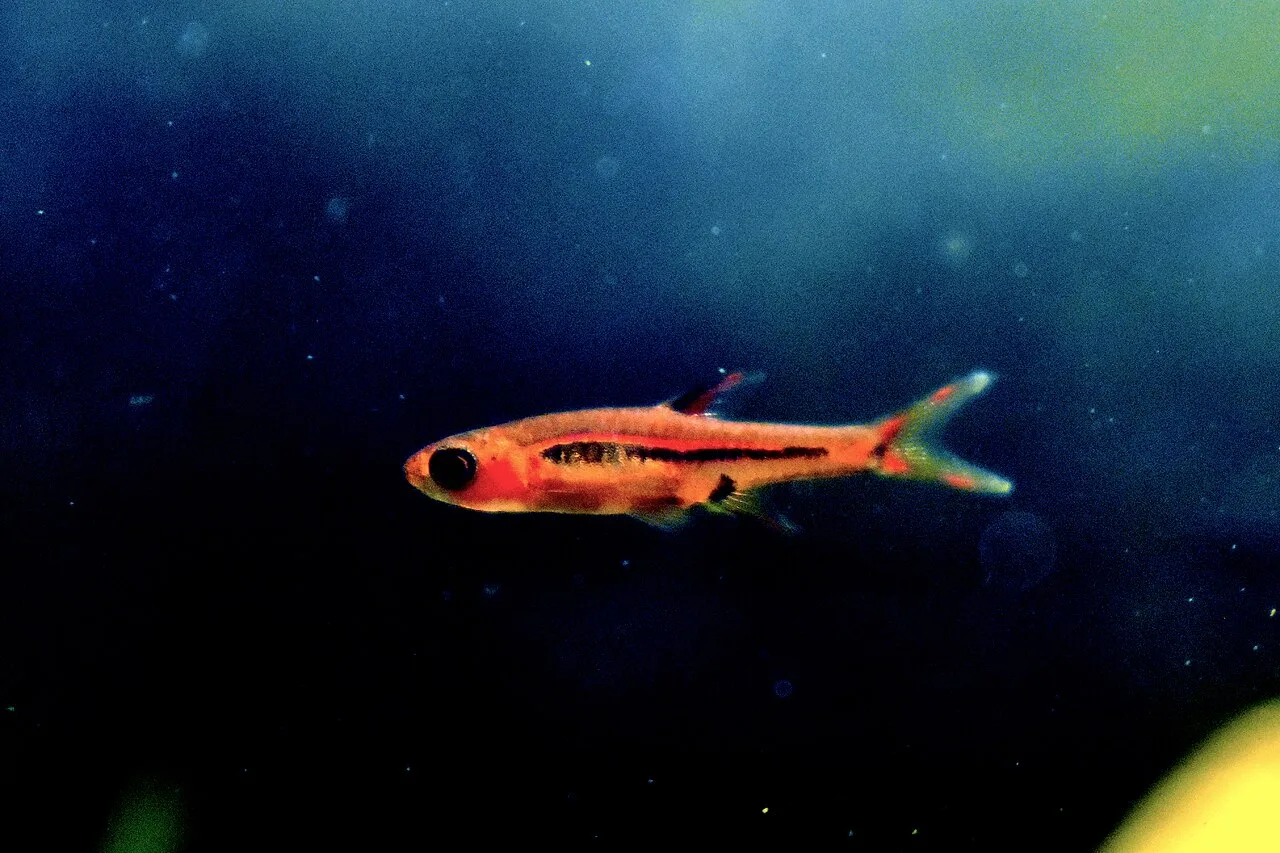
If the betta above is the solo answer to a 20-litre tank, the chili rasbora is the schooling answer. At 2 centimetres fully grown, a group of eight fits a genuine 20-litre footprint the way six neon tetras never will, and a proper group is what turns this fish from “a red speck” into the shimmering red shoal it is kept for.
The trade-off is price and patience. Chili rasboras run noticeably more per fish than an ember tetra or a guppy, largely because they are still wild-caught or limited-scale tank-bred instead of mass-produced, and Australian specialty retailers price them accordingly. They are also shy new arrivals. Give them dense planting and floating cover for the first fortnight and they settle; drop eight of them into a bare tank and half will hide behind the filter intake.
Where chili rasboras beat the celestial pearl danio just below is scale. Both are true nano fish, but the danio’s more active swimming pattern wants a touch more floor space than a chili rasbora school does.
Pros
- One of the very few fish on the market bred specifically for a 20-litre school
- Vivid red colour that intensifies once settled and fed well
- Peaceful with shrimp and other nano tankmates
Cons
- Priced well above a standard tetra or livebearer
- Shy for the first few weeks without dense cover
- Too small to compete with anything but other nano species for food
3. Celestial Pearl Danio (Danio margaritatus) – Best for a planted nano showpiece
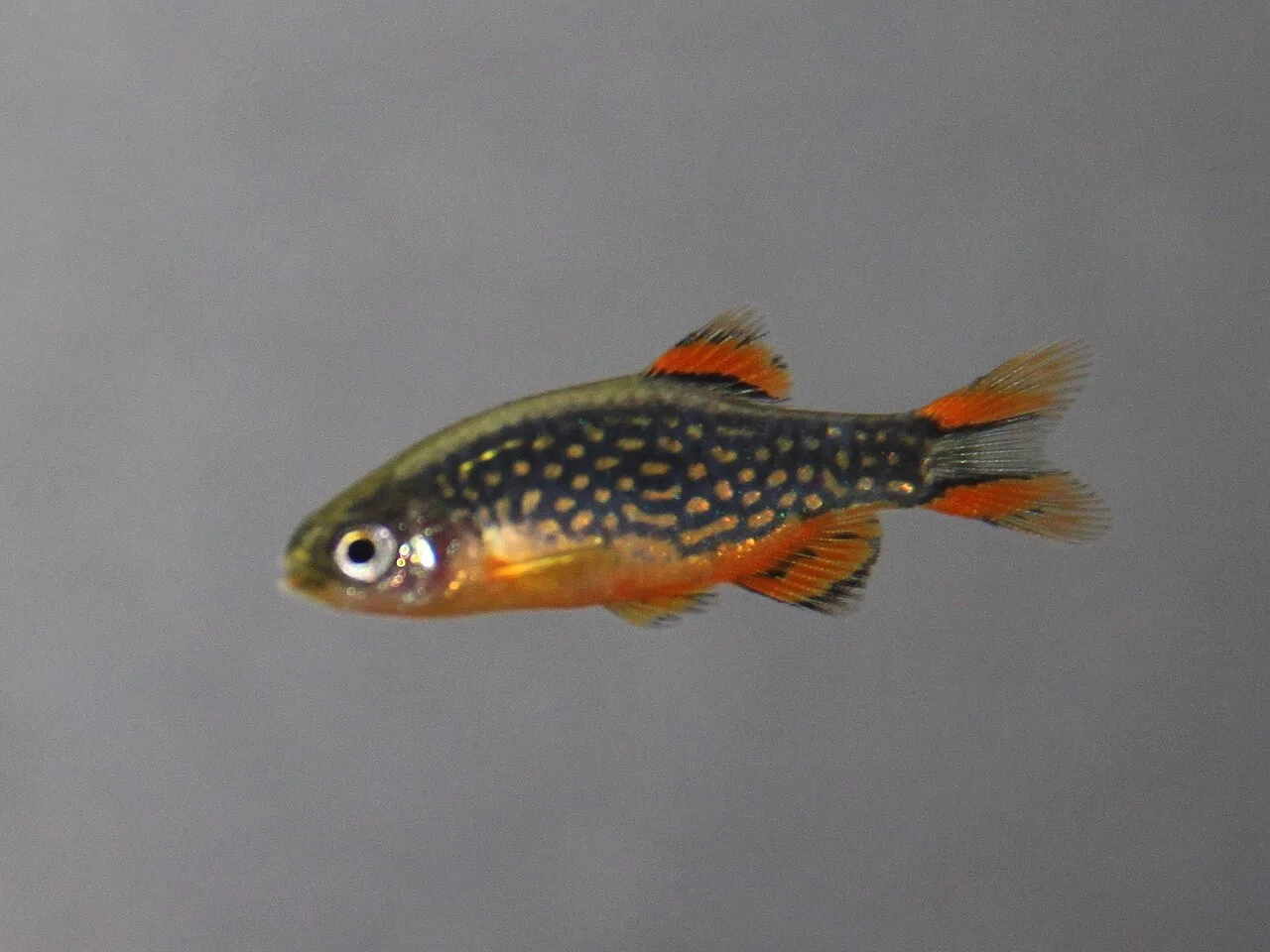
Also sold as the galaxy rasbora, and that older name is still what a lot of Australian shops and forum threads use. A 2016 Whirlpool thread on stocking a 40-litre tank has an experienced keeper recommending galaxy rasboras over zebra danios outright, calling them the nicer-looking fish, and that recommendation has aged well. They are noticeably more attractive up close than a plain schooling tetra, with a scattered pearl pattern over a dark body and orange-red fins on the males.
They run cooler than most of this list. Twenty to 24 degrees C is comfortably below what a heater set for a standard tropical community tank delivers, so check your heater’s actual setting instead of assuming “tropical” covers it. In a lot of Australian homes through spring and autumn they will happily go unheated for stretches, though I would not rely on that through a Melbourne or Hobart winter.
Set against the ember tetra further down, celestial pearl danios cost more and want a touch more room, but the colour and the more natural, foraging behaviour in a planted tank is the reason keepers pay the difference.
Pros
- Strikingly patterned at close range, more so than most nano tetras
- Runs cooler than most tropical fish, useful in an unheated or lightly heated setup
- Peaceful, shrimp-safe, and well suited to a heavily planted aquascape
Cons
- Costs more than an ember tetra or a livebearer for the same group size
- Needs more floor space than a chili rasbora school of the same number
- Males can get briefly territorial with each other over display space, though rarely to the point of injury
4. Ember Tetra (Hyphessobrycon amandae) – Best budget-friendly nano school
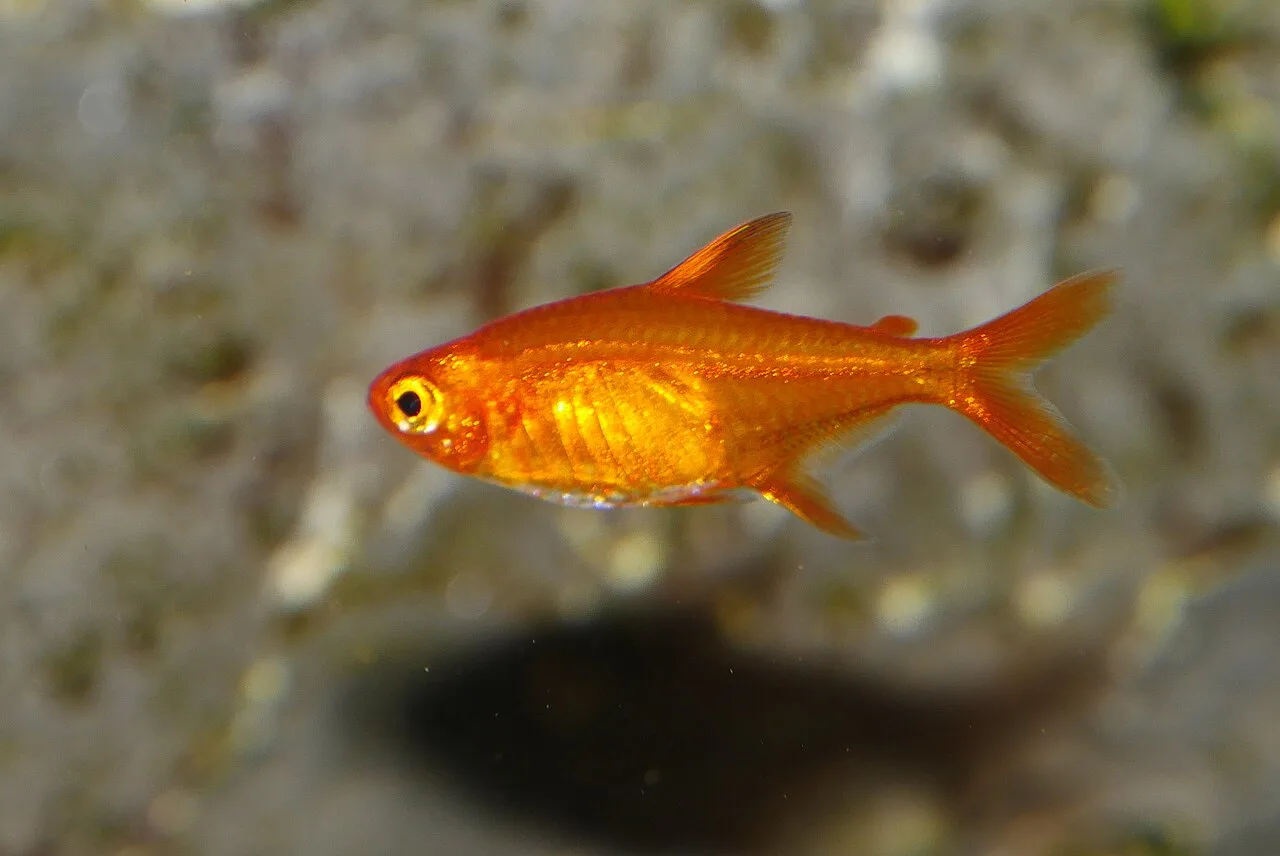
Embers are the cheapest true nano schooler on this list, and the same 2016 Whirlpool thread flagged them as “very hardy” alongside the standard silvertip and cardinal tetra recommendations, which tracks with how widely and cheaply Australian retailers move them; several run six-for-twenty specials that work out under four dollars a fish.
At full size they barely clear 2 centimetres, smaller than a neon tetra, which is exactly why they scale down to a 30-litre setup that a neon school would find cramped. Colour intensifies with a darker substrate and won’t show at all under harsh white light, so if your tank looks washed out, that is the tank, not a dud batch of fish.
Where embers lose to the celestial pearl danio above is visual interest per fish. Embers are a solid orange-red block of colour and not much else, while danios carry an actual pattern. What embers win back is price: you can stock double the group for the same budget.
Pros
- Cheapest true nano schooling fish on this list
- Very hardy once past the first week or two, per direct AU forum reports
- Small enough for a true 30-litre setup with a full group of six
Cons
- Colour looks flat under strong white lighting or over pale substrate
- Less visually distinct than the celestial pearl danio at the same swimming level
- Easily outcompeted for food by faster or larger tankmates, so keep the tank a nano-only setup
5. Pygmy Corydoras (Corydoras pygmaeus) – Best nano clean-up crew
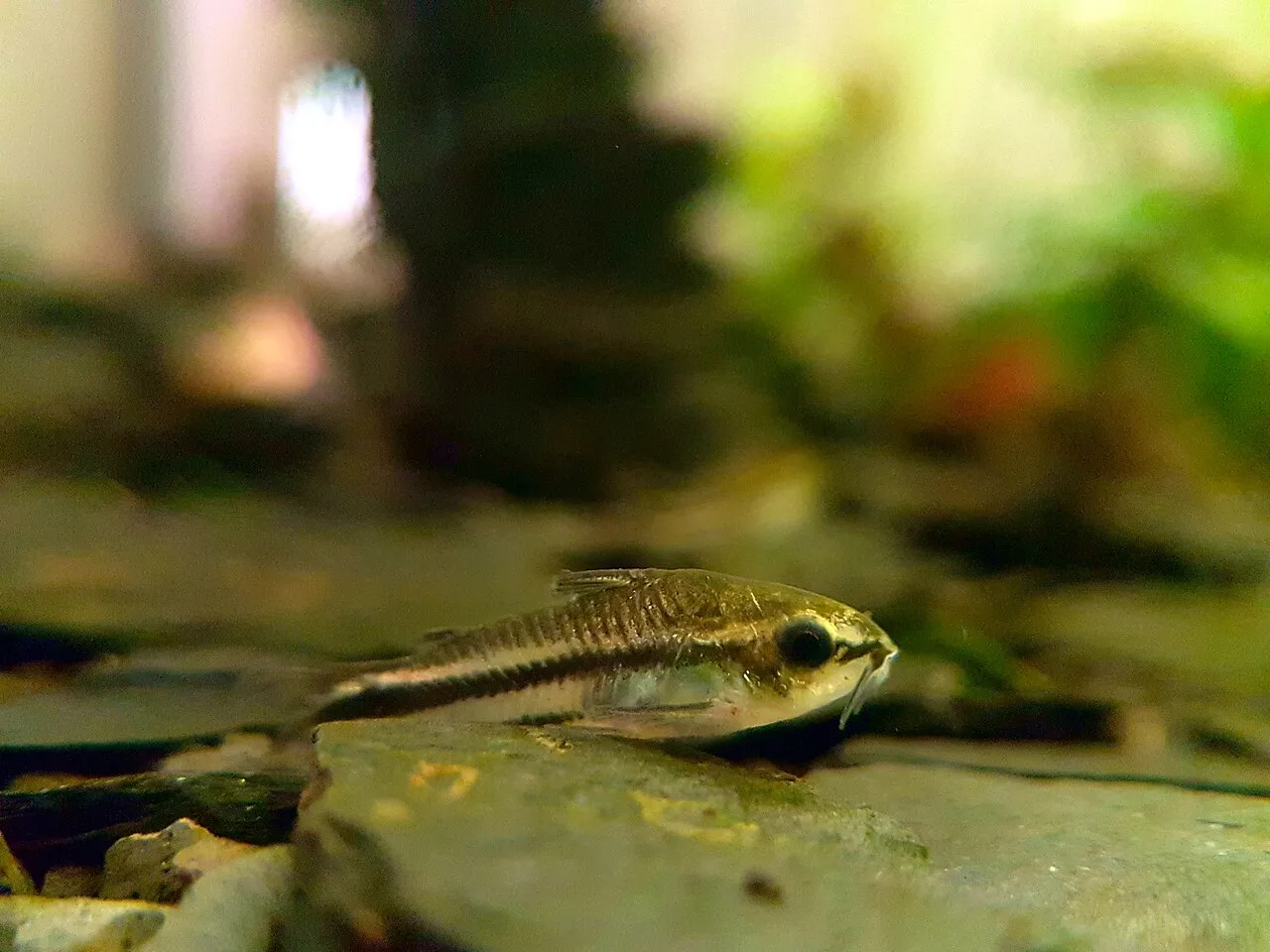
The standard bronze corydoras that turns up on every beginner list needs 60 litres for a proper group. This one does not. Pygmy corydoras top out around 2.5 centimetres, spend more time hovering mid-water than digging like their bigger cousins, and settle into a 30-litre setup with a group of six without crowding it.
They carry the same substrate warning every corydoras does, and it is worth repeating here since a small planted nano tank is exactly where keepers reach for a decorative sharp gravel: their barbels, the whiskers around the mouth, wear down on rough substrate over months. Sand is the safer floor for this fish, not a stylistic preference.
Compared to the otocinclus lower down this list, pygmy corydoras are the easier nano bottom-dweller for a newly cycled tank. Otocinclus need an established tank with real algae to graze; pygmy corydoras will eat a proper sinking pellet from day one.
Pros
- One of the only corydoras species properly sized for a 30-litre tank
- Peaceful with every fish on this list, including the celestial pearl danio and chili rasbora
- Does not need an already-mature, algae-covered tank the way an otocinclus does
Cons
- Sharp gravel wears down its barbels over time, same trap as the standard bronze corydoras
- Needs a real group of six, not the lone “clean-up fish” it is still sometimes sold as
- Easy to overlook at the shop next to flashier fish, so ask specifically for it by name
6. Endler’s Livebearer (Poecilia wingei) – Best colour without the guppy fry explosion
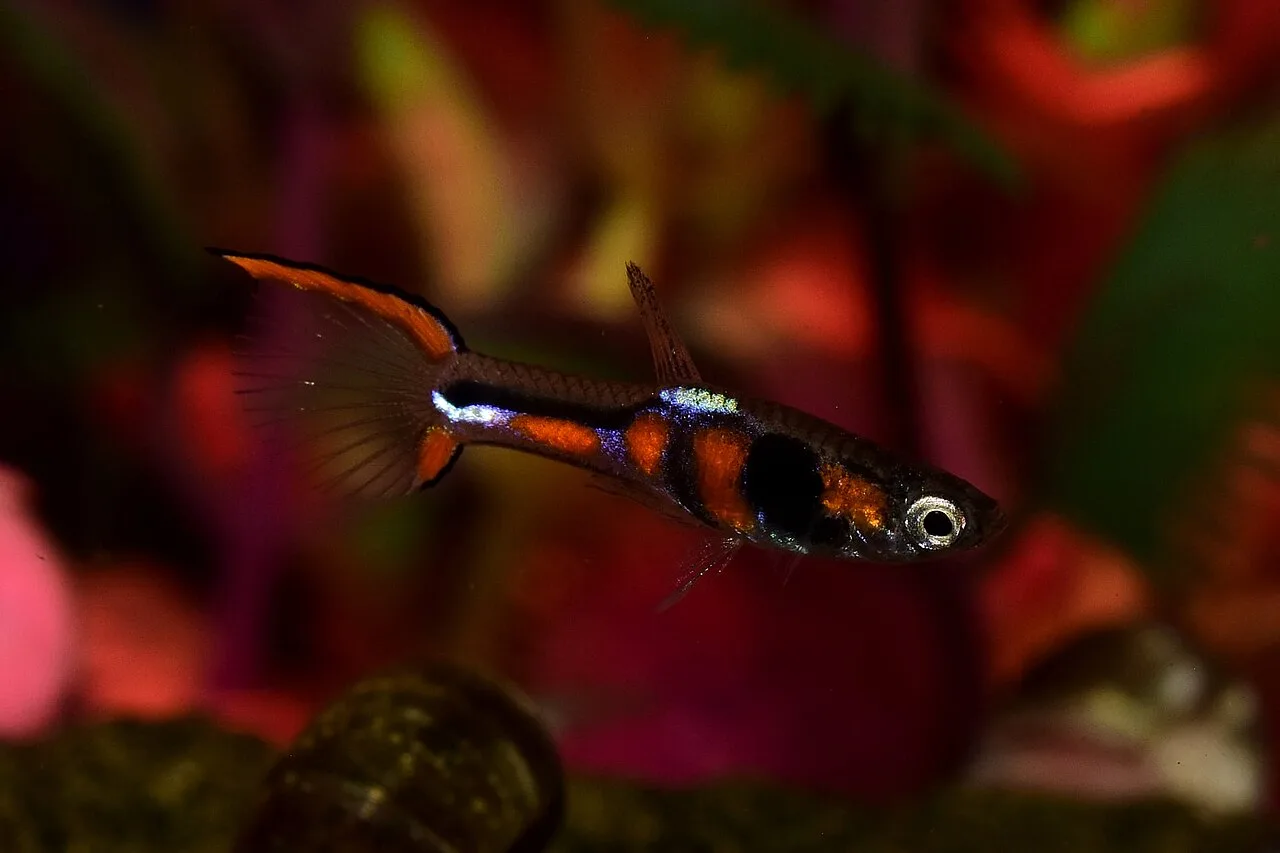
Endler’s are basically small, colourful guppies. Not quite, though close enough that most keepers assume they behave the same way, and mostly they do: livebearers, breed readily, tolerant of a new tank’s rough edges. Where they earn a separate spot on this list is size. A male tops out around 2.5 centimetres, noticeably smaller than a fancy guppy, and a small group of five settles into 40 litres in a way a guppy group starts to outgrow.
One real caveat, and it is not a small one: endler’s and guppies will crossbreed, and the resulting fry lose the purebred endler’s pattern within a couple of generations. If you want to keep the strain clean, do not mix them with any guppy, ever, including one a friend swears is “probably fine.”
Set beside the betta above, endler’s give you constant group activity and colour instead of one fish’s individual display. Which one suits you is really a question of whether you want to watch a shoal move or a single fish hold its space.
Pros
- Smaller adult size than a fancy guppy, properly suited to 40 litres instead of pushing past it
- Breeds readily if you want to try that later, without the size a guppy fry group reaches
- Wide colour variation across strains, often brighter than a standard feeder guppy
Cons
- Crossbreeds with guppies, which ruins the strain within a generation or two
- Still a livebearer, so an unplanned fry boom is likely in a mixed-sex group
- Harder water and a stable pH matter more to this fish than to a guppy
7. Sparkling Gourami (Trichopsis pumila) – Best for a quiet, lidded nano tank
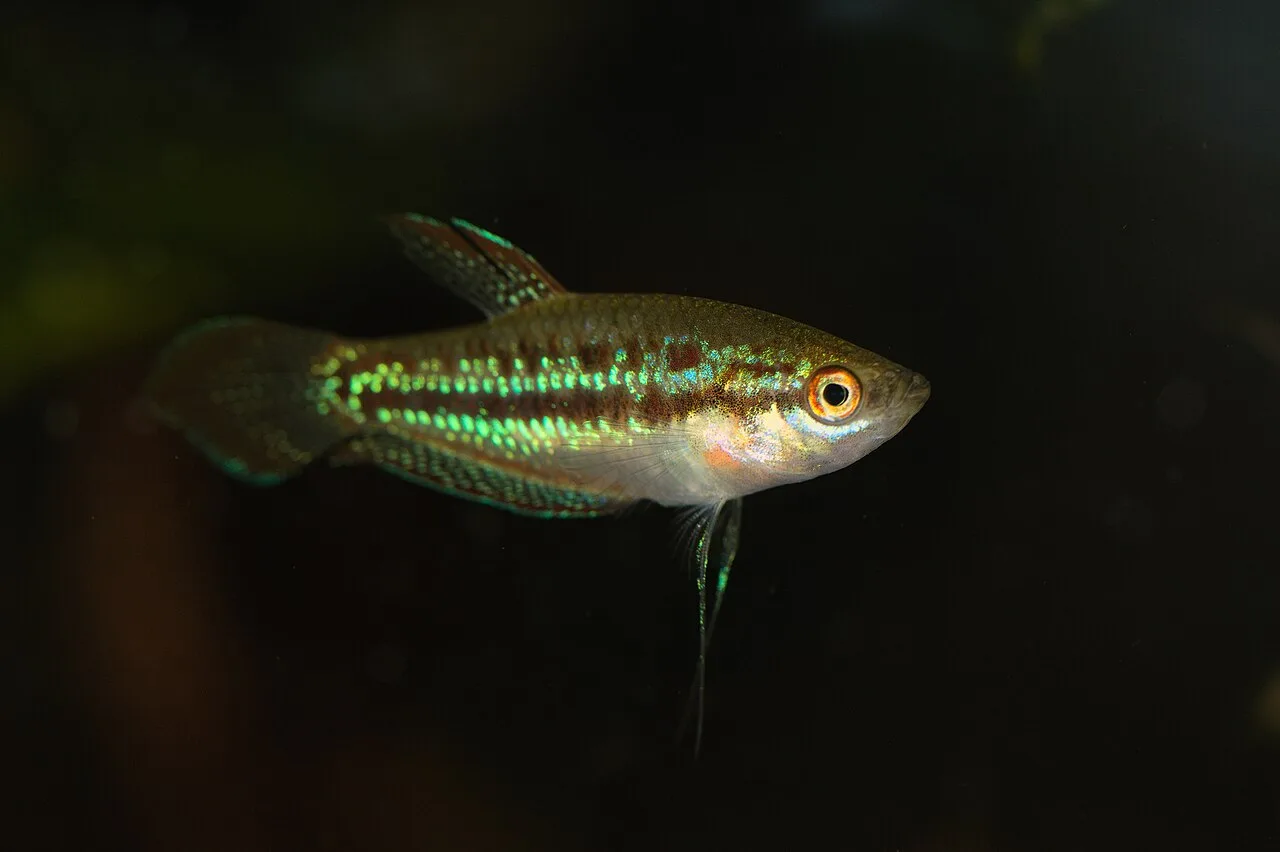
This is the one genuinely quiet, easy-to-overlook fish on this list, and it rewards a keeper who wants something other than another schooling shoal. Sparkling gouramis are labyrinth fish, meaning they gulp air at the surface as well as breathing through their gills, and they make an audible croaking sound during courtship, a strange, small detail most first-time keepers have never heard of until they own one.
They are shy rather than fragile. A dense floating plant cover and calm tankmates matter more to this fish than exact water numbers do, and a lid is not optional. Labyrinth fish surface for air in a warm, humid layer just above the waterline, and a gap under an ill-fitting lid can dry that layer out on a hot day.
Compared to the betta, another labyrinth fish on this list, sparkling gouramis are the pick if you want a small group instead of a solo display, though neither fish tolerates fast, boisterous tankmates well.
Pros
- Distinctive courtship behaviour, including an audible sound most keepers have never encountered
- Peaceful enough to sit alongside pygmy corydoras or chili rasboras without issue
- Thrives in a smaller, calmer setup that a big schooling fish would find dull
Cons
- Shy around fast or boisterous tankmates, so stock the rest of the tank with that in mind
- Needs floating plant cover and a snug lid, not just a heater and a filter
- Less available in mainstream Australian pet shops than a betta or a standard tetra, so specialty retailers are the more reliable source
8. Otocinclus (Otocinclus vittatus / affinis) – Best algae control in a mature small tank
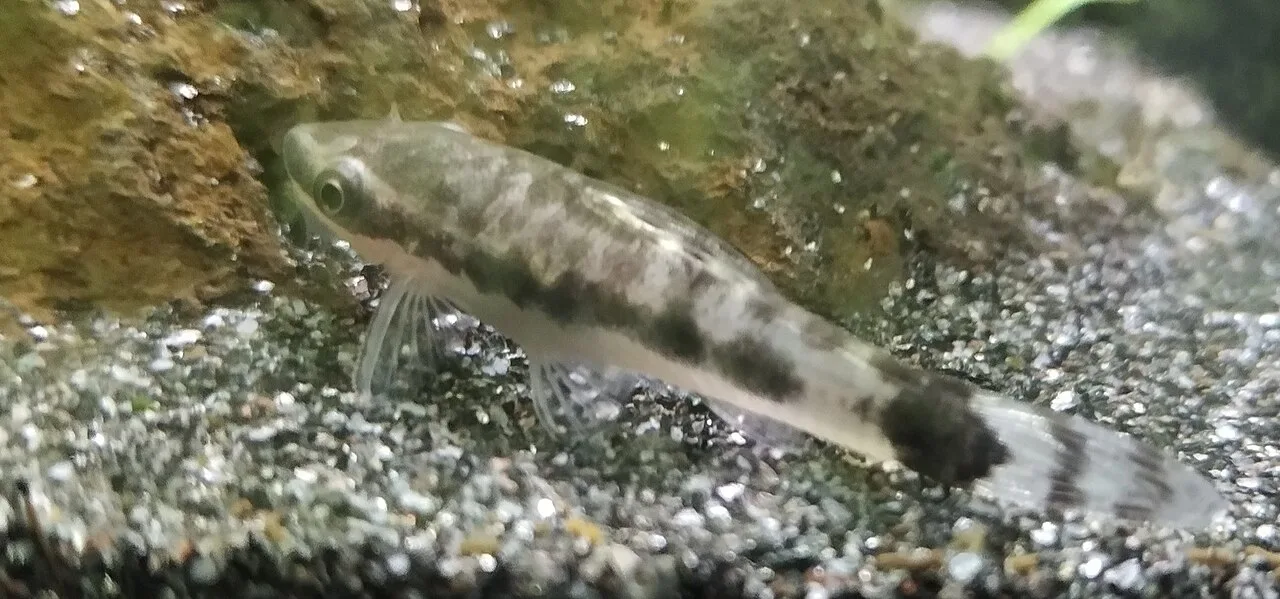
I am putting this one last for a reason, not because it is a weak fish but because it is the one entry here with a real hype-versus-reality gap. Otocinclus are marketed constantly as a drop-in algae solution for a new tank, and that is close to the opposite of correct. The single most common cause of death in home-kept otocinclus is starvation in the first month, arriving thin from the wholesaler and going into a freshly cycled tank with no algae film built up yet to graze on.
Add them to an established, several-months-old tank with real algae growth on the glass and decor, not a tank you just finished cycling last week, and that risk mostly disappears. Keep a group of three or more; a lone otocinclus does poorly, and this is not a fish where “just one for now” is a safe shortcut.
Set against the pygmy corydoras above, otocinclus are the pickier, more specialist choice: better at actual algae control, worse at tolerating a young tank, and worth the wait rather than the first fish you add.
Pros
- Effective at grazing soft algae film off glass and decor, once settled in
- Peaceful with every other fish on this list, including shrimp
- Small, unobtrusive, and rarely the fish causing a stocking problem
Cons
- Frequently starves in a new tank with no algae yet to eat, a real and common cause of early death
- Needs a group of three or more, not the lone algae-eater it is often sold as
- Best added to an already-established tank, not a newly cycled one
How to Choose Fish for a Small Tank
Get the litres right before you get the species right. Every number below assumes you already know your tank’s actual volume, not the size printed on the box, which sometimes rounds generously.
- Why does almost every care sheet say “six or more”? Because that number was written for a 60 to 200-litre display tank, not a 20-litre nano setup. Match the group size to the litres, not the other way round. A school of six neon tetras genuinely wants more like 60 litres. A school of eight chili rasboras is built for 20. Read the group size on this list as a floor, not a target to shrink if the tank feels crowded.
- Cycle the tank before any fish goes in, small tank or not. A 20-litre tank actually swings on water chemistry faster than a 200-litre one, not slower, since there is less water to dilute a mistake.
- If your tank sits closer to 60 litres than 20, a handful of entries above (celestial pearl danios, ember tetras, pygmy corydoras) can be stocked in a slightly larger group than the floor number listed, but do not stretch a 20-litre-rated group past what the tank in front of you can really support.
A small tank loses and gains heat faster than a large one, so an Australian summer pushing a north-facing room past 30 degrees C affects a 20-litre nano tank sooner and harder than it affects a 200-litre display. Check your tank’s actual water temperature on a hot afternoon before assuming your heater’s thermostat is telling the full story.
Related Guides
Keep reading on the same topic:
- best aquarium fish for beginners
- best freshwater aquarium fish
- best community fish
- best coldwater aquarium fish
- best aquarium plants for beginners
- best shrimp for aquariums
- best small fish tanks
- how often to feed fish
- browse the Best Fish hub
Frequently Asked Questions
What is the best fish for a 20-litre tank specifically?
A single betta is the most reliable choice at exactly 20 litres, since it needs no schooling group. A group of eight chili rasboras is the best schooling option at that size, provided the tank is already cycled and planted enough for them to settle in confidently.
Can I keep more than one type of fish together in a small tank?
Yes, within limits. Chili rasboras, celestial pearl danios, ember tetras and pygmy corydoras generally combine well in the same 30 to 40-litre tank since none compete heavily for space or food. A betta or a sparkling gourami is safer kept without fast, fin-nipping tankmates.
Do small tank fish need a heater in Australia?
Most do. Betta, chili rasbora, ember tetra, endler’s livebearer, sparkling gourami and otocinclus all need a stable tropical range, typically 22 to 28 degrees C. Celestial pearl danios run cooler and can sometimes go unheated through an Australian spring or autumn, though not reliably through a cold-climate winter.
Is it cruel to keep fish in a 20-litre tank?
Not if the species and stocking match the space. A 20-litre tank is genuinely too small for six neon tetras or a school of zebra danios, but it is a real, adequate home for a single betta or a properly cycled school of chili rasboras, which is the entire distinction this list is built around.
Are any of these small tank fish illegal to keep in Australia?
None of the eight appear on the banned-fish lists I checked for NSW, Queensland, South Australia, Victoria, Western Australia or the Northern Territory, and all eight are on Tasmania’s permitted list (checked October 2026). I couldn’t confirm the ACT, so check there first. Ornamental fish legality is set state by state and does change over time, so check your state’s Fisheries or Biosecurity department if you are ever unsure about a specific species before buying.
For a genuine 20-litre tank with no room to move, a single betta or a group of eight chili rasboras are the two picks that actually fit that footprint rather than merely surviving in it. Step up to 30 or 40 litres and celestial pearl danios, ember tetras and pygmy corydoras open up real, well-evidenced options, with the otocinclus worth adding only once the tank has matured past its first few months. Whichever you choose, match the group size on this list to your actual litres, not the six-or-more rule written for a much bigger tank.
