
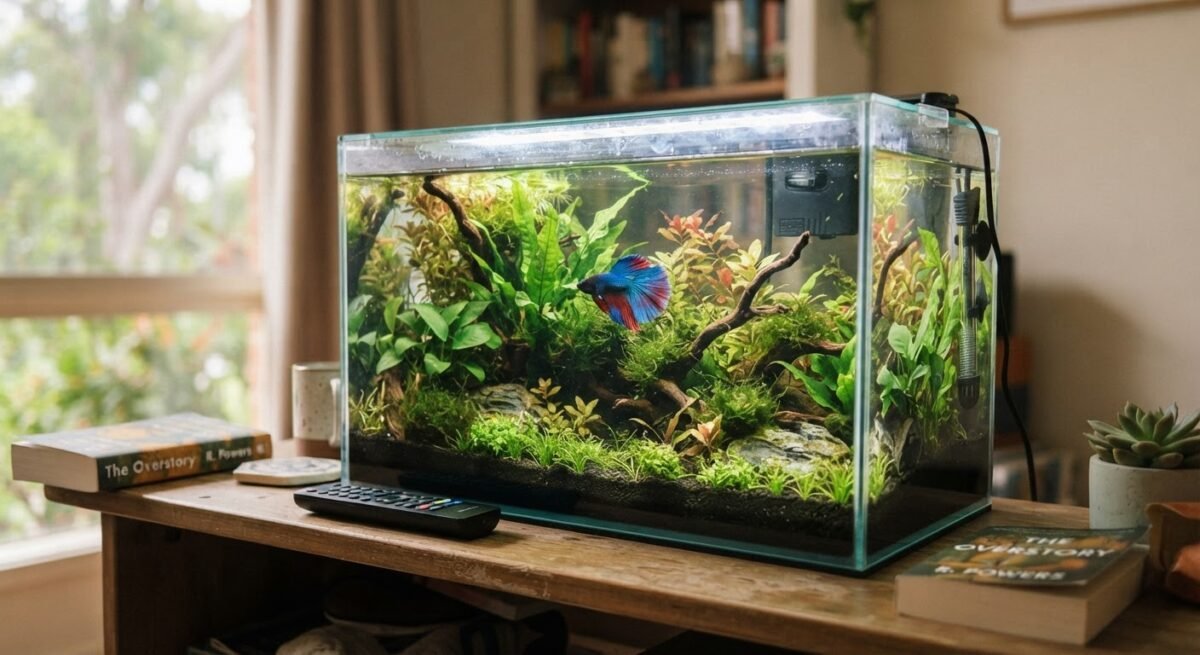
Change 10 to 25% of the water each week and vacuum the gravel at the same time, as RSPCA Australia recommends. Leave the betta in the tank, treat new water with a conditioner that handles chloramine, match the temperature, and rinse filter media only in old tank water.
Here’s how to clean betta fish tank water the low-stress way. Once a week, unplug the heater, wipe the glass, then siphon out 10 to 25% of the water while vacuuming the gravel. Refill with conditioned tap water at the same temperature. Rinse the filter sponge in the old water only when flow drops. Your betta stays in the tank the whole time.
This is the betta-specific version of our general guide to cleaning a fish tank without removing the fish, and it sits in the tank cleaning hub. If you’re still choosing a setup, check what size tank a betta needs first, because tank size changes how often you clean.
What You Need
- A small siphon or gravel vacuum sized for a nano tank. A big one empties a 20 L tank in seconds.
- A clean bucket kept for the tank only, never washed with detergent.
- An algae pad or soft sponge for the glass.
- Water conditioner that says it treats chloramine, not just chlorine.
- A thermometer, so the new water matches the tank.
How to Clean Betta Fish Tank Water: Step by Step
This routine is written for a filtered, heated betta tank of about 20 litres, which is what RSPCA Australia recommends. An unfiltered bowl or a tank with live plants and shrimp needs a different rhythm, so adjust if your setup doesn’t match.
- Unplug the heater and filter. A heater left running out of water can crack its glass. Give it 10 to 15 minutes to cool before the level drops.
- Wipe the glass first. Loosened algae floats down and gets siphoned out in the next step.
- Siphon 10 to 25% of the water while pushing the vacuum into the gravel. In a 20 L tank, that’s 2 to 5 litres.
- Prepare the new water. Fill the bucket from the cold tap, dose the conditioner for the full bucket volume, and bring it within a degree or two of the tank.
- Refill slowly. Pour onto a plate or your hand so the flow doesn’t blast the betta’s fins or dig up the gravel. Leave a few centimetres below the rim, because bettas jump.
- Restart the equipment. Plug the filter back in, wait 15 minutes for the heater to sit in water, then switch it on. Check the thermometer an hour later.
That’s the weekly job, about ten minutes. Our step-by-step water change guide covers the siphon technique in more detail.
How Often to Clean a Betta Fish Tank
RSPCA Australia recommends weekly partial water changes of 10 to 25% combined with a gravel clean. That’s the baseline for a filtered tank. The table shows how it shifts with the setup.
| Setup | Water change | Gravel | Filter media |
|---|---|---|---|
| Filtered, heated, 20 L or more | 10 to 25% weekly | Vacuum weekly | Rinse in old tank water when flow drops |
| Filtered, 10 to 19 L | 20 to 25% weekly, test more often | Vacuum weekly | Rinse in old tank water when flow drops |
| Unfiltered bowl or vase | Several partial changes a week | Every change | No filter, so waste builds fast |
| Heavily planted, few fish | 10 to 15% weekly | Light vacuum on open patches | Rinse only when flow drops |
The bowl row is the reason we steer people away from bowls. With no filter, ammonia from waste builds up between changes, and the only fix is changing water more often. RSPCA Australia gives 10 litres as the absolute minimum for a betta and 20 litres or more as the target. If you test the water, ammonia and nitrite should read zero. See how often to clean a fish tank for testing schedules.
The Australian Tap Water Trap
Many Australian supplies use chloramine (chlorine bonded to ammonia), at least in some areas. Sydney Water adds it, parts of the Yarra Valley Water network use it, and so do a number of regional utilities. The Kempsey Shire Council chloramination FAQ says chloramine must be removed before water goes into an aquarium.
Here’s the catch. Leaving a bucket to stand overnight lets chlorine escape, but it doesn’t shift chloramine. Use a conditioner that names chloramine on the label every time.
Two more local tips. Run the cold tap for a few seconds first, because water that has sat in copper pipes or a hot water system can carry metals that harm fish. And never fill from the hot tap.
How to Clean Betta Fish Tank Decor, Gravel and Filter
Decor and plants
Scrub ornaments in a bucket of old tank water with a soft brush. No soap, no detergent, no household cleaners. Swap hard plastic plants for silk or live ones if you see torn fins, because long betta fins snag easily.
Gravel
Vacuum a different third of the gravel each week if the tank has live plants, so you don’t rip up roots. In a bare or artificial-plant tank, vacuum it all. Our gravel cleaning guide covers sand too.
Filter
The filter sponge holds the beneficial bacteria that turn ammonia into less harmful nitrate. Squeeze it gently in a container of the water you just removed, only when flow has slowed. Tap water can knock that bacteria back. Don’t rinse the filter and vacuum all the gravel on the same day. See how to clean a fish tank filter for each filter type.
One betta extra: RSPCA Australia says bettas prefer low flow and the filter should have adjustable flow. If your betta struggles to swim after a clean, turn the outlet down or baffle it with a sponge.
How to Keep a Betta Fish Tank Clean Longer
- Feed less. RSPCA Australia suggests once a day, only what your betta eats in under 2 minutes. Uneaten pellets are the main source of dirty water.
- Add live plants. They use nitrate and compete with algae.
- Keep tank mates few, if any. See which tank mates suit a betta.
Common Mistakes
- Doing a 100% water change. It strips the water the fish is used to and swings temperature and chemistry at once.
- Catching the betta with a net every week. It’s stressful and unnecessary for a partial change.
- Standing tap water instead of conditioning it. That doesn’t remove chloramine.
- Washing the filter sponge under the tap.
- Using soap or a bucket that has had cleaning products in it.
- Cleaning while a bubble nest is fresh, then wondering why the male is agitated. Skip the glass at the surface that week.
When to Get Help
Cleaning on schedule but the water is still cloudy, smelly or testing positive for ammonia? The tank may not be cycled, may be overstocked for its size, or the filter may be too small. Test the water first. If your betta is clamped, lying on the bottom for long periods, or showing torn or rotting fins, a local aquarium shop or a fish vet can help. The RSPCA Australia betta care page is a good baseline to check your setup against. For more betta guides, browse the betta fish hub.
Frequently Asked Questions
How often should you clean a betta fish tank?
Once a week for a filtered tank, changing 10 to 25% of the water with a gravel vacuum. An unfiltered bowl needs partial changes several times a week.
Do I take my betta out to clean the tank?
No, not for a weekly clean. Siphon around the fish. Only move it to a container of its own tank water if you’re stripping the whole tank down.
How to clean a small betta fish tank without a filter?
Do smaller, more frequent partial changes, wipe the glass and siphon the bottom each time. Better still, add a gentle sponge filter, which cuts the workload and makes the water far more stable.
Can I use tap water for my betta?
Yes, once it’s treated with a conditioner that handles chloramine and brought to the same temperature as the tank. Untreated tap water isn’t safe for fish.
What is the best way to clean a betta fish tank with a filter?
Clean the glass, do the weekly partial change and gravel vacuum, and leave the filter alone unless flow has dropped. When it has, squeeze the sponge in old tank water on a different day from a big gravel clean.