

The best floating plants for aquariums sit on the surface with their roots hanging into the water, so they shade the tank, soak up nitrate before algae can use it and give fry, shrimp and bettas somewhere to hide. Nothing has to be planted. You drop them in and they get to work.
Most fall into four groups: true floaters such as red root floater, the tiny duckweeds, floating ferns like azolla and water sprite, and stem plants that will also drift, such as hornwort and Brazilian pennywort. The number to watch is surface cover. Aim for no more than about half of the surface, because most of these plants can double their spread in a week or two and a solid mat cuts the gas exchange your fish depend on.
Here is the Australian catch. The three floaters overseas guides recommend most often, Amazon frogbit, salvinia and water lettuce, are declared weeds in parts of Australia, so this list leaves them out. It covers seven floating plants that Australian shops sell and that I could clear against the NSW and Queensland weed lists. If you are new to live plants, start with what plants you can put in a fish tank and browse the Live Plants hub.
NSW DPI lists frogbit (Limnobium laevigatum) and spongeplant (Limnobium spongia) as prohibited matter, bans dealings in salvinia (Salvinia molesta) and water hyacinth, and treats water lettuce (Pistia stratiotes) as a regional priority weed. Queensland makes salvinia a restricted plant that must not be given away or sold, and every other salvinia species is prohibited there. Aquafy and Micro Aquatic Shop will not post live plants to WA or Tasmania, and Aquafy also excludes the NT. I checked the NSW and Queensland lists and SA’s Hydrocotyle page, not every state’s list, so confirm with your state agency before you buy. Never tip tank water or plant scraps into a drain, creek or dam.
Red root floater is the best all-round floating plant you can legally buy in Australia, with 132 reviews behind it on Aquafy alone. Water sprite is the native pick that also grows planted, and azolla or duckweed suit goldfish ponds and anyone who wants maximum nitrate uptake, as long as you are ready to net them out every week.
The Best Floating Plants for Aquariums, Compared
| Plant | Type | Best For | Key Trait |
|---|---|---|---|
| Red Root Floater | True floater | Colour and all-round cover | Hates surface splash |
| Water Sprite | Floating fern | Native, floats or roots | Lacy fronds, fragile stems |
| Azolla | Floating fern | Ponds and warm water | Native, very fast |
| Duckweed | True floater | Nitrate uptake and goldfish food | Hard to remove once in |
| Brazilian Pennywort | Stem plant that floats | Shade with round leaves | Lookalike is a declared weed |
| Hornwort | Rootless stem plant | Fry cover and goldfish tanks | Declared weed in Tasmania |
| Riccia fluitans | Floating liverwort | Shrimp and fry tanks | Thin review sample |
How I Compared It
I researched these plants and did not grow each one side by side, so every pick here is Researched, not Hands-on tested, and none carries a score. productreview.com.au has no per-plant listings, so the owner evidence is the verified review history on Aquafy and Micro Aquatic Shop, read star by star, plus forum threads on the Aquarium Co-Op forum and UKAPS, which I could only read through search summaries. Care details come from Tropica. Legal status comes from the NSW DPI water plants list, Queensland’s prohibited plants list and salvinia fact sheet, and SA’s Hydrocotyle page. Prices and stock were checked on live listings on 1 October 2026. Several one-star reviews were about postage, not the plant, and I say so where it matters.
1. Red Root Floater (Phyllanthus fluitans) – Best for colour and all-round surface cover
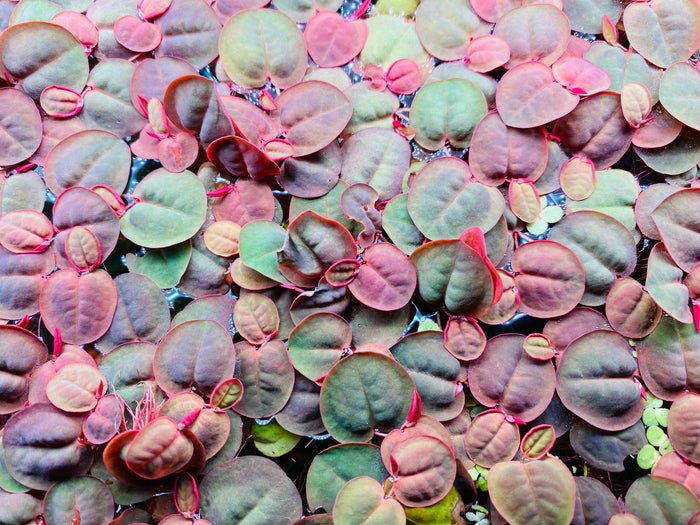
Red root floater has the deepest owner record of any floating plant sold here. Aquafy shows 132 reviews, 101 of them five star, and the recurring praise is the same two words: red roots. Micro Aquatic Shop adds another 15 reviews averaging 4.67, including a buyer who called it a colourful addition to a betta tank. Aquafy sells five plants for $5.95. Micro Aquatic Shop sells 15 for $14.95.
Now the honest bit. The red is not guaranteed. One Micro Aquatic Shop reviewer warned that plants grown indoors will not be anywhere near as red as the photos, and Tropica’s care page says stronger light turns the leaves browner, so expect a green top with red roots under a typical LED. The other weakness is splash. Forum keepers report that red root floaters melt where water sits on the leaves, so an airstone bubbling right under them, or a sealed lid dripping condensation, is the usual cause of failure.
Compared with the duckweed further down, it is far easier to keep in check. You can scoop out a handful of 2 cm leaves in a minute, while duckweed sticks to your arm, the net and the glass. That alone is why it ranks first.
Pros
- 101 of 132 Aquafy reviews are five star
- Tropica rates it easy, with low light and low CO2 needs
- Large leaves are easy to thin by hand
Cons
- Indoor plants stay greener than the shop photos
- Leaves melt under splashing water or lid condensation
- Not posted to WA, NT or Tasmania by Aquafy
2. Water Sprite (Ceratopteris thalictroides) – Best for a native fern that floats or roots
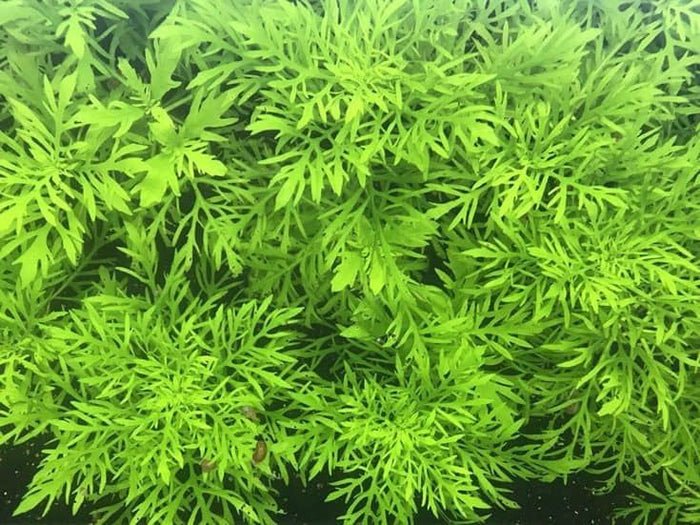
Water sprite is the only plant on this list that is native to tropical Queensland, the NT and northern WA, where it grows along creek and billabong margins. In a tank it does two jobs. Float it and the lacy fronds shade the surface and throw out baby plants. Push the base into gravel and it becomes a bushy background plant instead.
The review sample is small but clean: nine reviews on Aquafy, seven five star and two four star, with one owner noting their bettas love it. The real complaint is fragility. Micro Aquatic Shop’s own listing warns that it is a fragile plant, and an Aquafy buyer found the stems had bent and browned in a small ziplock bag before recovering. Aquafy sends three stems for $9.95, while Micro Aquatic Shop charges $14.95 for a single 10 cm plant.
Against the red root floater above, sprite gives taller, softer cover but less surface shade per dollar. Pick it if you want one plant that can move from the surface to the substrate later, or if you like the idea of growing a local species.
Pros
- Native to northern Australia
- Works floating or planted
- No negative reviews on either shop
Cons
- Fragile stems bruise in the post
- Only 11 reviews across both shops
- Grows large and needs regular thinning
3. Azolla (Azolla filiculoides) – Best for goldfish ponds and hot Australian summers
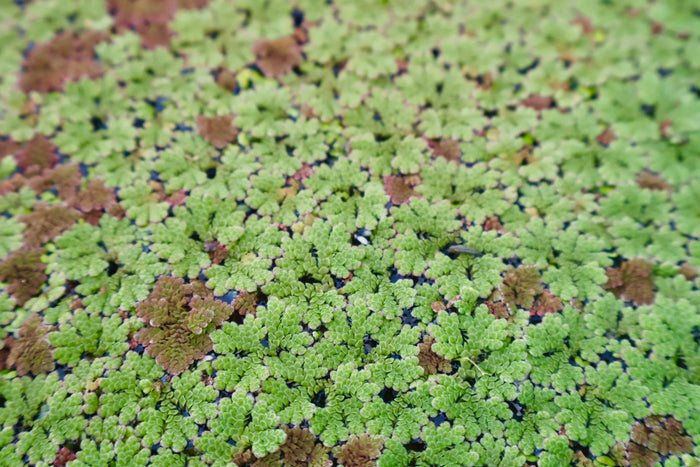
Azolla is a tiny native floating fern, sometimes sold as fairy moss or mosquito fern. Aquafy sends at least 50 plants for $8.95 and says it handles higher temperatures than duckweed, which matters if your tank or pond sits in a hot Brisbane or Perth summer. It also takes on red and purple tones in strong light, much like the red root floater above.
Its owner record is split. Of 51 Aquafy reviews, 28 are five star and 9 are one star. Reading them, the one-star reviews are about delivery: a portion that arrived dried out and half dead, and an order that never came. Happy buyers mention fast postage and a generous portion. A Micro Aquatic Shop reviewer added a useful warning, that azolla sticks to everything you put in the tank unless you rinse it off first.
So which is it, a great plant or a bad one? The plant is tough. The risk is the trip in the post, so order early in the week and float it the day it arrives. It is better outdoors than in a sealed indoor tank, and it is my pick over duckweed for a goldfish pond because goldfish usually leave it alone, according to Aquafy.
Pros
- Native and very fast-growing
- Copes with warmer water than duckweed
- Goldfish usually leave it alone
Cons
- 9 of 51 Aquafy reviews are one star, mostly for arrival condition
- Clings to hands, nets and decor
- Sold out at Micro Aquatic Shop on 1 October 2026
4. Duckweed (Lemna) – Best for fast nitrate uptake and free goldfish greens
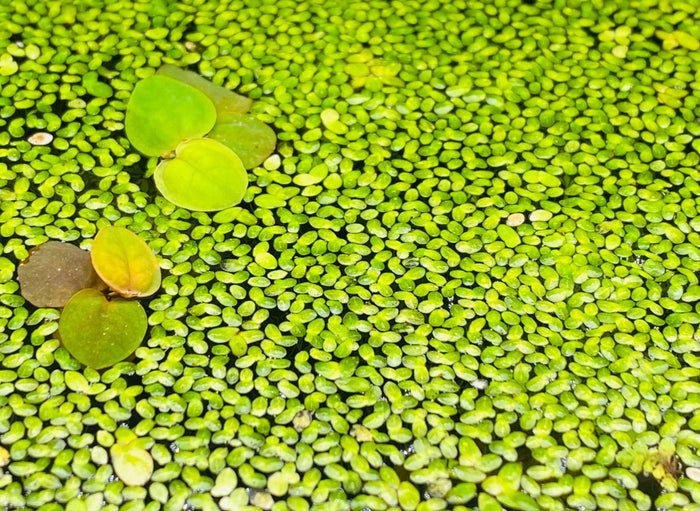
Duckweed is the cheapest plant here and the hardest to get rid of. Aquafy sells a 10 x 10 cm portion with at least 100 plantlets for $4.95, and its 68 reviews include 38 five star and 11 one star. One reviewer summed up the goldfish problem neatly: perfect, unless your goldfish is an absolute pig. Duckweeds are native to Australia, so they are not a weed concern in the legal sense.
Read this before you buy:
- It reaches every corner of the surface in weeks, and a single plantlet left behind restarts the mat.
- It rides on nets, buckets and hands into your other tanks.
- Pond fish and goldfish eat it, which is a bonus if you want free greens and a problem if you want permanent cover.
- Giant duckweed is sold as a larger, easier-to-net version. Check you are getting the right plant, because salvinia has been sold as duckweed.
That last point is real. In 2020 a hardware store in Ardrossan, SA, sold salvinia labelled as native duckweed, and the regional landscape board asked buyers to hand it back. Queensland’s salvinia fact sheet notes that young salvinia leaves often resemble duckweed, but they grow in pairs, are covered in stiff water-repellent hairs and reach about 12 mm wide. Even Aquafy’s own floating bamboo listing pitches that plant as one that will not spread everywhere like duckweed and azolla, which tells you something.
Pros
- Cheapest floater on the list at $4.95
- Strips nitrate quickly as it spreads
- Native, with no state weed listing
Cons
- Almost impossible to remove completely
- Clogs filter intakes and skimmers
- 11 of 68 Aquafy reviews are one star
5. Brazilian Pennywort (Hydrocotyle leucocephala) – Best for shade from big round leaves
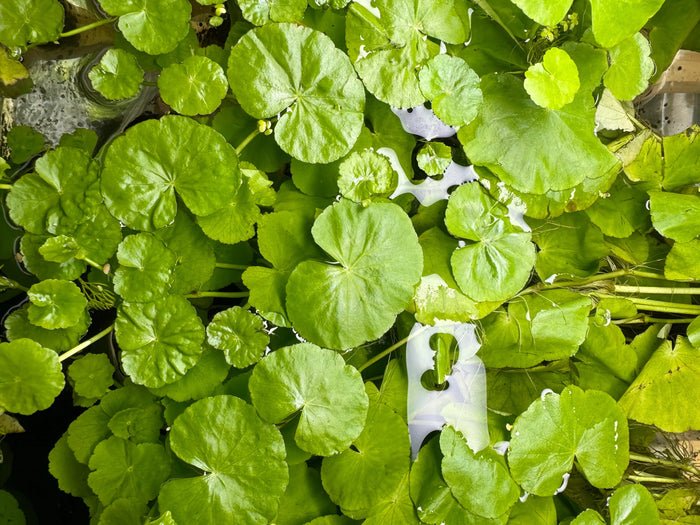
Brazilian pennywort is a stem plant, but left loose it sends coin-sized leaves along the surface and makes broad pockets of shade underneath. Aquafy sells at least 10 leaves for $10.95 and shows 13 reviews, nine of them five star. One buyer’s plant arrived green after a weekend in transit in summer heat. Another saw a few original leaves melt before healthy new ones took over.
Micro Aquatic Shop has only one review, but it is a telling one. The buyer bought three floating plants for a tank under artificial light, and pennywort was the only one that survived and thrived. The complaints on Aquafy are about size: one reviewer expected larger plants from the photo, and another rated the batch the worst they had bought.
Buy it only from a shop that names it as Hydrocotyle leucocephala. Its relative Hydrocotyle ranunculoides is prohibited matter in NSW and a reportable weed in SA, and the two share round, scalloped leaves. Against the hornwort below, pennywort gives better shade, while hornwort gives better fry cover.
Pros
- Coin-sized leaves give strong shade
- Survived artificial light where other floaters failed
- Can be planted later as a stem plant
Cons
- Some leaves melt after arrival
- A buyer found the plants smaller than pictured
- Shares a look with a prohibited Hydrocotyle
6. Hornwort (Ceratophyllum demersum) – Best for fry cover in goldfish and breeding tanks
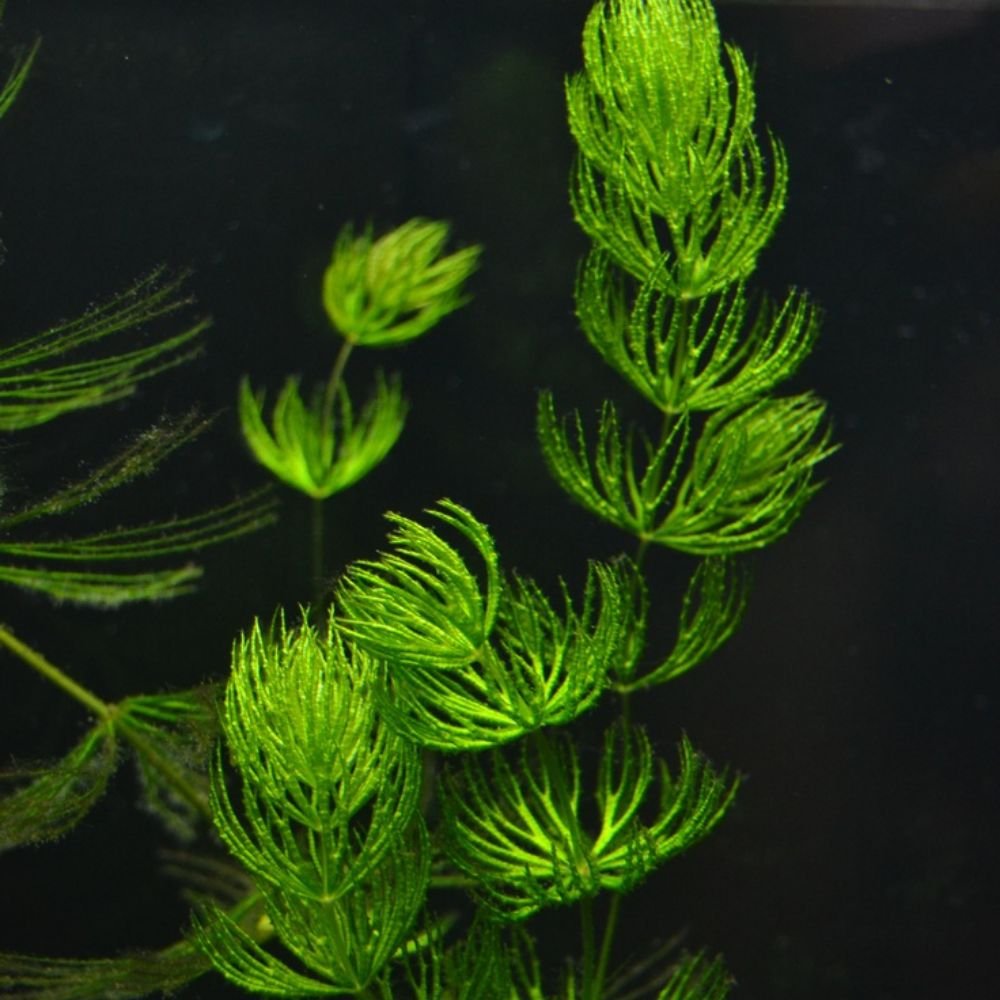
Hornwort is not a true floater. It is a rootless stem plant that you can weight down or simply let drift just under the surface, where the needle-like whorls make a tangle that adult fish cannot push through and fry can. Aquafy sells two or three 10 to 15 cm strands for $9.95, and Micro Aquatic Shop charges $14.95 for three. I already recommend it for betta tanks, and it earns its spot here for a different reason: it is tough enough for goldfish.
The evidence is mixed in an instructive way. Of 40 Aquafy reviews, 23 are five star and 7 are one star, and one detailed complaint described two bags with only one long strand and a lot of short bits. Aquafy’s listing also warns it may contain snails or algae. It sheds needles when it is unhappy, so expect some mess in the first week.
There is a legal note too. Hornwort is native across most of mainland Australia but is a declared weed in Tasmania, and neither shop posts plants there anyway.
Pros
- Dense cover that protects fry
- Grows in low light without CO2
- Native to most of mainland Australia
Cons
- 7 of 40 Aquafy reviews are one star
- Some packs arrive as short fragments
- Declared weed in Tasmania
7. Riccia fluitans (Crystalwort) – Best for shrimp and fry tanks that need fine cover
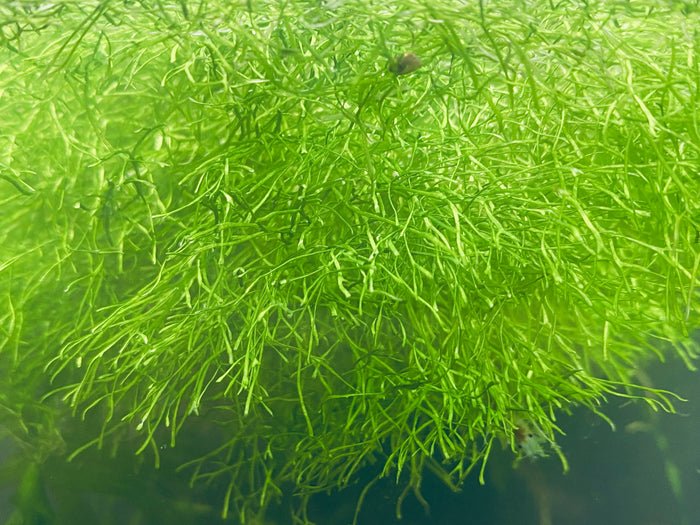
Riccia floats as a bright green, fine-textured clump that baby shrimp and fry pick through for food. Aquafy sells a 5 x 5 cm portion for $12.95, and Micro Aquatic Shop has an $18 tissue-culture pot, which arrives pest-free. Five of Aquafy’s six reviews are five star, including a beginner who has bought it twice and says it is thriving in a low-tech tank. That is a thin sample, which is why it ranks last.
Watch the temperature. Aquafy lists an upper limit of 26 C, lower than any other plant here, so a tank that runs warm through a Darwin or Brisbane summer may struggle. It also breaks into fragments that drift into filters. If you would rather tie it down, it behaves more like the plants in the best aquarium moss list.
Pros
- Fine cover that shrimp and fry graze
- Tissue-culture pots arrive free of pests
- No complaints about the plant itself on Aquafy
Cons
- Only 6 reviews
- Struggles above about 26 C
- Loose portion sold out at Micro Aquatic Shop
How to Choose Floating Plants
Start with your surface. Floating plants want still water and dry leaves. If your filter output churns the surface or an airstone bubbles directly below, either move it or corral the plants with a floating ring of airline tubing. Then look at your lid. A sealed glass lid drips condensation back onto the leaves, which is the most common reason red root floaters melt. Lifting one corner, or swapping in a mesh cover from the best fish tank lids list, usually fixes it.
Next, decide how much control you want. Red root floater, water sprite and pennywort are easy to thin by hand. Azolla and duckweed are not. They are great nitrate sponges if you are fighting green water or algae, but you will be netting some out every week. Whatever you choose, keep at least half the surface open, especially in a crowded tank, and read how to add oxygen to a fish tank if your fish start hanging at the top.
Postage often costs more than the plant. Aquafy charges $12.99 express for plants, so a $5.95 bag of red root floaters lands at $18.94. Order on a Monday so the parcel does not sit in a hot depot over the weekend, especially from December to February, and float the plants the day they arrive. If you live in WA, the NT or Tasmania, neither shop will post to you, so ask a local aquarium shop or club instead. Excess plants go in the bin or the compost, never in a waterway.
Floating Plant and Planted Tank Guides
More on choosing and growing live plants in an Australian tank:
- best aquarium plants for beginners
- best low light aquarium plants
- betta fish tank ideas that use floating cover
- how to set up a goldfish tank
- how to lower nitrate in a fish tank
Frequently Asked Questions
Is Amazon frogbit legal in Australia?
Not everywhere. NSW DPI lists frogbit (Limnobium laevigatum) as prohibited matter, which makes dealing in it an offence, and it is banned in the ACT. Overseas guides still rank it as a top floating plant because they were written for other countries. In Australia, red root floater or water sprite gives similar surface cover without the legal risk. Check your own state list before buying any floater.
Is salvinia legal to keep in an aquarium?
No. Salvinia molesta is a Weed of National Significance. Queensland makes it a restricted plant that must not be given away, sold or released, and every other salvinia species is prohibited there. NSW bans dealings in it. Salvinia has also been sold by mistake as duckweed, so check for paired, hairy leaves about 12 mm wide before you add any floater from an unknown seller.
Do floating plants need special lighting?
No. Tropica rates red root floater as low light, and every plant on this list grows under a standard aquarium LED without added CO2. Floating plants sit closer to the light than anything else in the tank, so they usually grow faster than rooted plants. Stronger light brings out red and purple tones in azolla and red root floater, but it is optional.
Why are my floating plants melting?
Wet leaves are the usual cause. Most floaters want the tops of their leaves dry, and splashing from an airstone or filter, or condensation dripping from a sealed lid, keeps them soaked until they rot. Calm the surface, lift a corner of the lid, and give the plants a week. Fresh plants also lose some leaves after a long trip in the post, then recover.
How much of the tank surface should floating plants cover?
Keep about half of the surface open. Floating plants can double their spread in a week or two, and a solid mat cuts light to plants below and slows gas exchange at the surface. Bettas and gouramis also need open water to breathe air. Thin the mat whenever it creeps past half, and bin the excess instead of tipping it outside.
Verdict
For most Australian tanks, red root floater is the floating plant to buy first: it has the strongest owner record of anything sold here, it is easy to thin, and it is cheap. Choose water sprite if you want a native plant that can be planted later, and choose azolla for a goldfish pond or a hot outdoor tub. Skip frogbit, salvinia and water lettuce entirely, whatever an overseas guide says.
