
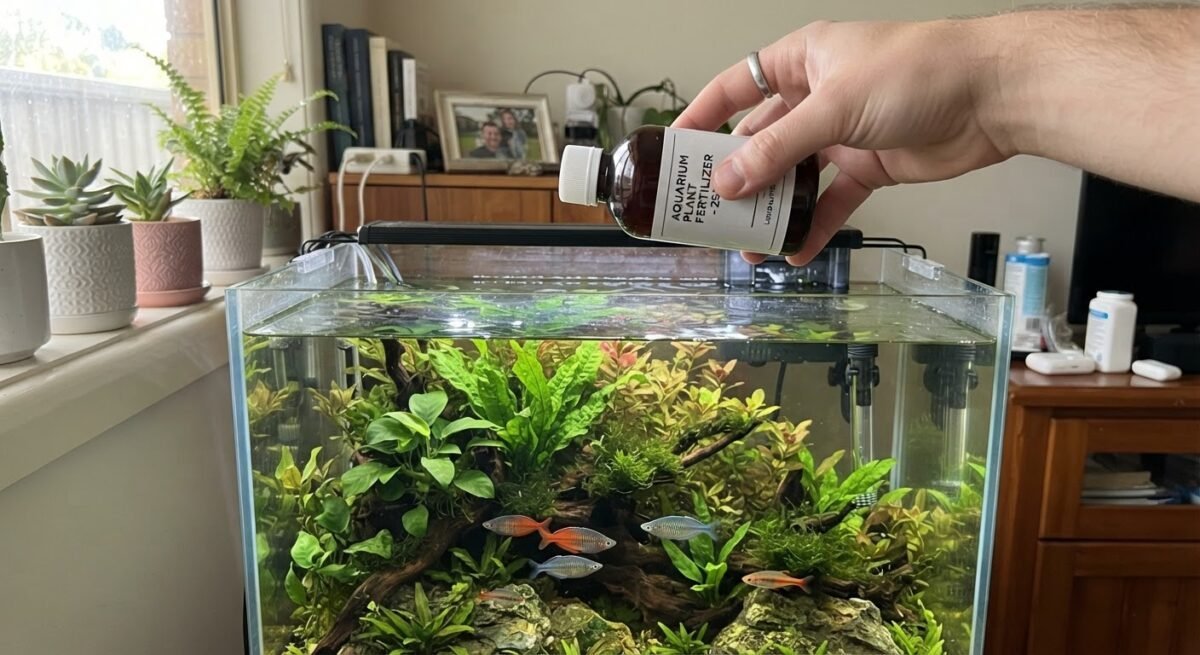
The best aquarium plant fertilizer is the one that replaces whatever your particular tank is short of, and in most Australian home aquariums that is a handful of micronutrients and, in heavily planted tanks, some nitrogen. Fertilisers come in two broad types: liquids dosed into the water for leaf feeders, and root tabs pushed into the substrate for plants that feed through their roots.
The number that matters most is dose per litre. Seachem Flourish is dosed at 5 mL per 250 L, Easy-Life ProFito at 10 mL per 100 L, and API Leaf Zone at 5 mL per 38 L, so bottle price alone tells you very little about what a week of feeding costs. This list works those numbers out for a 60 L tank so the comparison is honest.
It covers five freshwater plant fertilisers you can buy in Australia, all researched rather than tested in my own tanks. It leaves out carbon products and full-macro dry ferts, which suit a different kind of tank. If you are still choosing plants, start with the best aquarium plants for beginners.
Seachem Flourish is the safest starting point: cheap to run, shrimp safe by the maker’s own statement, and honest that it is a micronutrient supplement. Add Flourish Tabs if you keep swords or crypts. The API products work but cost more per month of feeding, and API itself warns that Leaf Zone can feed algae.
The Best Aquarium Plant Fertilizer, Compared
| Product | Type | Best For | Key Spec |
|---|---|---|---|
| Seachem Flourish | Liquid micronutrients | Low-tech tanks and shrimp tanks | 5 mL per 250 L, once or twice a week |
| Seachem Flourish Tabs | Root tabs | Sword plants and crypts | 1 tab per 10 to 15 cm radius, replace every 3 to 4 months |
| Easy-Life ProFito | Liquid, universal | Lightly to moderately lit planted tanks | 10 mL per 100 L weekly, no nitrate or phosphate |
| API Root Tabs | Root tabs | Small tanks needing a monthly root feed | 1 tab per 30 sq in, replace monthly |
| API Leaf Zone | Liquid, iron and potassium | Beginners wanting one simple weekly dose | 5 mL per 38 L, weekly |
How I Compared It
I have not run these five in my own tanks, so every pick is labelled Researched, as promised on the How We Test page. Dosing and contents come from the makers’ own pages. Owner sentiment comes from the Fish Forums Flourish Tabs thread, the Barr Report ProFito thread and a 2010 Practical Fishkeeping review. API owner complaints came from summarised search results, so they carry less weight. Reddit could not be read directly, and productreview.com.au only lists aquarium stores, not fertilisers. Prices were checked on The Tech Den, Micro Aquatic Shop and Aquatic Supplies on 29 September 2026.
1. Seachem Flourish – Best all-round micronutrient liquid for low-tech tanks
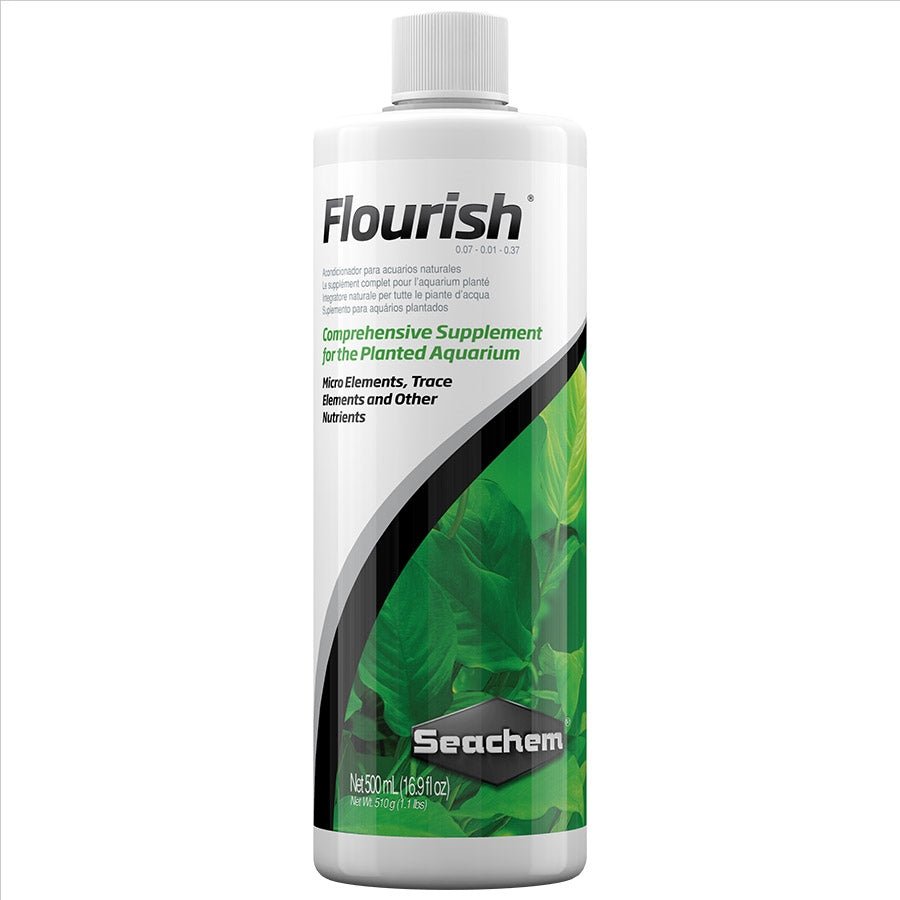
Flourish is a micronutrient supplement, and the label is upfront about it: no significant nitrogen or phosphorus. That is the point. In a lightly stocked, lightly planted tank it tops up the iron, manganese and trace elements that fish food never supplies in useful amounts. In a heavily planted tank it is only part of the answer, because Seachem’s own article on adjusting supplements says nitrogen is often the limiting nutrient there, which is why the range has separate Nitrogen, Potassium and Iron bottles.
The dose is easy to remember and tiny. One 5 mL capful treats 250 L, so a 60 L tank gets about 1.2 mL per dose. A 250 mL bottle costs $15.50 at The Tech Den and $31.00 at Micro Aquatic Shop for the same bottle on the same day, and the 500 mL is $23.50 against $43.50. At the higher dose twice a week, that is roughly 15 to 30 cents a week to feed a 60 L tank. Nothing else on this list is that cheap to run.
Compared with ProFito below, Flourish takes the same no-nitrate, no-phosphate approach at a fraction of the weekly cost. Two ownership details: Seachem recommends refrigerating it three months after opening, and the label carries an allergy warning, so rinse your hands after dosing. Worth a look, too, is the Planted Tank Forum thread titled “Seachem Flourish is not a complete fertilizer”, which is the honest summary of its limits.
Pros
- Shrimp safe by Seachem’s own statement
- Phosphate under 0.01 percent, so it does not feed algae directly
- Cheapest weekly running cost here at 15 to 30 cents for a 60 L tank
Cons
- No significant nitrogen or phosphorus, so heavily planted tanks outgrow it
- Recommended to be refrigerated three months after opening
- Same bottle costs about double at one Australian shop compared with another
2. Seachem Flourish Tabs – Best root feed for swords and crypts
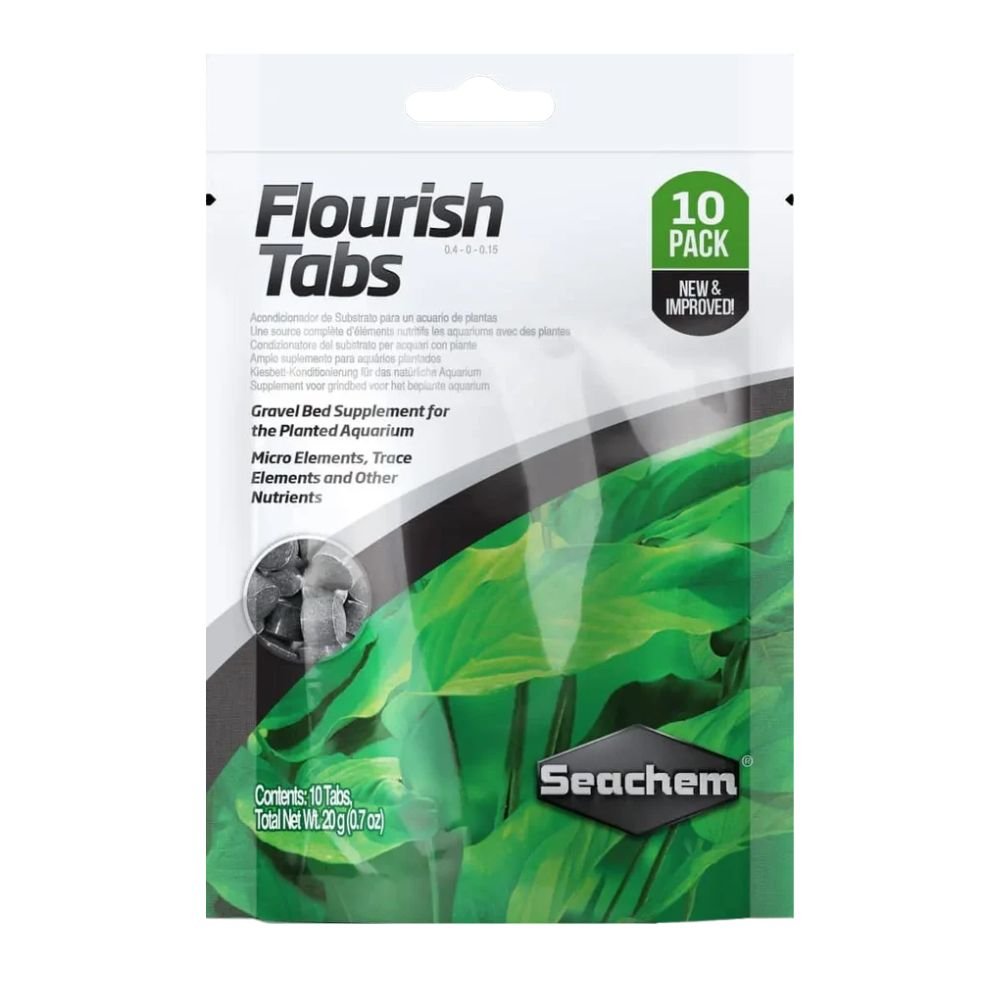
Flourish Tabs go into the gravel or sand next to the plant, one per 10 to 15 cm radius, and Seachem says to replace them every three to four months. Its own example (a hint at how dense it wants them) is six tabs for a 38 L tank. A Fish Forums thread from December 2020 to April 2021 is mostly positive, with one owner reporting swords growing like mad and a moderator calling them one of the better brands.
The cost per refill is the number to watch. Six tabs from a $19.95 ten-pack is about $12 per refill, or roughly $3 to $4 a month, which is about a quarter of what API Root Tabs cost per month of feeding. The 40-pack is $54.50 at The Tech Den. Tabs feed only what roots can reach, so pair them with a liquid such as Flourish above.
Pros
- Replacement only every three to four months
- Seachem states no phosphate or nitrate that would promote algae
- Forum owners reported vigorous sword growth
Cons
- One forum poster called them not cheap
- Improvement was not instant: a poster asked how long recovery takes, and the strongest results paired tabs with a liquid
- Slightly acidic, like peat, in very soft or unbuffered water per Seachem
3. Easy-Life ProFito – Best universal liquid for lightly lit planted tanks
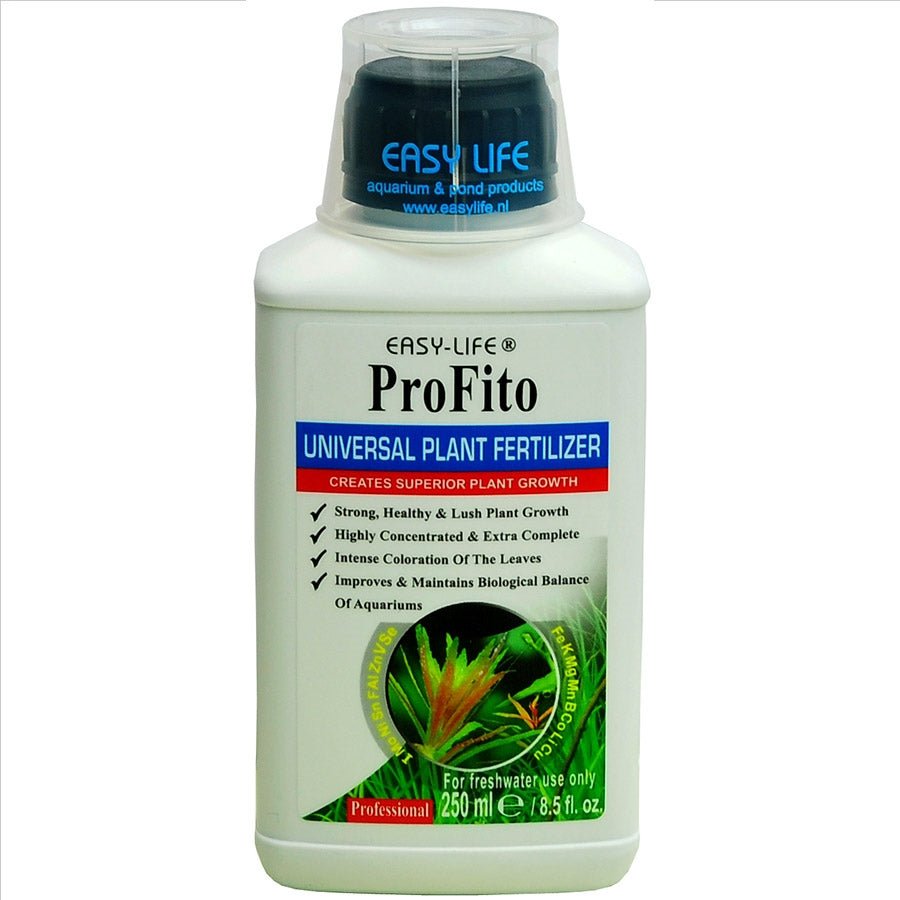
ProFito is a Dutch universal fertiliser with iron, potassium and manganese plus a long trace-element list, and Easy-Life states plainly that it contains no nitrate or phosphate. The label dose is 10 mL per 100 L weekly, and Easy-Life suggests starting at one third and reading the youngest leaves: pale green means you can increase, algae means cut back. George Farmer gave the range 4 out of 5 in Practical Fishkeeping in 2010, calling ProFito a good all-rounder.
The trade-off is price and age of evidence. A 60 L tank takes 6 mL a week, so a $22.95 250 mL bottle lasts about 41 weeks and costs about 56 cents a week, against 15 to 30 cents for Flourish. The 1 L bottle at $59.90 drops that to about 36 cents. The review is 16 years old, and a Barr Report thread from 2007 to 2008 advised against automatic dosing pumps because ProFito tends to precipitate.
Easy-Life’s own page makes no shrimp-safety claim, unlike Flourish and Leaf Zone, so shrimp keepers should look elsewhere in this list.
Pros
- Dosing guidance tells you what to look for on new leaves
- Rated 4 out of 5 by Practical Fishkeeping, with reviewer praise as an all-rounder
- Long trace-element list including iron, potassium and manganese
Cons
- A forum poster warned it precipitates, so avoid automatic dosing pumps
- About twice the weekly cost of Flourish on a 60 L tank
- No shrimp-safety statement on the maker’s page
4. API Root Tabs – Best small-tank monthly root feed
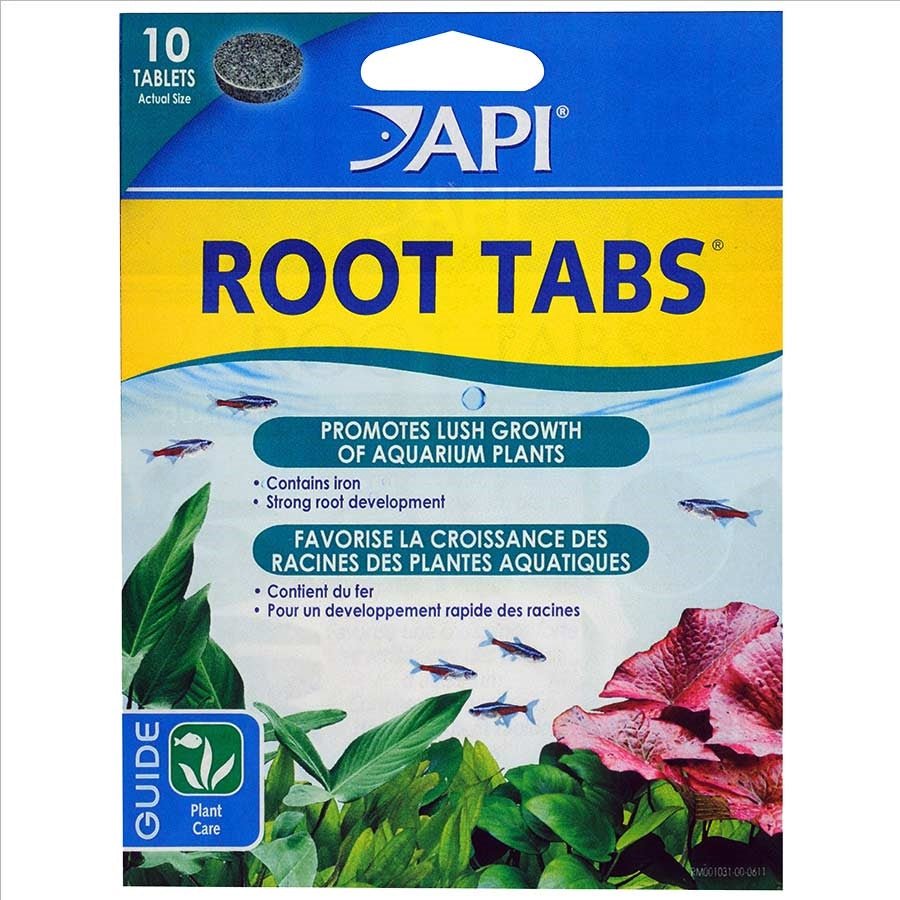
API Root Tabs are pressed tablets containing iron, potassium and carbon, and API says to add new tablets monthly, six for a 38 L tank. Against Flourish Tabs above, the monthly rhythm is the problem. Six tabs from a $22.95 pack is about $13.77 a month, roughly three and a half to four and a half times the monthly cost of Flourish Tabs.
Owner reports, gathered from summarised search results rather than read directly, mention water clouding for a day or two and tabs breaking up before they reach the substrate. One owner blamed tabs that dissolved into the water for a bacterial bloom. That is a single report, but it is why you push each tab well down.
Pros
- Small tablets that reached struggling sword plants within weeks in owner reports
- Clear maker dosing: six tabs for a 38 L tank
- Contains iron, potassium and carbon
Cons
- Owners reported clouding lasting a day or two
- Monthly replacement makes it several times dearer than Flourish Tabs
- Some owners reported tabs dissolving before placement
5. API Leaf Zone – Best one-bottle weekly dose for beginners
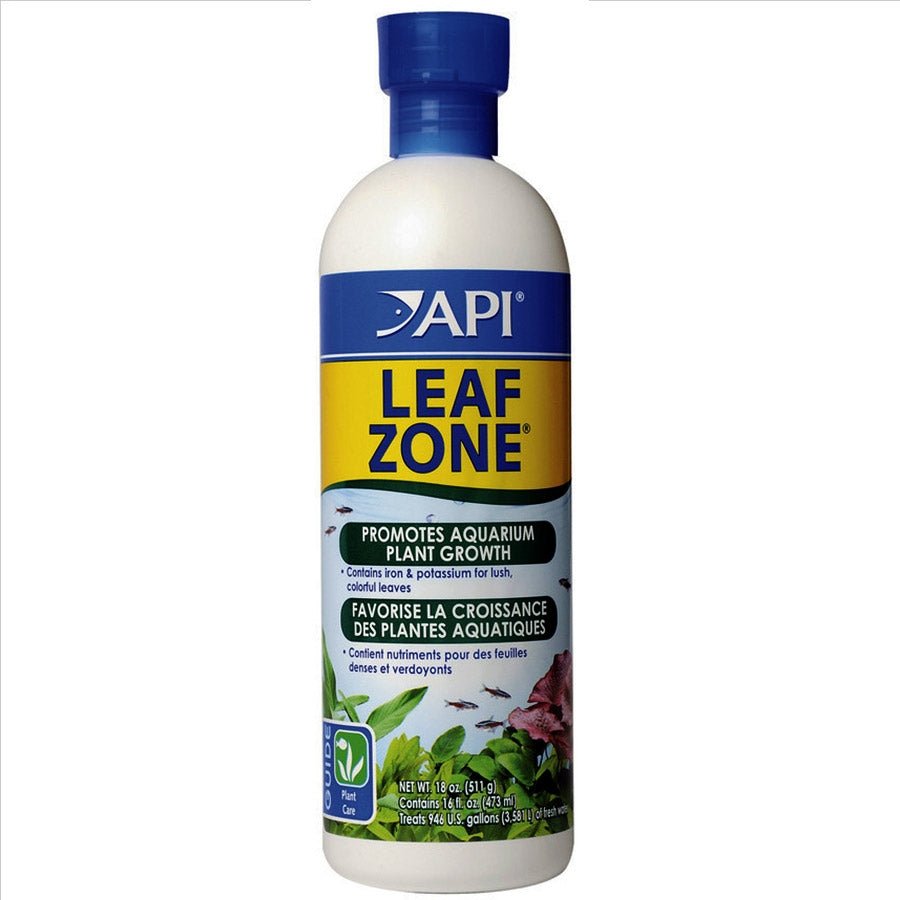
API says Leaf Zone contains chelated iron and potassium, and that it is safe with shrimp and snails. The dose is one line: 5 mL per 38 L weekly. A 60 L tank takes about 8 mL, so a $27.95 473 mL bottle lasts about 60 weeks at around 47 cents a week.
API is unusually candid on its product page: it says Leaf Zone does stimulate algae growth, so dose carefully. Its Walmart rating is 4.9 out of 5, but from only 11 reviews, and one reviewer complained it has only two active ingredients. Compared with ProFito, the weekly rhythm matches and the price per week is similar. The difference is that API states invertebrate safety.
Pros
- Simplest dosing rule on the list
- API states it is safe for shrimp and snails
- 4.9 out of 5 on Walmart, though from a small sample of 11
Cons
- API states it stimulates algae growth, so overdosing is a real risk
- One reviewer noted only two active ingredients
- No full ingredient list on the maker’s page
How to Choose
Sort out light and carbon before you buy any fertiliser. Seachem’s own article says carbon is the most commonly deficient nutrient and that plants use about three times as much carbon as any other nutrient. A liquid will not fix a tank that is short of light or carbon, and it will feed algae instead.
Not sure whether your tank is short of anything at all? Test what it already has. Seachem notes phosphorus often builds up from tap water, so a phosphate product can make things worse. A decent test kit tells you where you stand; see the best aquarium water test kits. Substrate matters too, because a nutrient-rich one can reduce how many tabs you need, as covered in the best planted aquarium substrates.
Tanks running warm through an Australian summer grow plants faster and grow algae faster too. Start any liquid at a third of the label dose, as Easy-Life advises for ProFito, and watch the newest leaves for a fortnight. Prices also swing widely between Australian shops: the same 500 mL Flourish was $23.50 at one shop and $43.50 at another on 29 September 2026, so check two or three before buying.
Planted Tank Guides
These pair well with a fertiliser. Match your light to your plants with the best LED lights for planted aquariums, pick easy species from the best aquarium plants for beginners, and browse the Live Plants hub for related coverage. If tap water needs treating first, see the best water conditioners for Australian tap water.
- best aquarium CO2 systems
- best background plants for aquariums
- best aquarium moss types
- best low light aquarium plants
Frequently Asked Questions
Do aquarium plants need fertiliser if I already feed my fish?
Often yes, but not always in the way the bottle suggests. Fish food and waste supply some nitrogen and phosphorus, yet iron, manganese and other trace elements are usually thin. A lightly planted tank may only need a micronutrient liquid, while heavy root feeders such as sword plants also benefit from tabs pushed into the substrate.
Is liquid fertiliser or root tabs better?
They do different jobs. Liquids feed leaves and plants that take nutrients from the water, such as stem plants and floaters. Root tabs feed plants that pull nutrients through their roots, such as swords and crypts. Most planted tanks in this list use one of each, with the liquid dosed weekly and the tabs replaced every one to four months.
Are these plant fertilisers safe for shrimp and snails?
Seachem states that Flourish is safe for invertebrates such as shrimp, and API states the same for Leaf Zone. Easy-Life’s own ProFito page makes no shrimp-safety claim, and neither root tab page states invertebrate safety, so shrimp keepers should check the safety data sheets first and start at a reduced dose.
Will plant fertiliser cause algae in my tank?
It can if the dose outruns what the plants use. API says Leaf Zone does stimulate algae growth and advises careful dosing. Flourish and ProFito both avoid nitrate and phosphate, which lowers the risk. Light and carbon usually set the limit first, so start at a third of the label dose and watch the youngest leaves.
How much does it cost to fertilise a 60 litre planted tank in Australia?
On listed prices for 29 September 2026, liquid micros run roughly 15 cents to 66 cents a week on a 60 litre tank, depending on the bottle. Root tabs add around $3 a month with Flourish Tabs or about $14 a month with API Root Tabs, using Seachem’s and API’s own tab counts for a 38 litre tank.
For most Australian planted tanks, start with Seachem Flourish for the water column and add Flourish Tabs if you keep root feeders like swords or crypts. Both are cheap to run and Seachem states no nitrate or phosphate in either. Choose Easy-Life ProFito if you want its trace-element mix and are happy to pay a little more per week, or API Leaf Zone if you want the simplest dosing and stated shrimp safety. API Root Tabs work but cost several times more per month than Flourish Tabs.
